Finanziatori del Progetto “Paesaggio Avegno 2”:
Cantone Ticino - Dipartimento del Territorio - Sezione sviluppo territoriale
Cantone Ticino – Dipartimento del Territorio – Sezione forestale
Cantone Ticino - Dipartimento delle Istituzioni – Sezione enti locali
Cantone Zurigo - Fondo Lotteria, tramite Fondazione svizzera per la tutela del paesaggio
Ente Regionale per lo Sviluppo del Locarnese e Vallemaggia
Fondo svizzero per il paesaggio
Fondazione Ernst Göhner
Patronato svizzero per comuni di montagna
Comune di Avegno Gordevio
Patriziato di Avegno
Per maggiori informazioni:
Patriziato di Avegno
6670 Avegno
info@patriziatoavegno.ch
The three hamlets are connected by a distinctive route: the sentiero romano (Roman Trail). A vestige of this civilisation’s presence in the valley, it winds across uneven agricultural land, running alongside the enormous boulders that survived the ancient quarrying of stone, and past the traditional vineyards used to produce local wine. Finally, the trail passes through wooded foothills where numerous chestnut trees remained a source of livelihood for countless generations of people in Avegno. The proposed itinerary offers the opportunity to re-experience the same emotions felt by the women, men and children of Avegno over the past few centuries.
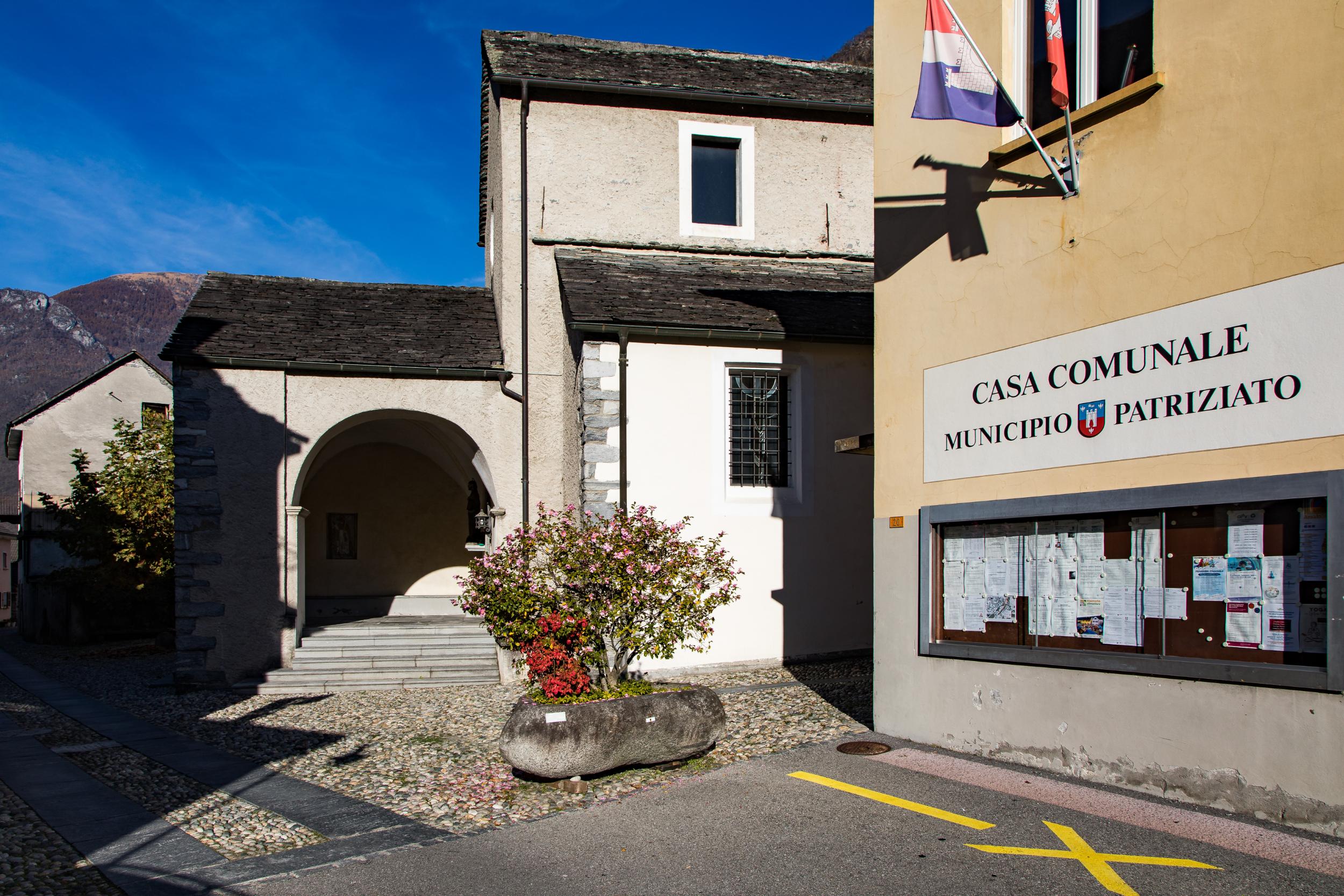
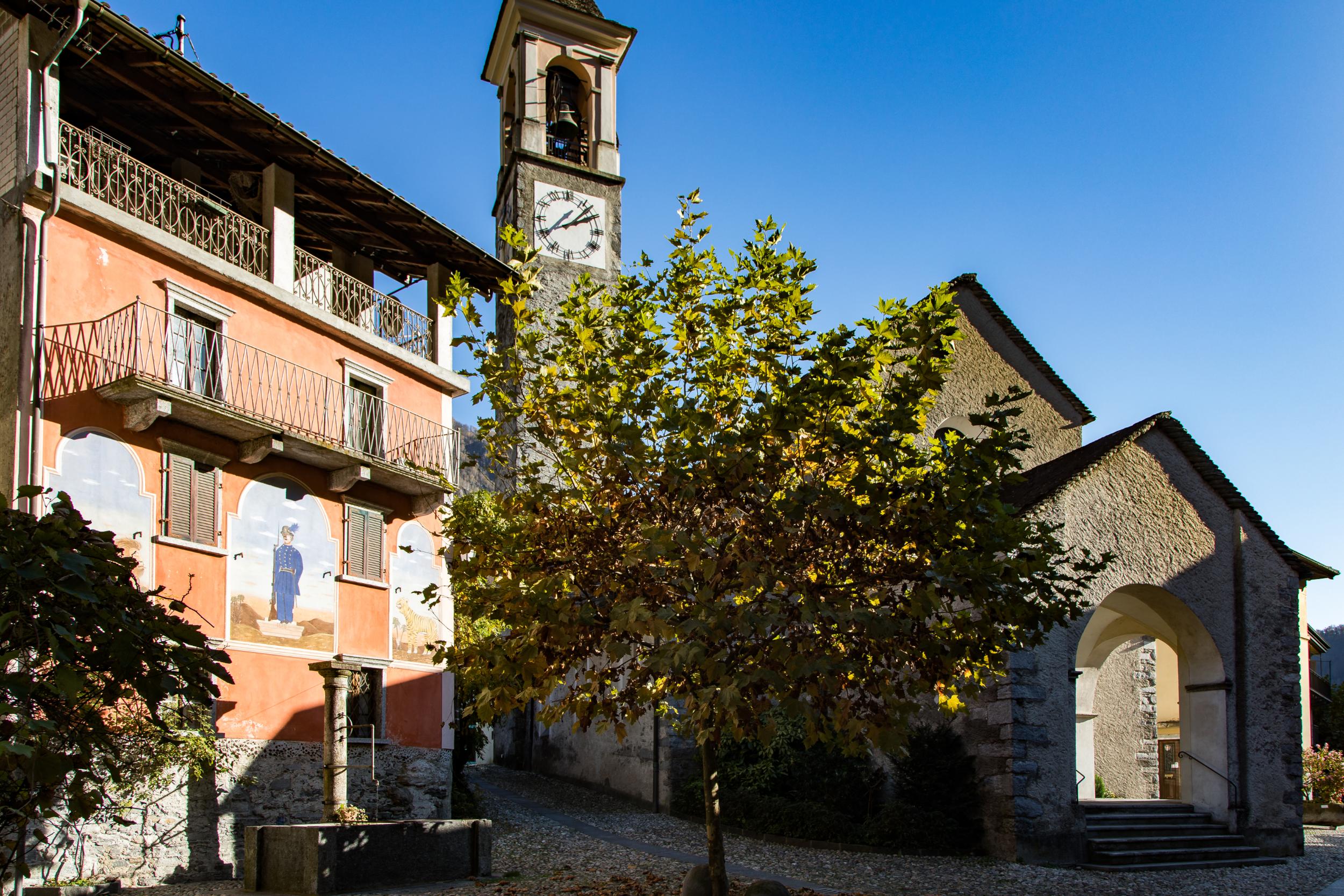
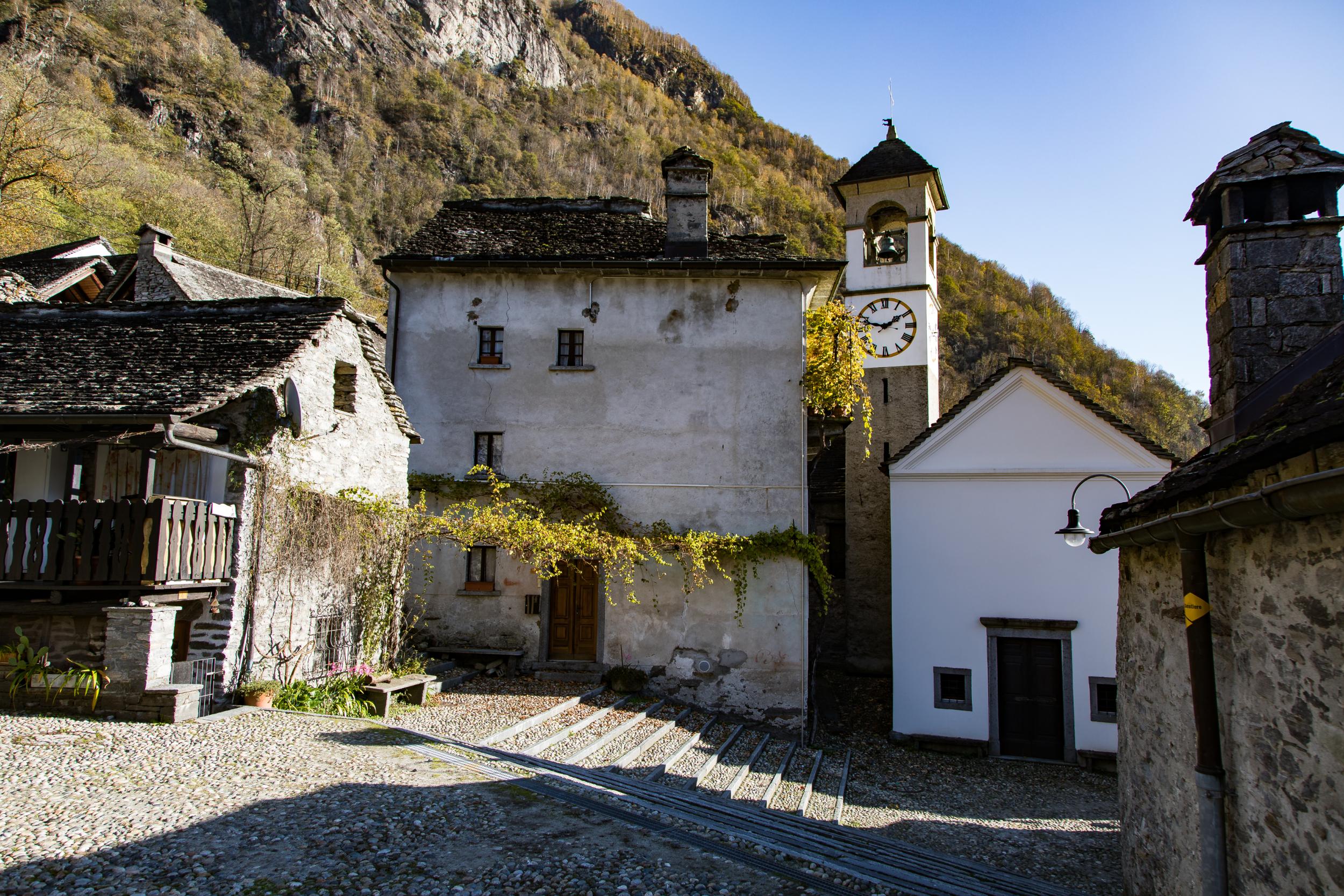
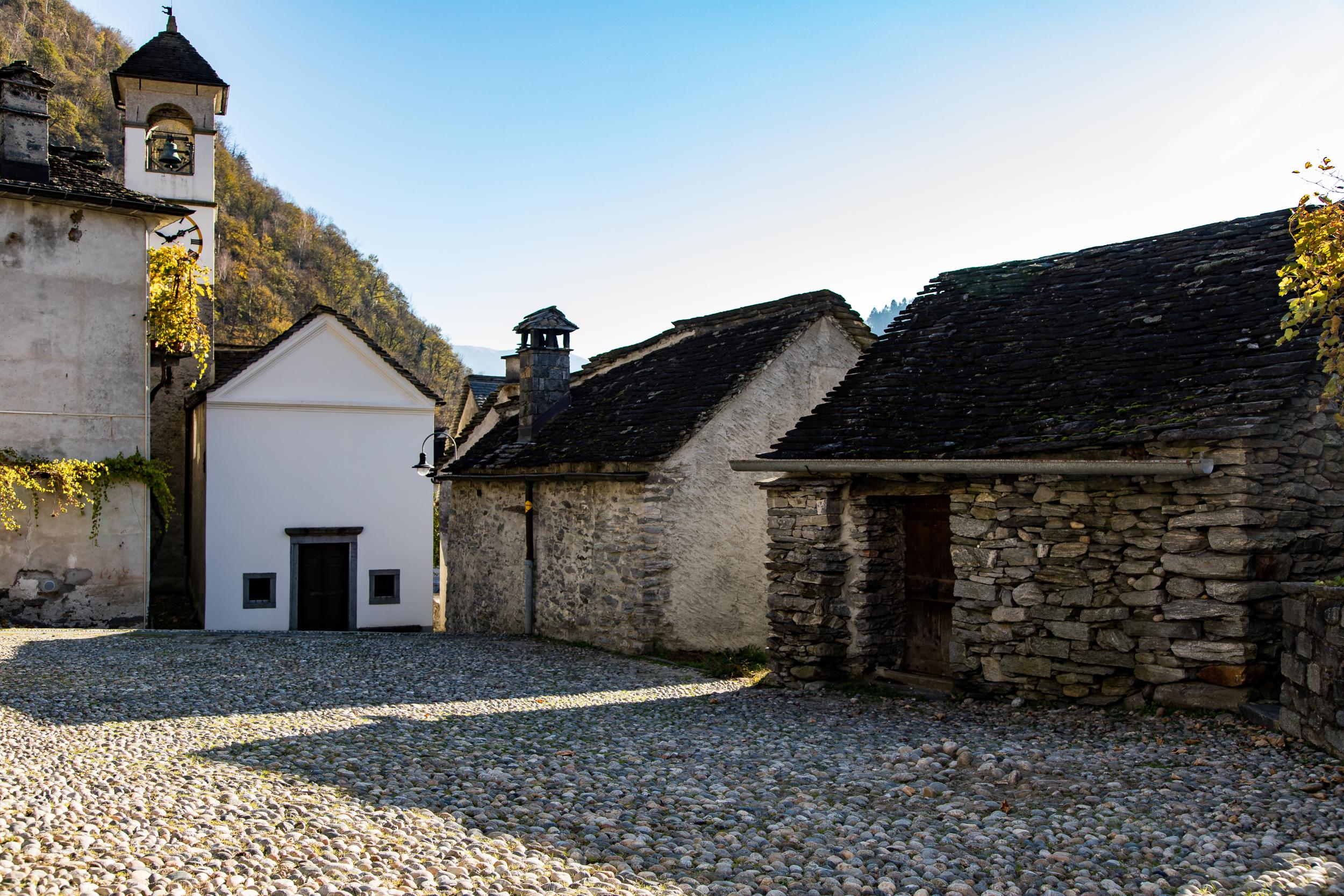
The parish church was, and in many ways still is, the focal point of the entire village, especially of the central hamlet, which takes its name from it. It was here, during the 19th century, that the main public buildings were established: the town hall, the school (today only the kindergarten remains, housed in a modern building), the restaurant, the shop, and the fountain, dating back to 1858. Until 1838, the space in front of the fountain was occupied by the old cemetery, blessed in 1516. Most of these buildings were built along the first carriage road of the Maggia Valley, that was opened between 1818 and 1824. The station of the Locarno-Ponte Brolla-Bignasco railway line, which operated from 1907 to 1965, was located slightly lower down.
The original single nave church is thought to have been built in the 13th century. The most significant extension, which included the creation of two side naves supported by four imposing columns and the addition of side altars dedicated to Our Lady of Mount Carmel and Saint Charles Borromeo, took place in the first half of the 17th century. The bell tower, on the other hand, dates back to 1527 and was raised in 1852. In the last decades of the 20th century, the church underwent major renovations, so that works by contemporary artists coexist alongside very old elements: the altar and the ambon by Panos da Faenza, the large fresco of the Last Supper, and the stained glass windows by friar Roberto Pasotti.
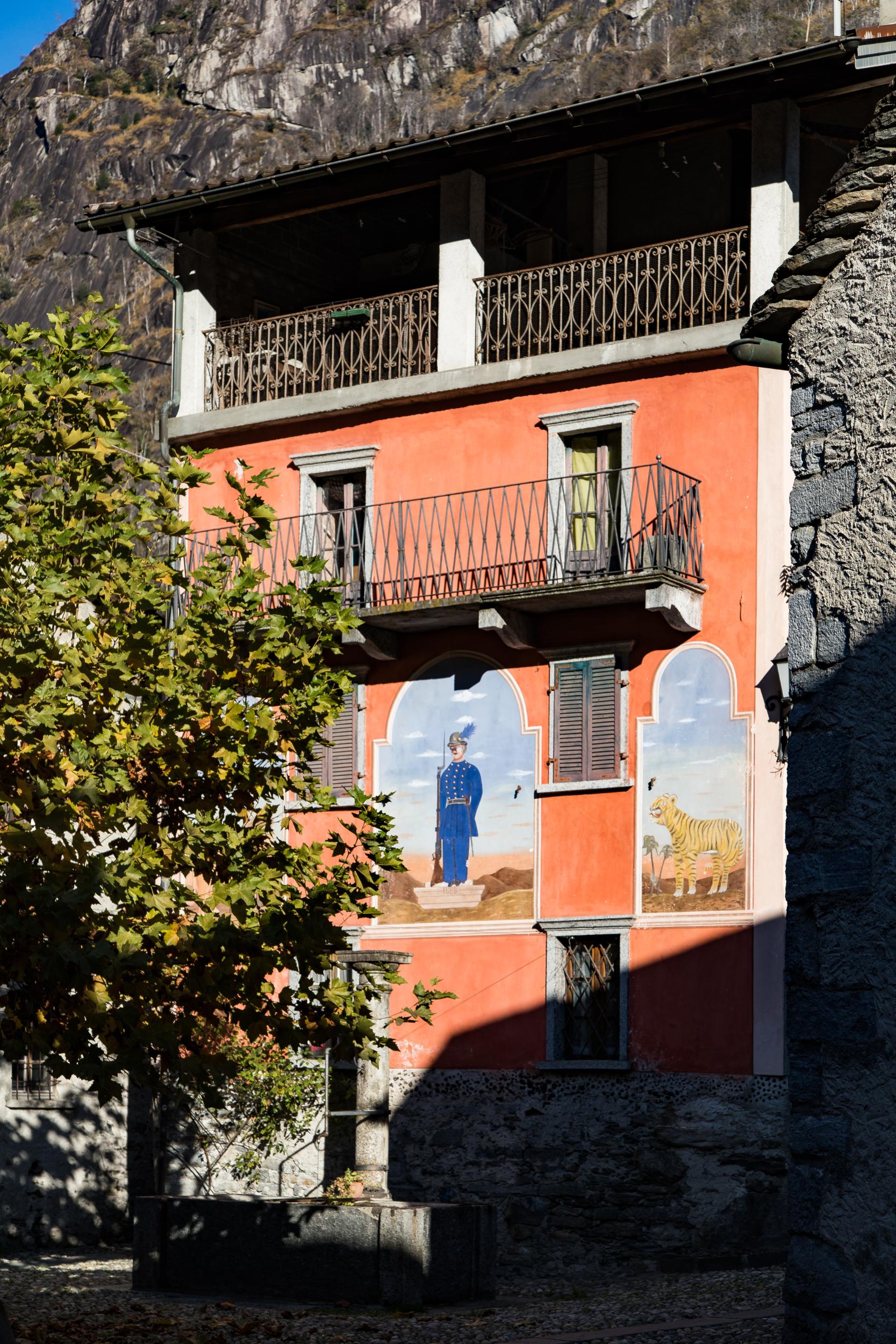
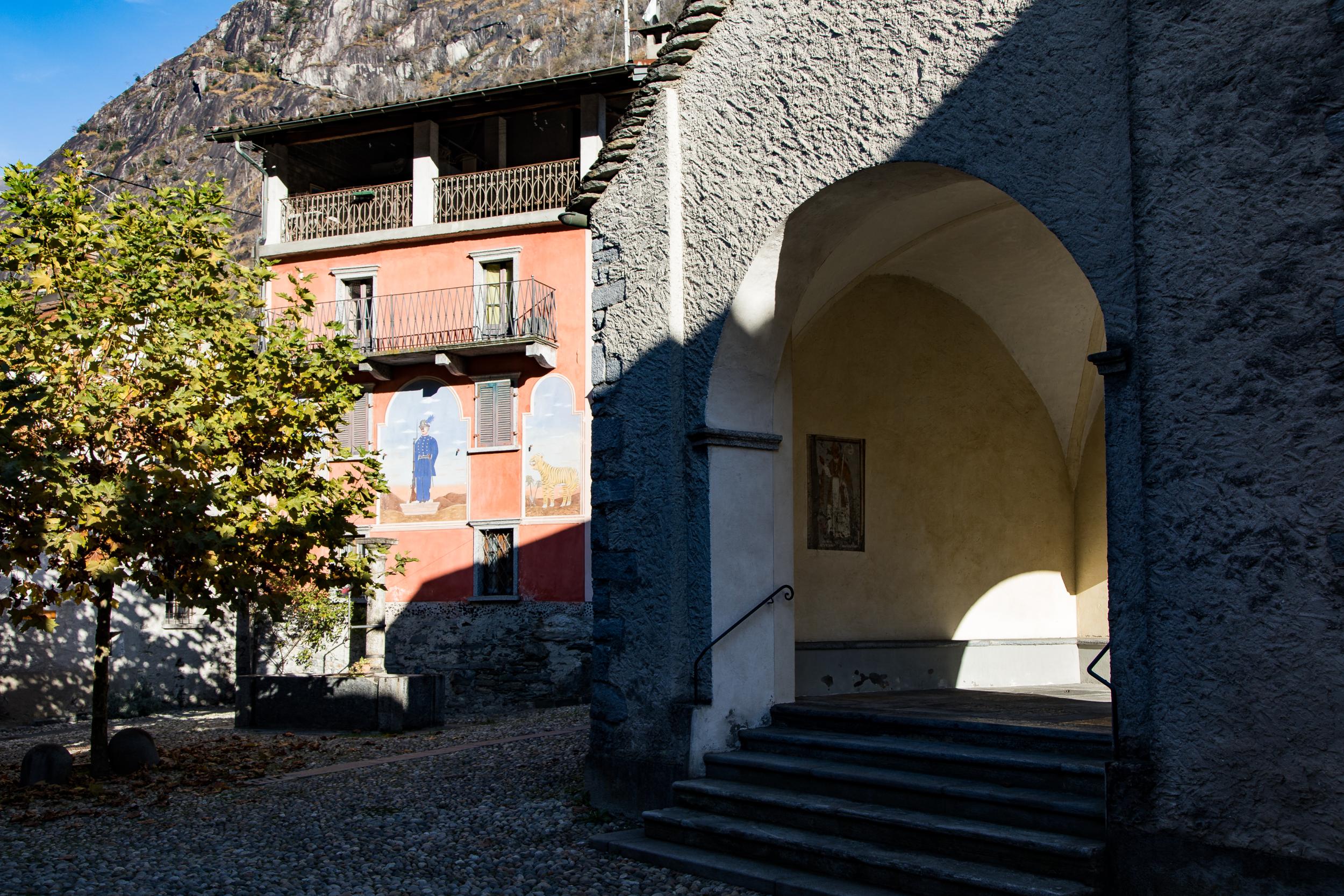
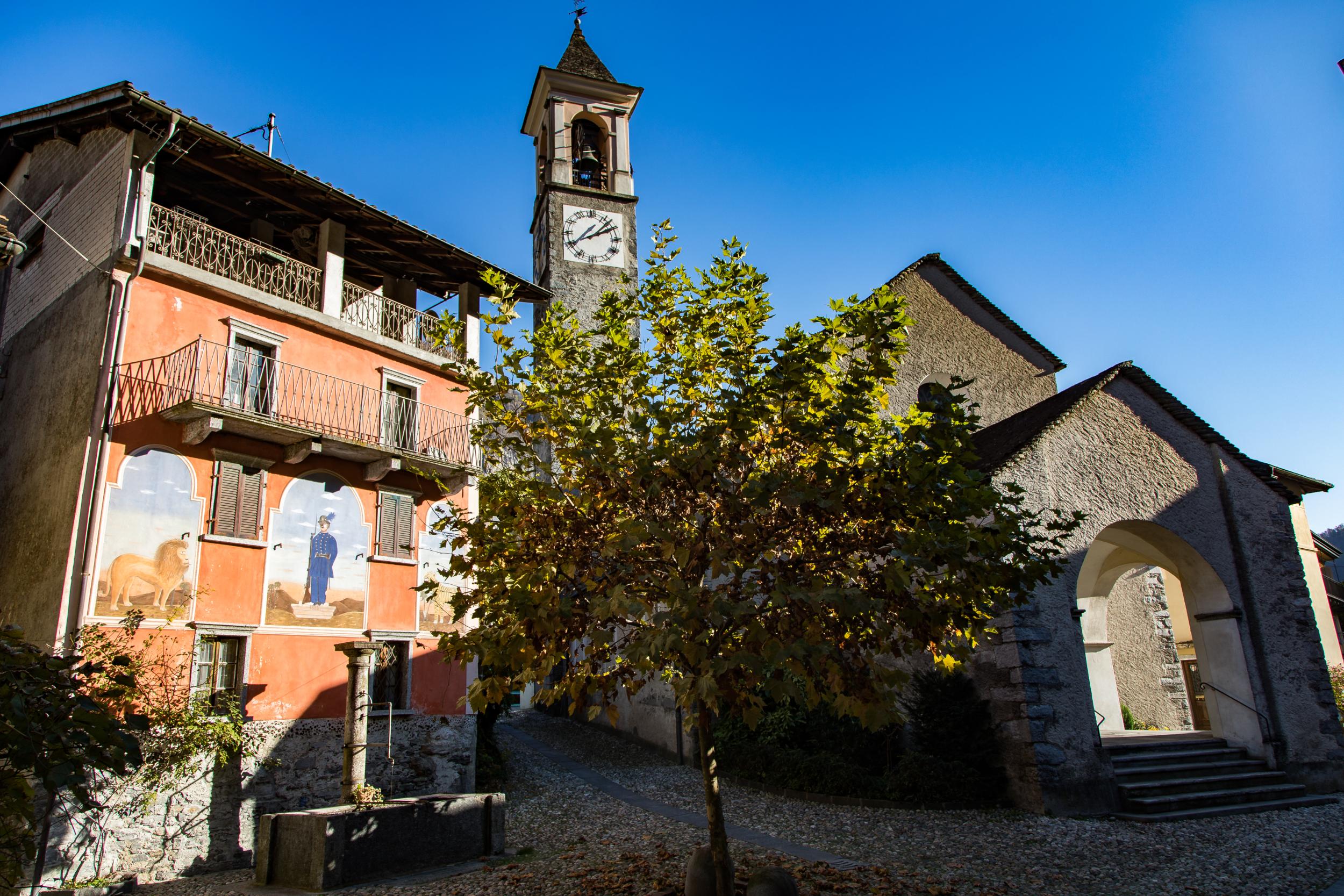
A large 19th-century house, with three floors and a balcony, renovated in the mid-20th century. Although some modifications have partially compromised its original appearance, it is remarkable for its façade, which is almost entirely covered by a painting with a soldier flanked by two wild animals (a lion and a tiger). Although of no particular artistic value, the large decoration is noteworthy for the uniqueness of the subject and for its date of 1888.
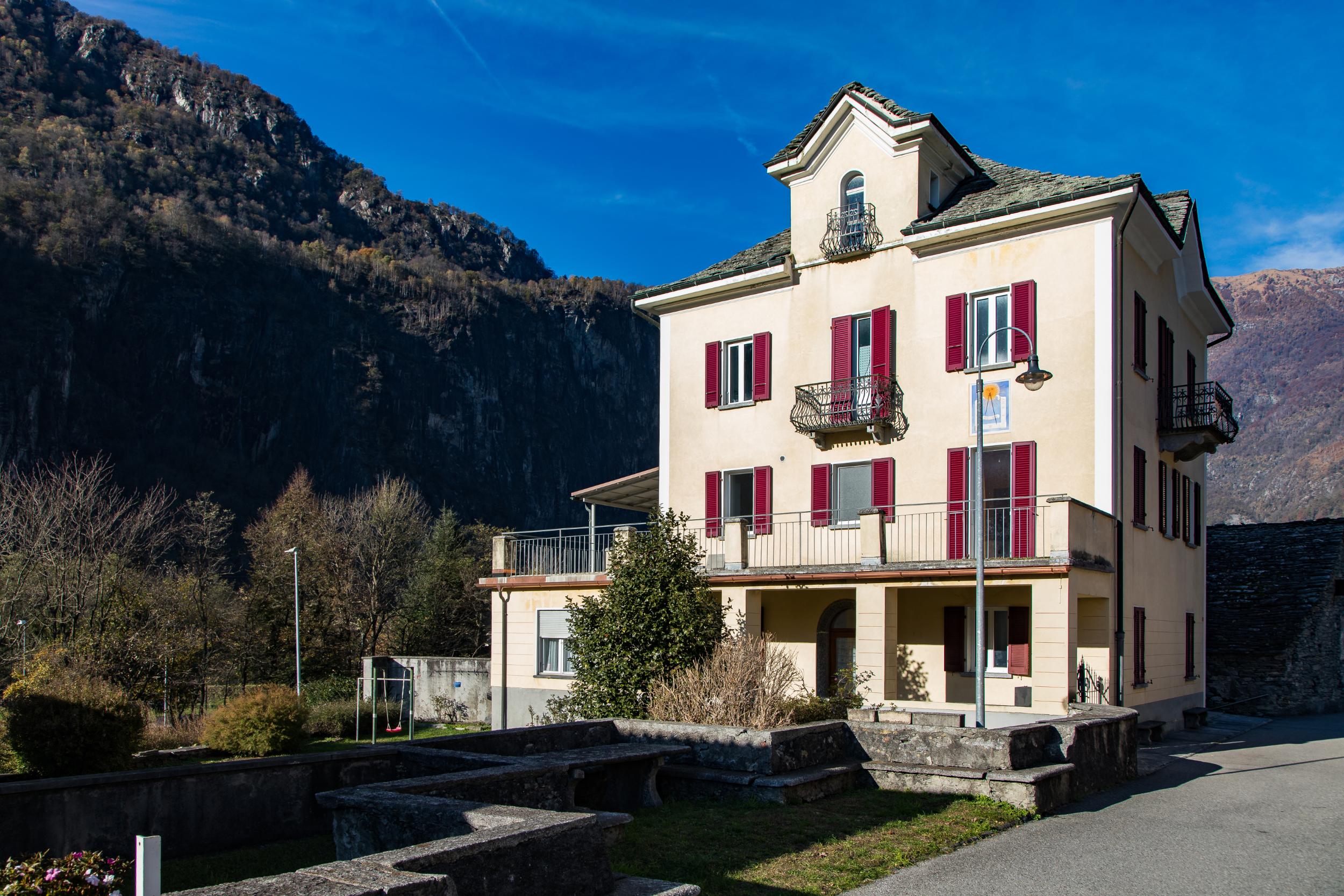
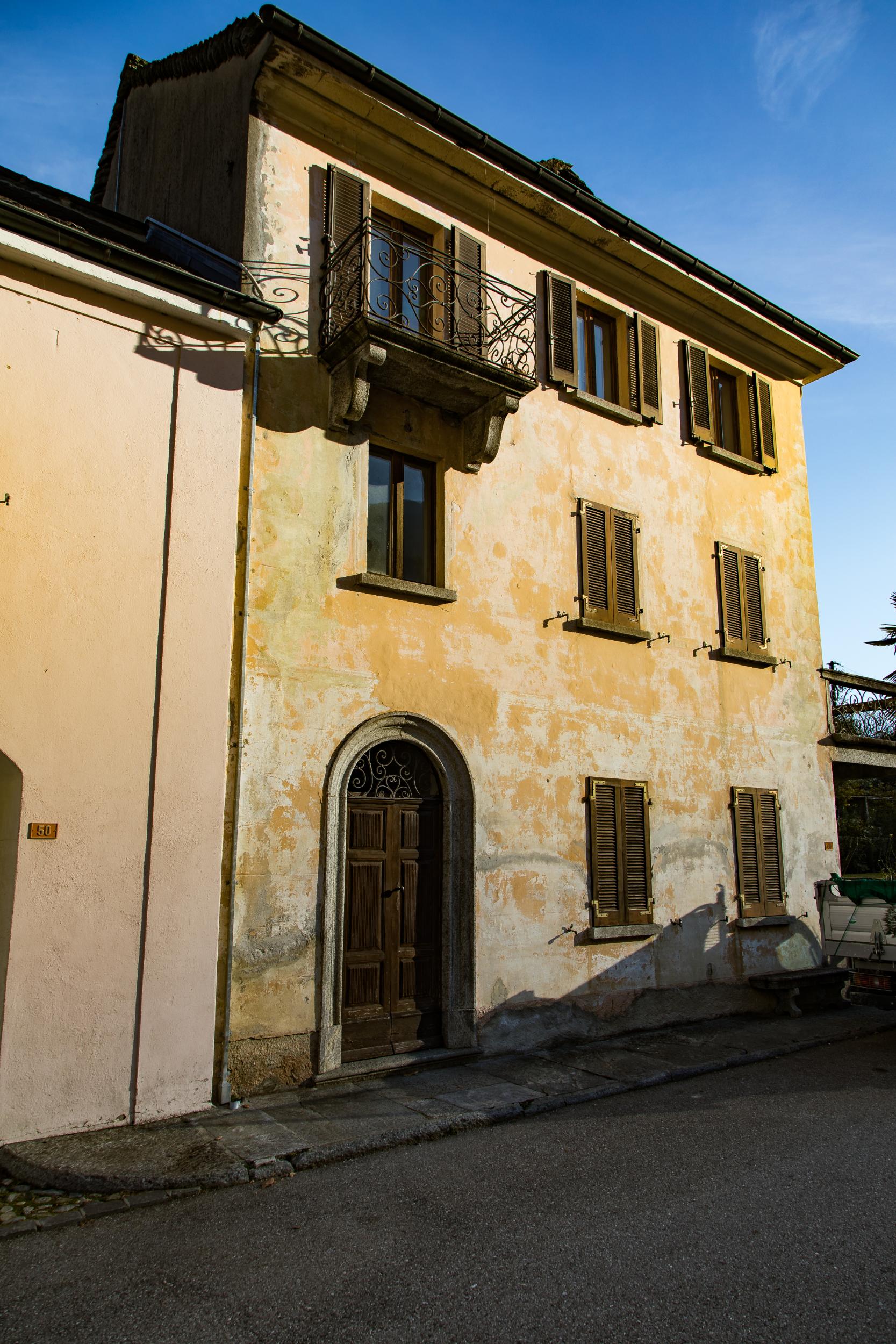
Along the road that links the hamlets of La Gésgia and Lüdínt, there are traces of the successful emigration of some inhabitants of Avegno to the Americas. Noteworthy are the C’a do Sèp Rianda, built in 1899, which features modest decorative elements on the façade and a beautiful symmetrical fenced garden, and especially the elegant C’a du Bòp Crespin, a three-storey house built in 1910 by Arnoldo Crespini. Before its completion, Crespini decided to return to California for good and sold the house to his brother Battista.
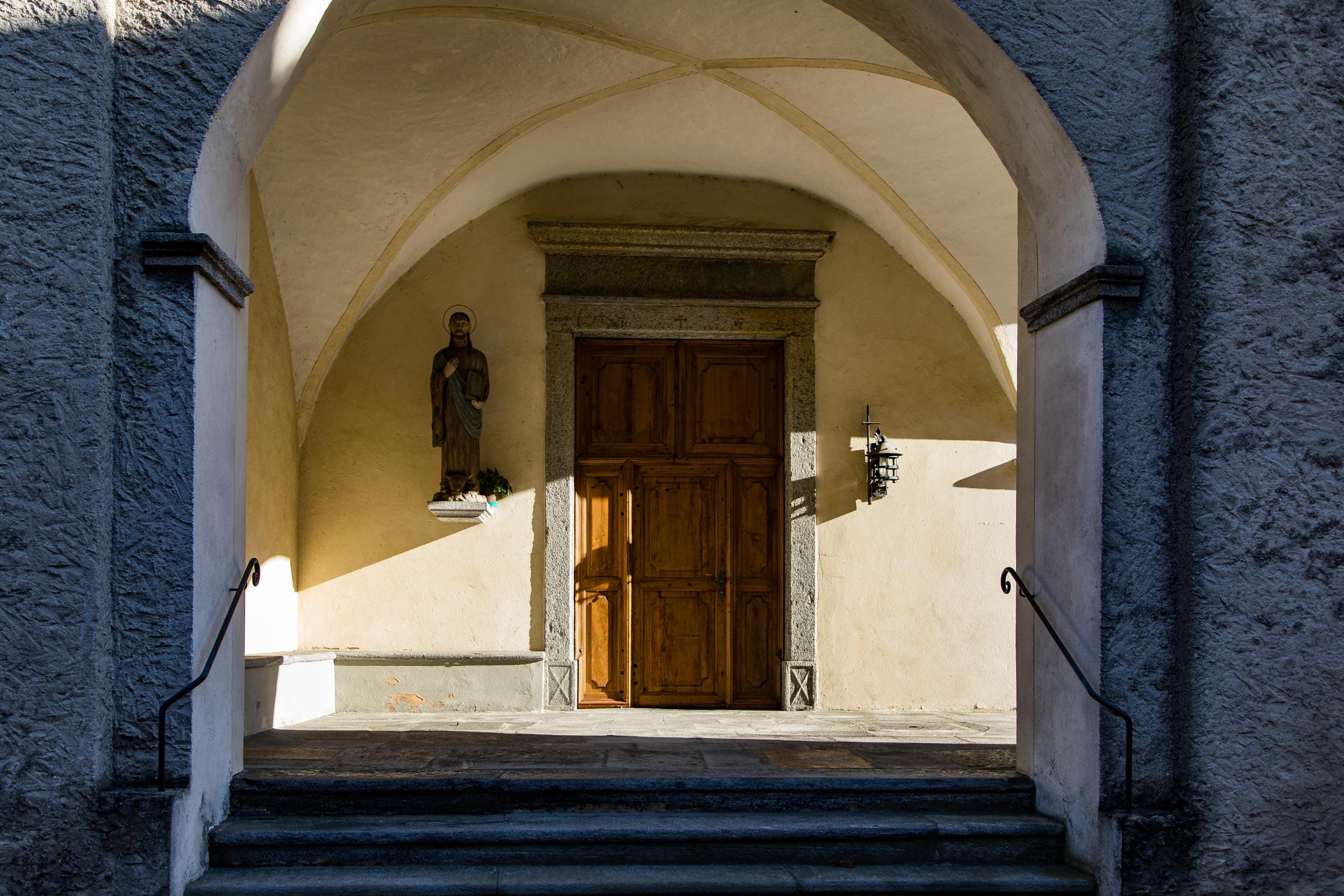
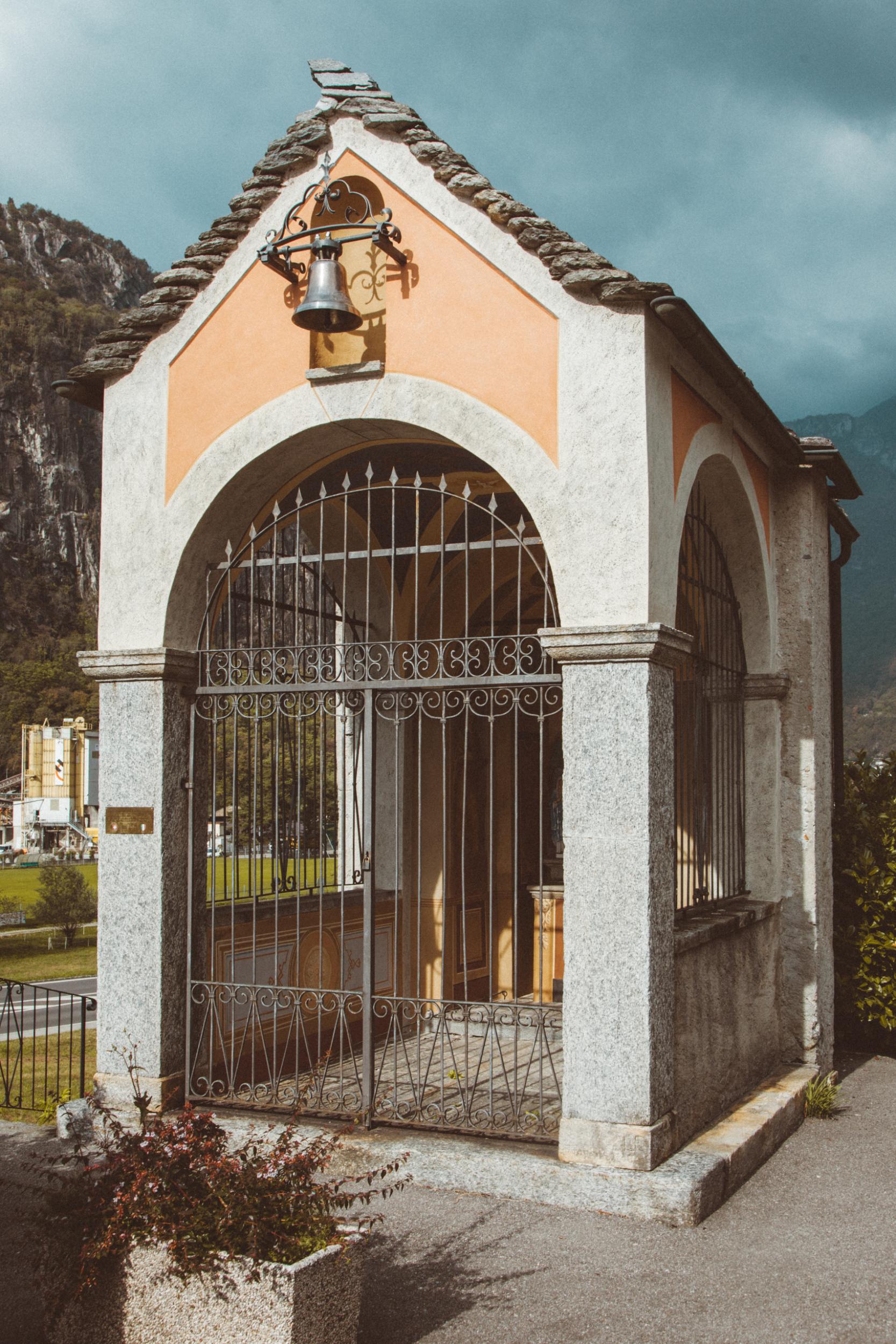
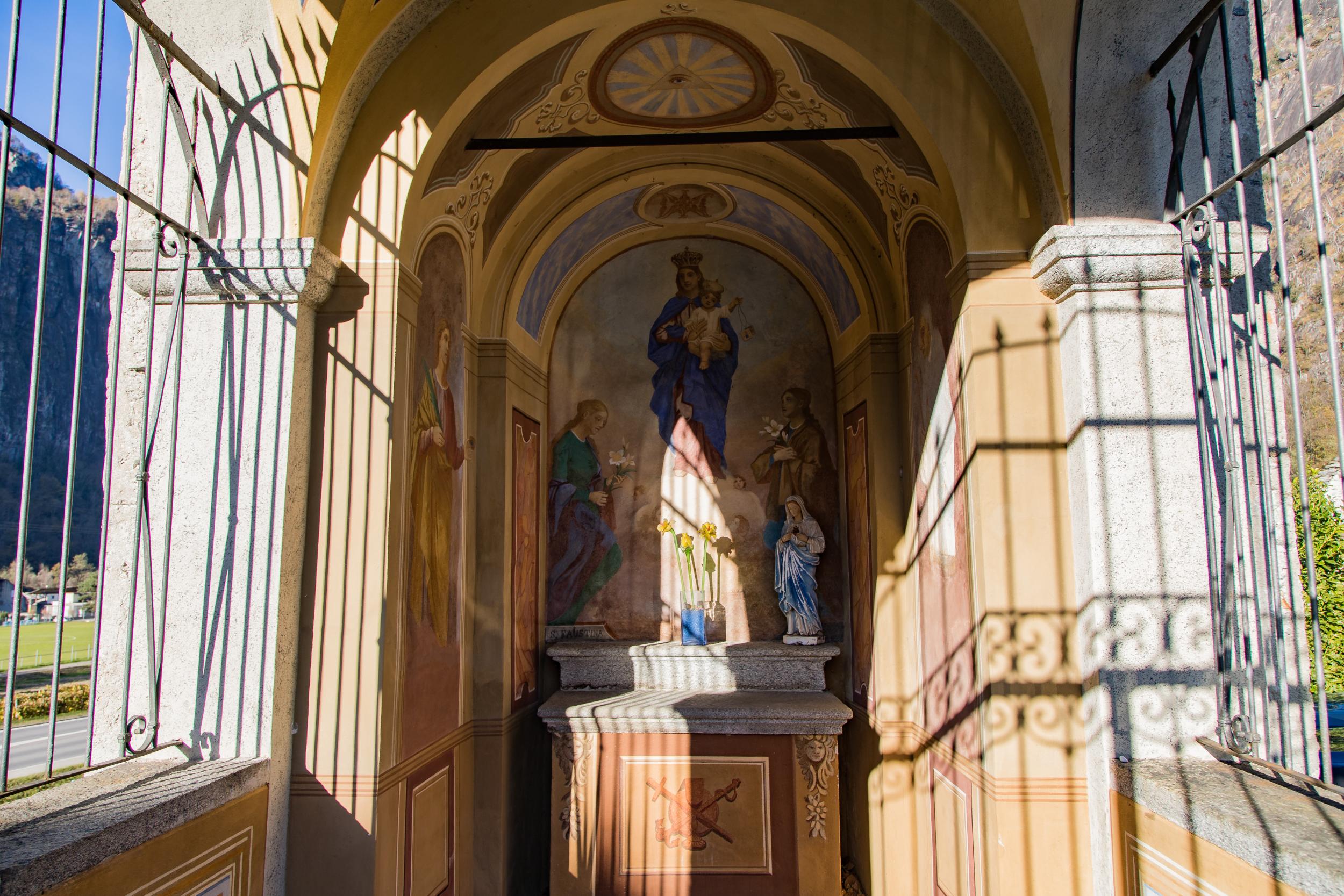
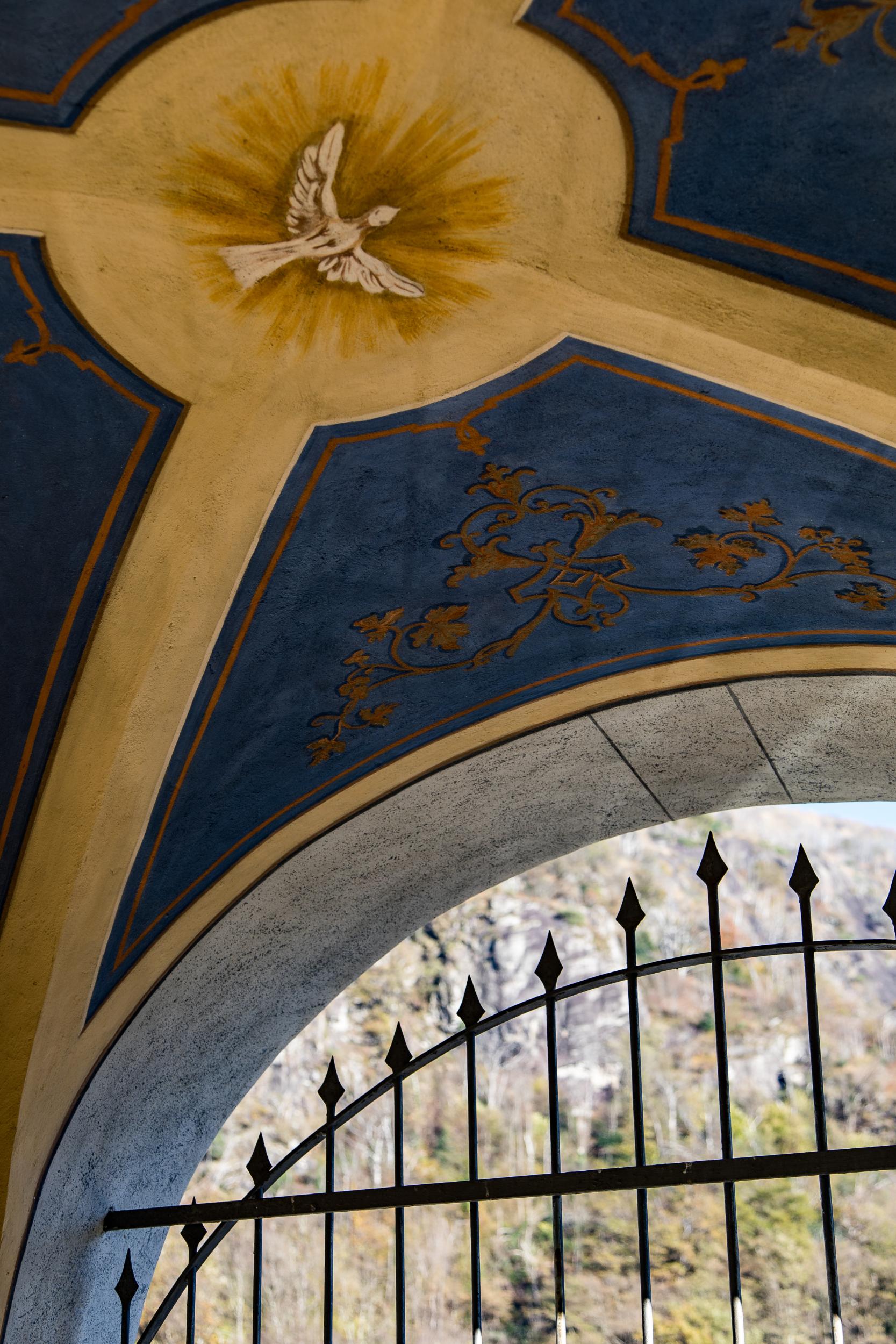
The construction date of this large chapel with a portico is unknown, but it is attributed to the second half of the 19th century, when it is believed to have replaced two nearby chapels that were demolished. The chapel, with a floor paved with slate slabs, features a small altar and is entirely painted: Our Lady of Mount Carmel is depicted in the centre, surrounded by Saints Faustina and Liberata. The outer side walls are decorated with a small mural painting: to the west, the Crucifixion with Saint Francis of Assisi and Saint Mary Magdalene; to the east, the Holy Family. The large portico, supported by monolithic pillars and vaulted in a ribbed pattern with the symbol of the Holy Trinity, is enclosed by an iron fence on three sides and was probably added in the early 20th century.
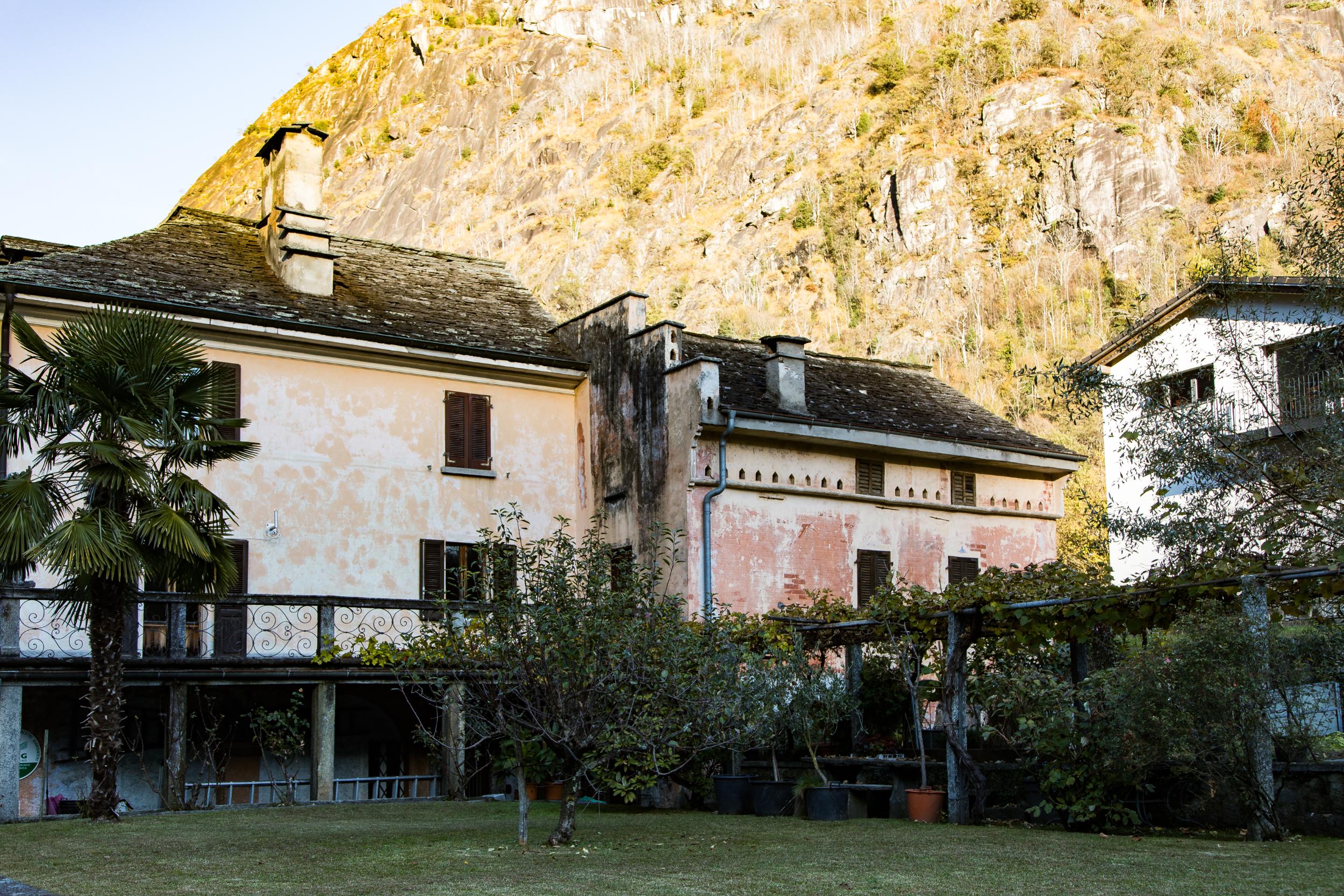
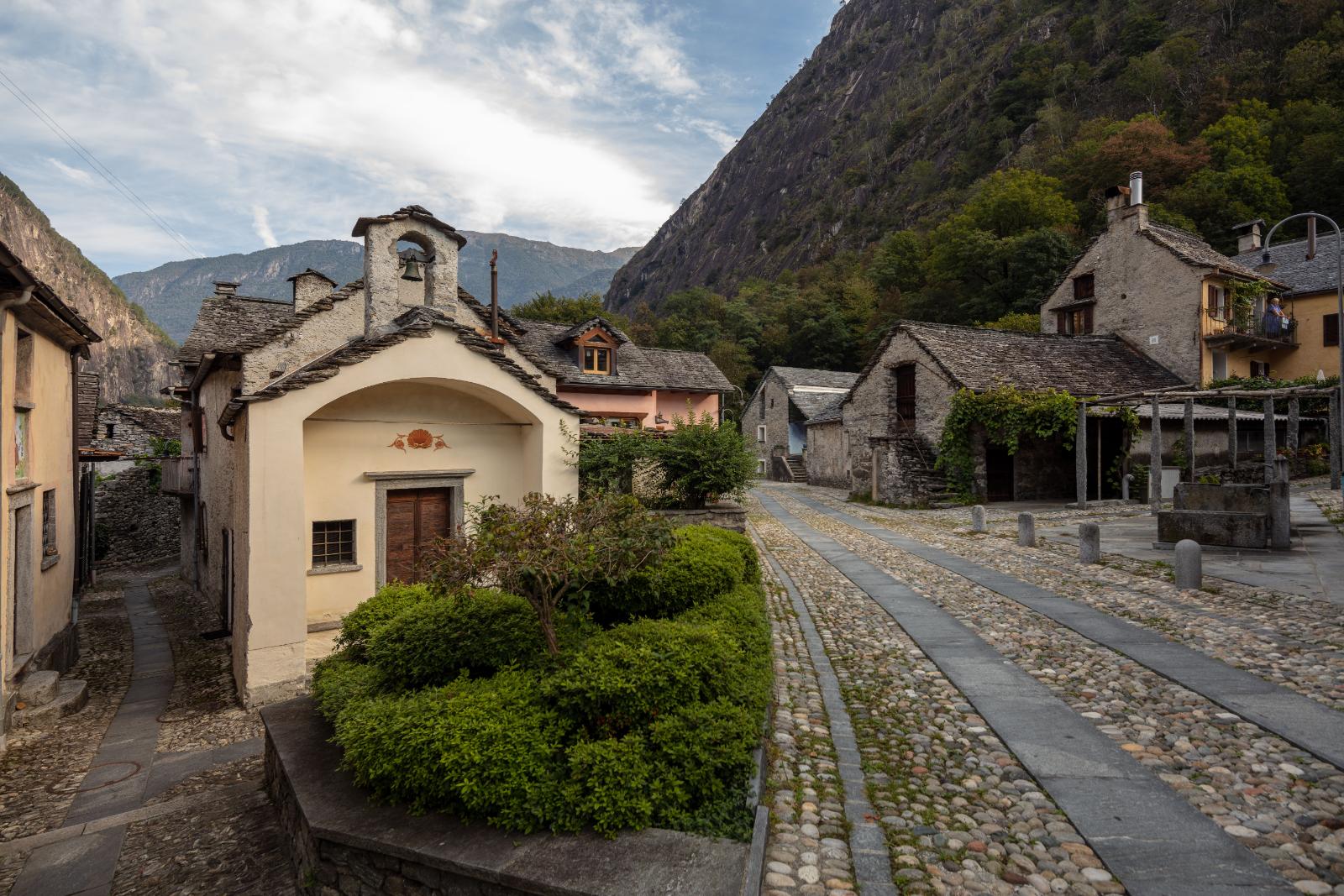
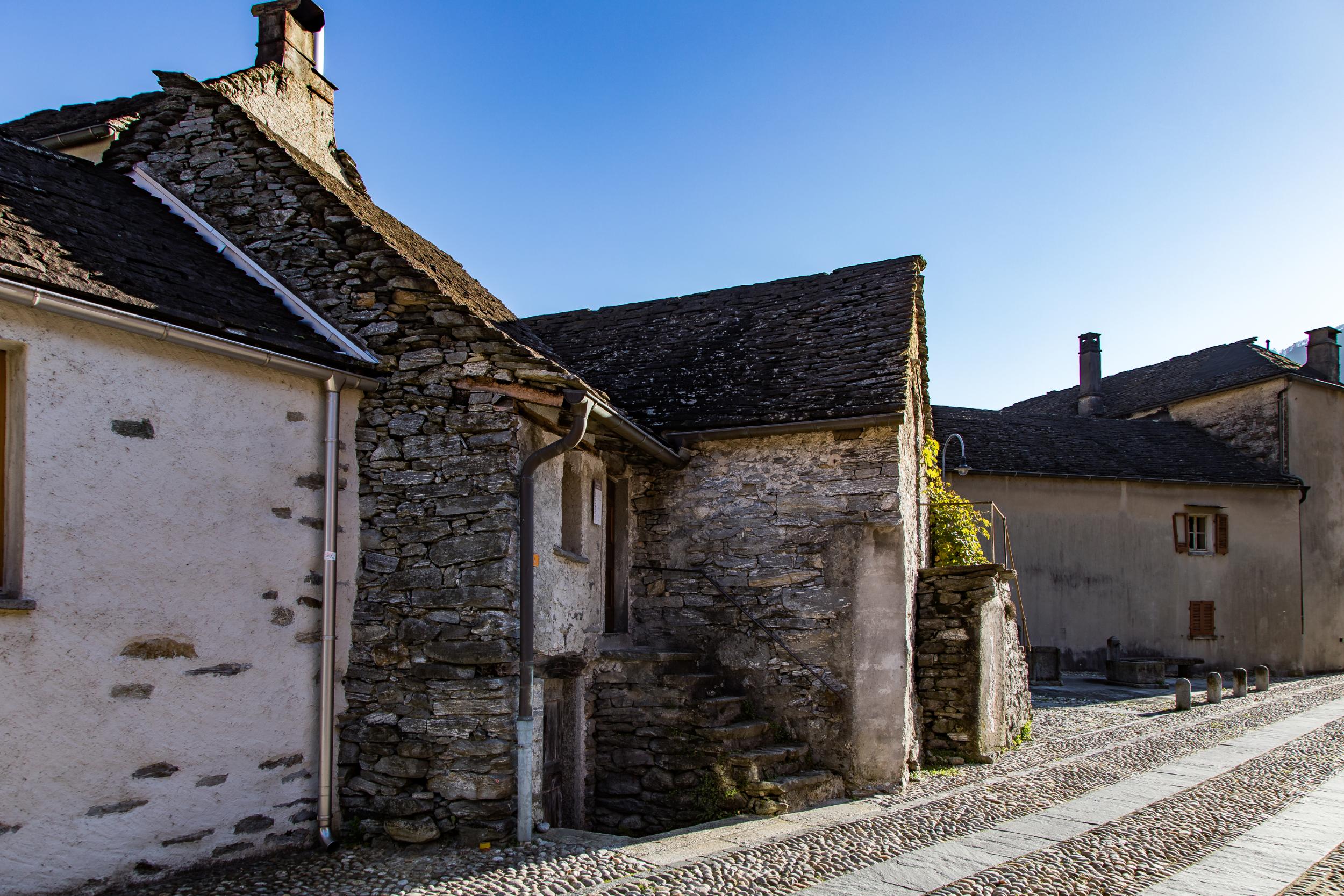
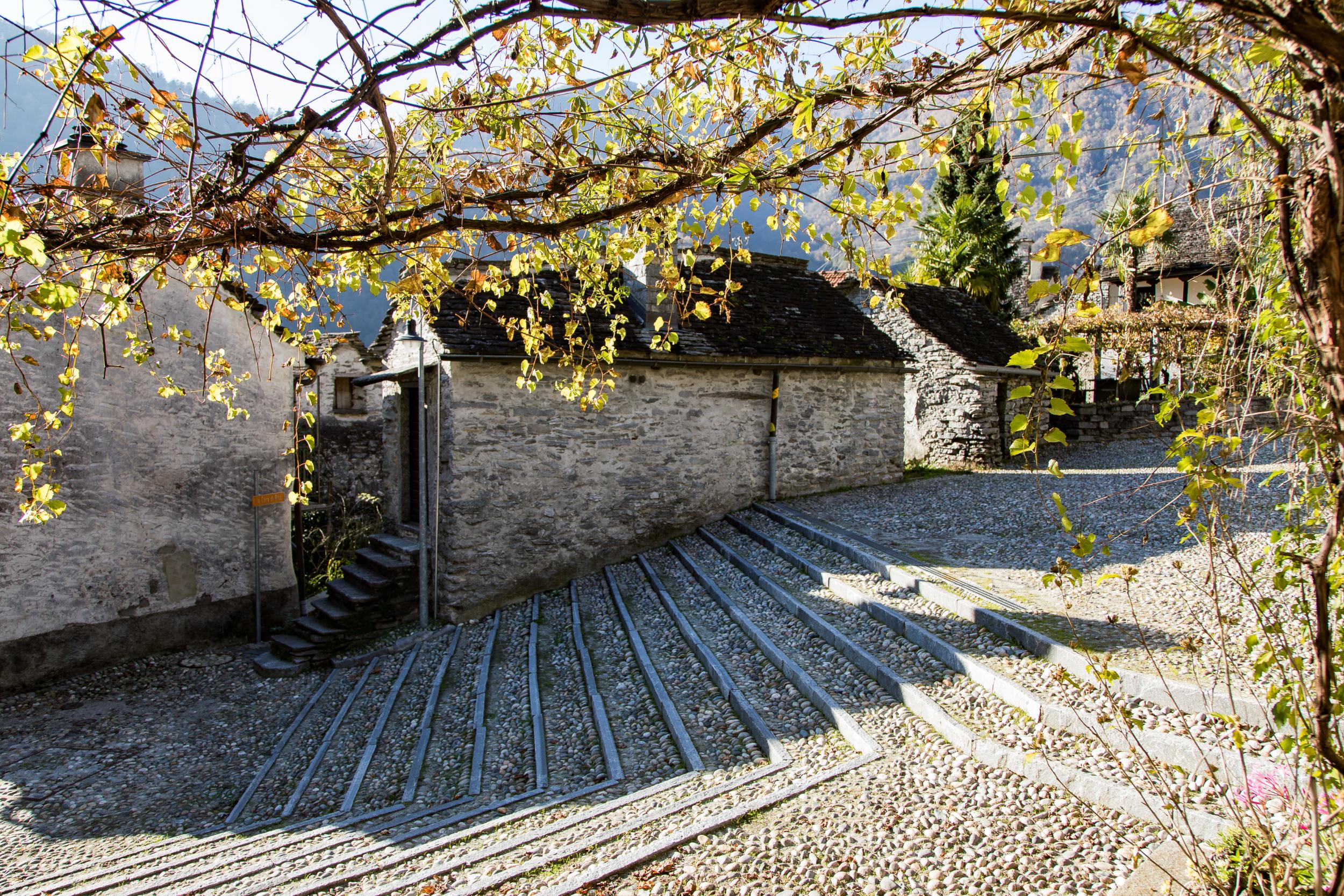
In the lower Maggia Valley, pre-modern houses – those built before the 19th century – were characterized by a portico on the ground floor and a loggia on the first floor, supported by stone or wooden pillars, along the longest side of the house, usually facing south. The stairs, made of stone, were outside the building to avoid taking up space in the living areas and because they were often shared by multiple owners. The hamlet of Lüdínt, the northernmost and least populated part of the village of Avegno, preserves several typical houses of the Maggia Valley in their original form, along with others that, although renovated, still retain their distinctive features. Other buildings linked to the rural tradition, such as the oven, the wine fermentation room, the fountains, the washbasin, some well-preserved stables, and several buildings under the rock, add further interesting architectural elements to the hamlet.
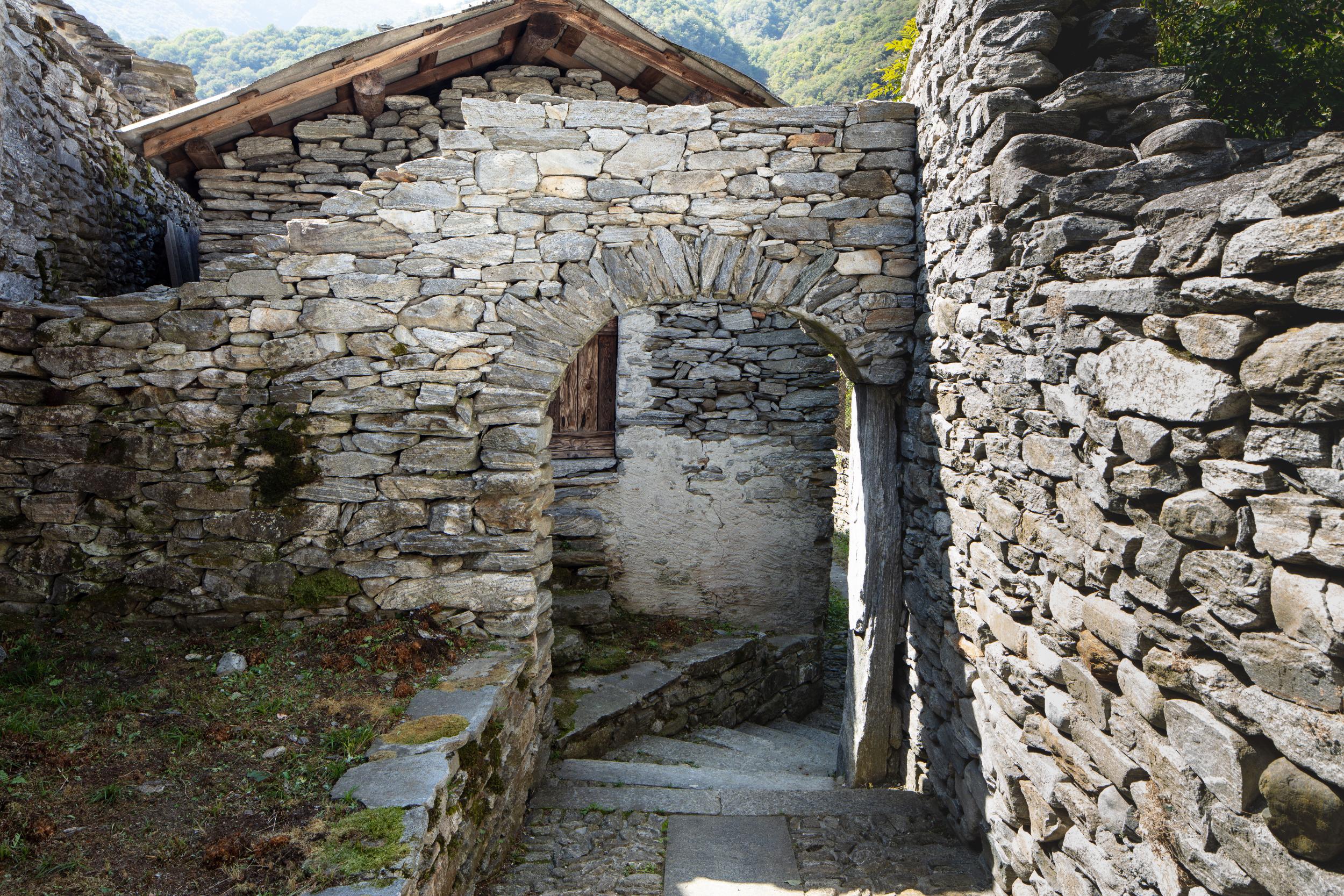
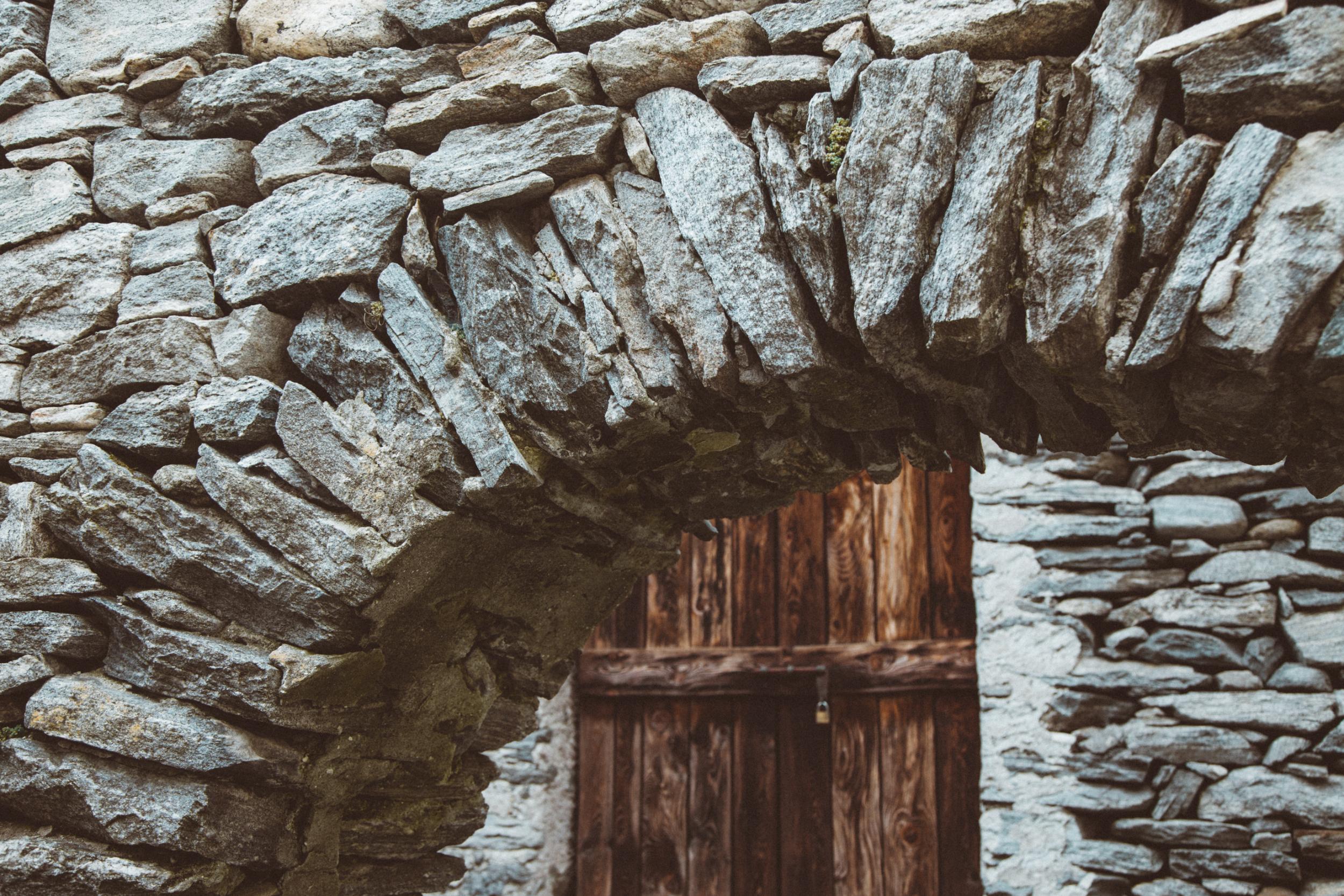
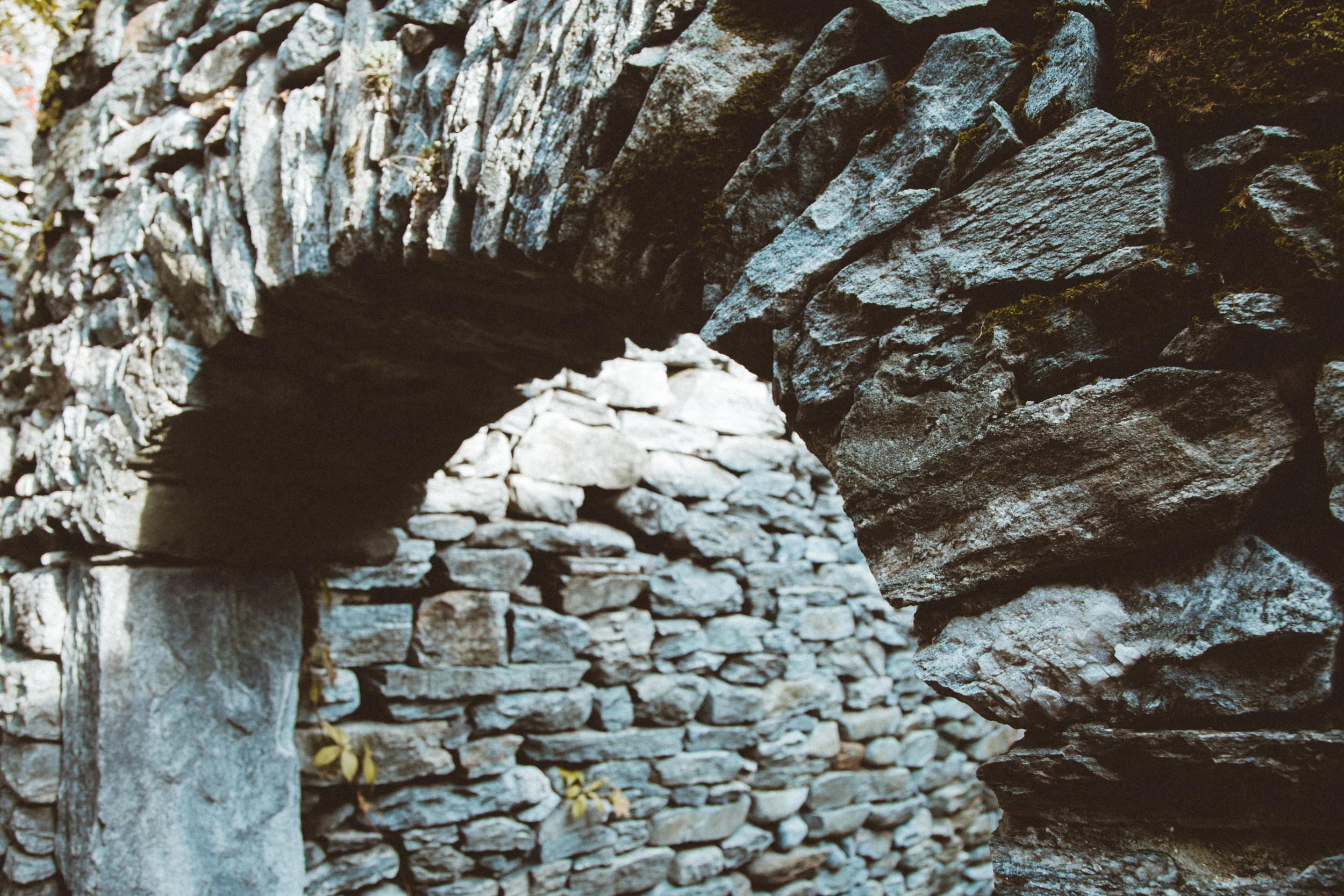
This ancient stone arch was built in the oldest hamlet of the village, Lüdínt. It is all that remains of a more complicated structure, originally consisting of two twin arches that supported a living area, forming a portico above the pedestrian walkway.
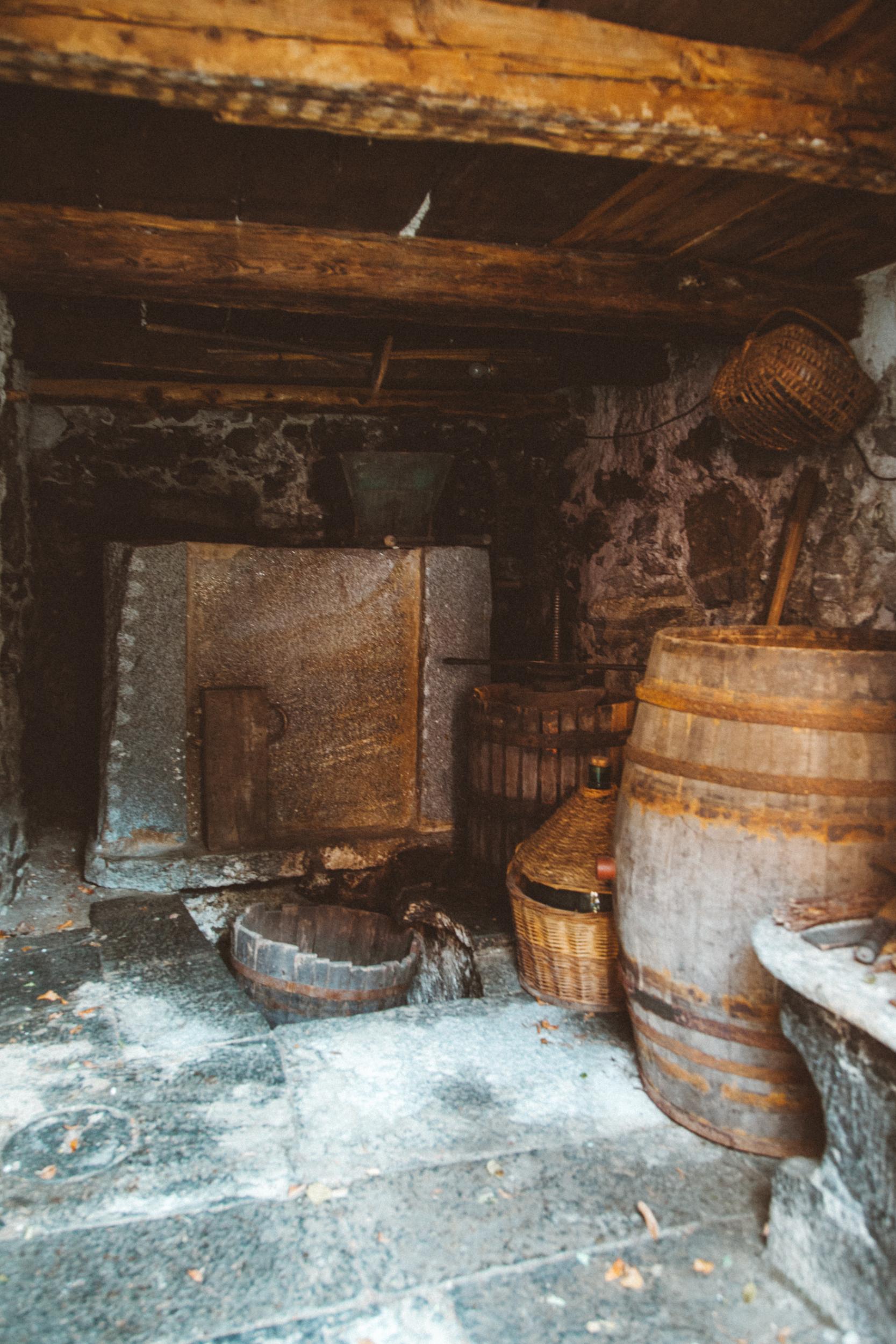
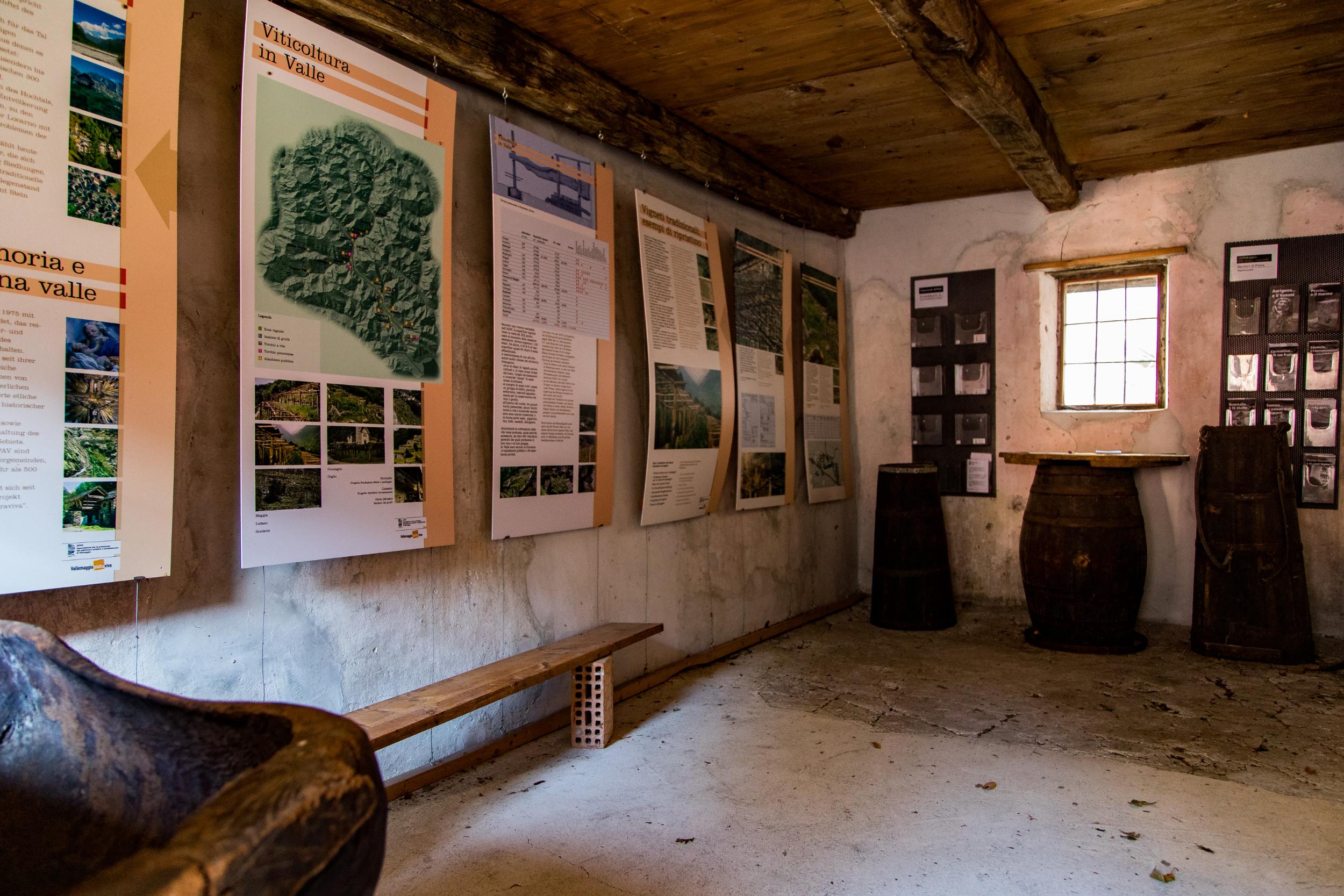
A small building once used for the production and storage of wine. On the ground floor, there is a screw press and a stone vat with a capacity of about 1,000 litres. The use of large stone slabs, rather than wooden staves, to make large containers for storing wine is typical of the more southerly villages of the Maggia Valley. On the first floor, APAV has set up a small exhibition, which is always open, that shows the vine-growing situation in the lower Maggia Valley.
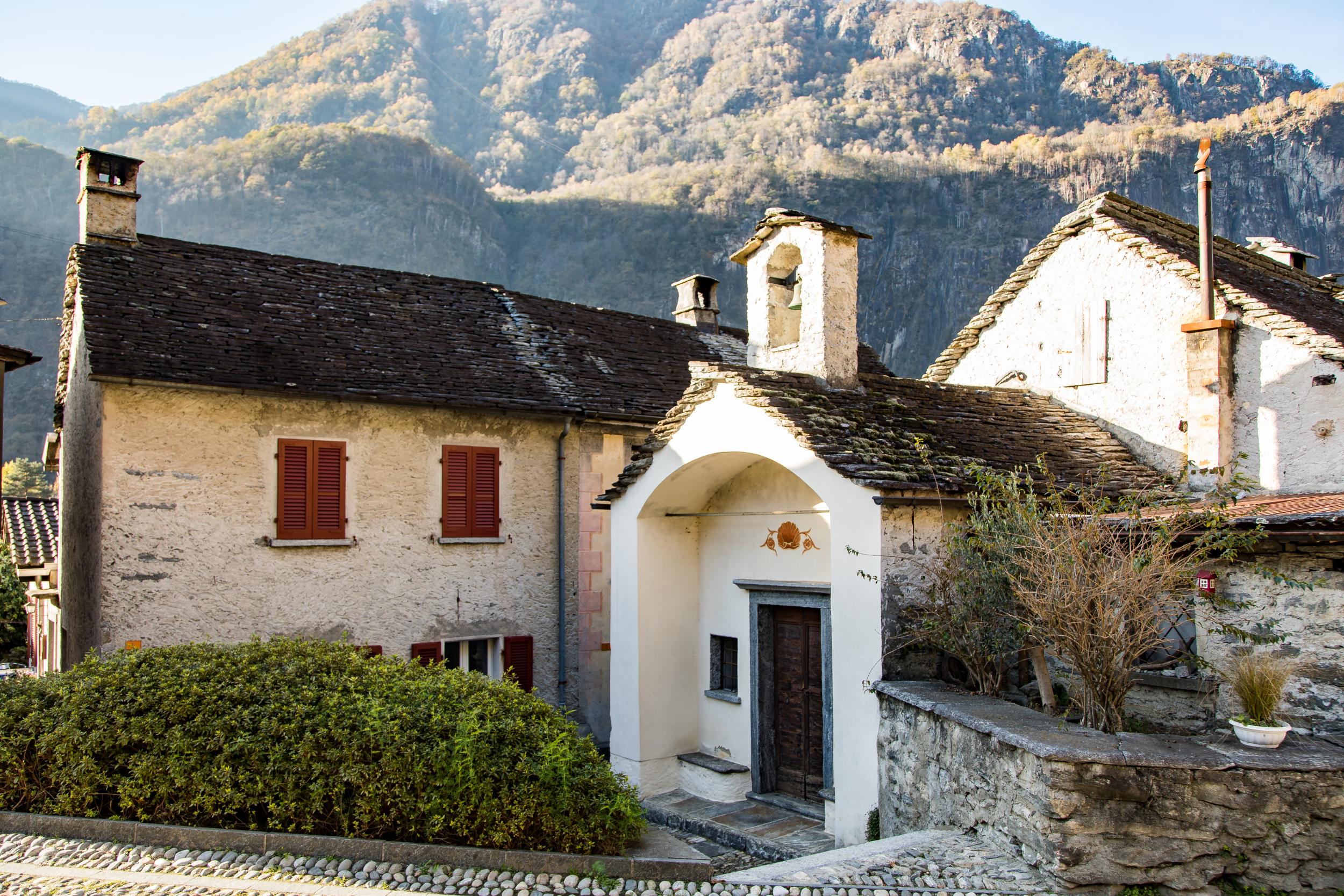
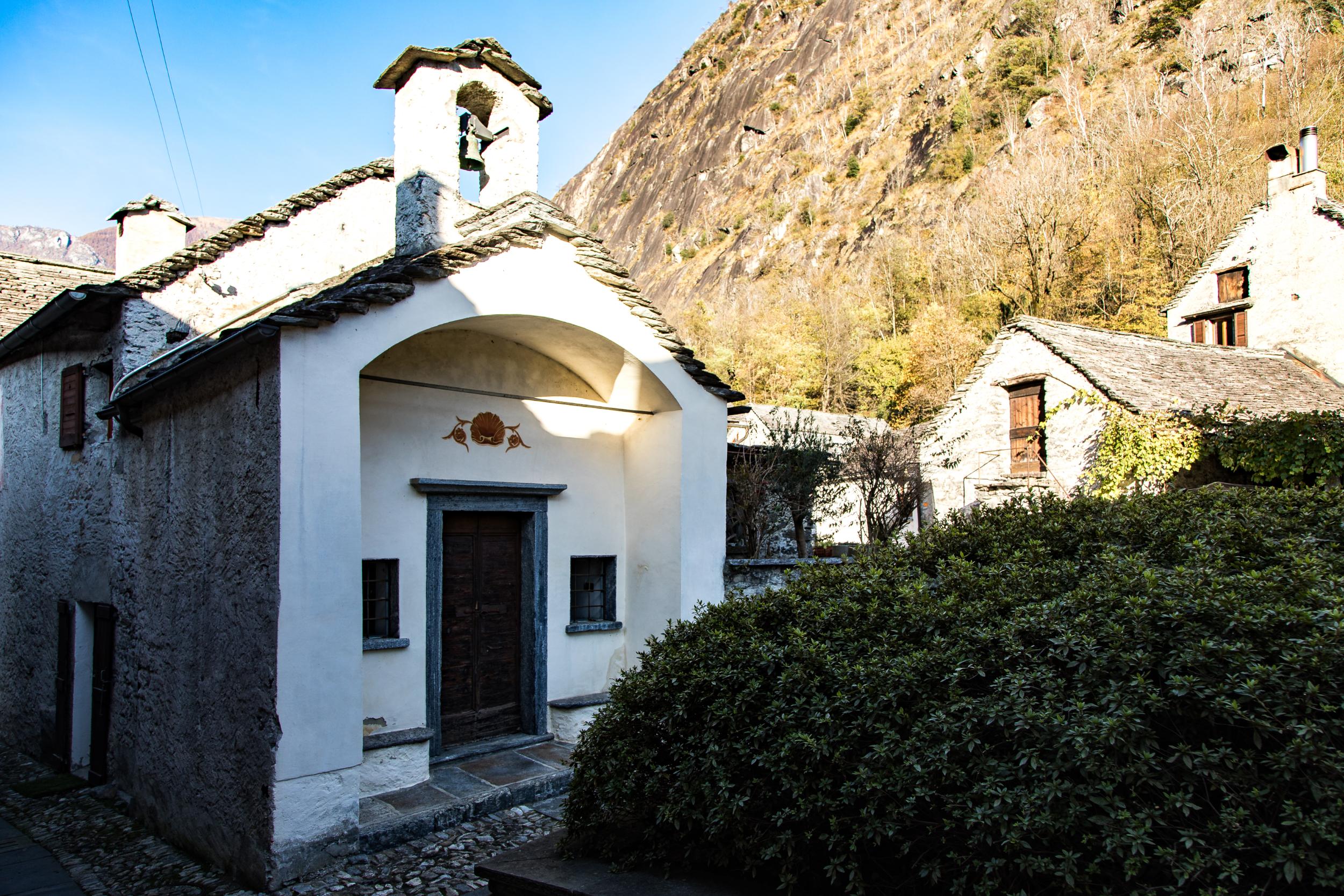
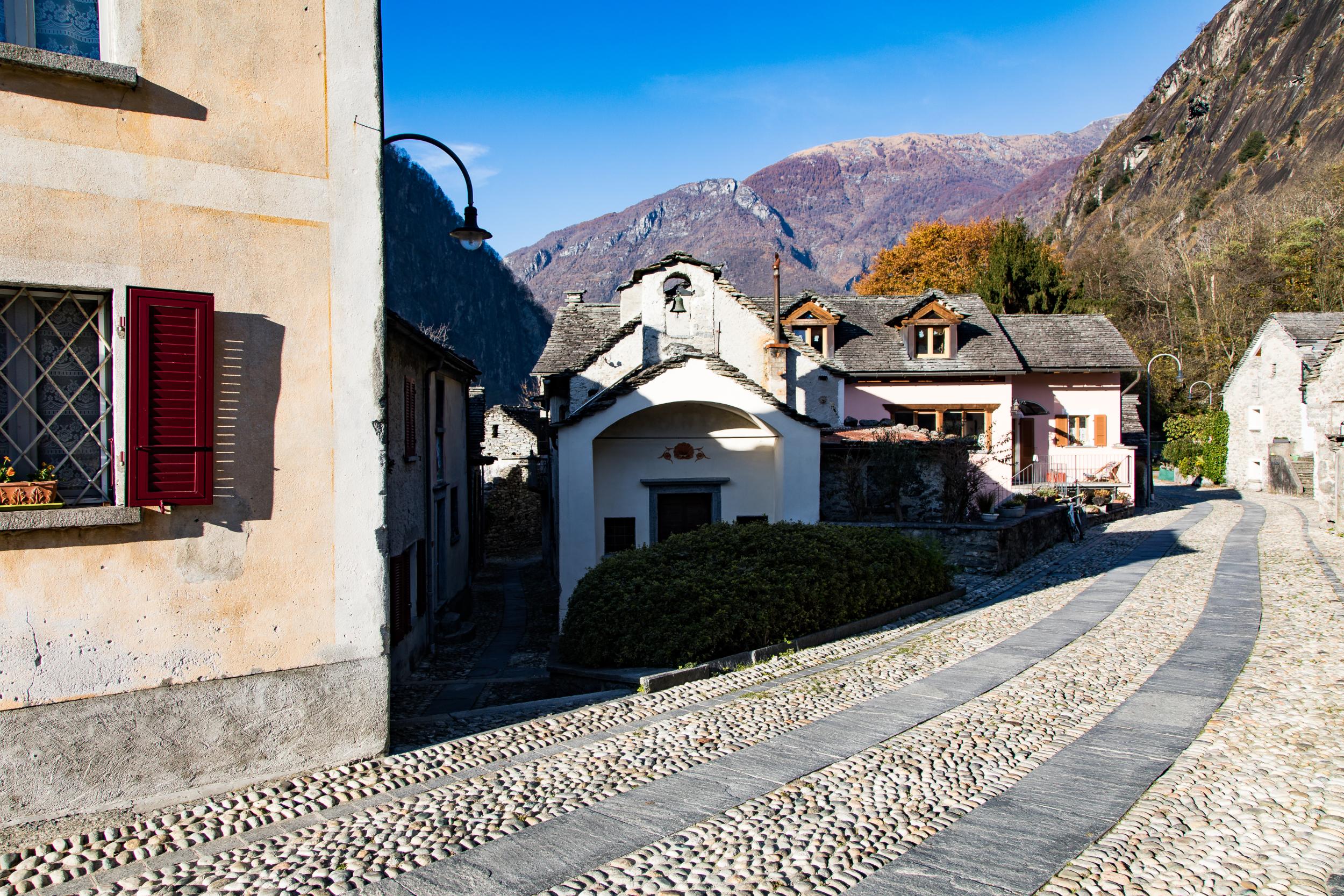
The oratory, built in the second half of the 17th century in the centre of the Lüdínt hamlet, is dedicated to Saint Anne, Mary’s mother. The exterior is very simple, with a small portico and a small bell gable. The interior, although no longer furnished with a complete set of liturgical items, retains some noteworthy elements, in particular the 17th-century altarpiece depicting the Infant Mary between Saints Anne and Joachim, as well as the mural paintings created in 1966 by the artist Hans Anton Tomamichel from Bosco Gurin, which stand out on the back wall. In the past, the oratory was also adorned with two 15th-century wooden statues representing the Madonna with Child and Saint Abbondio, which are now on display in the parish church of Avegno.
Built in 1921, the washbasin was initially located near the fountain in the centre of the hamlet, where the inhabitants of Lüdínt used to draw water and take their cattle to drink. In 1946, after the construction of the new municipal water supply system, it was moved to its current location near the Capèla di Ortaiöi.
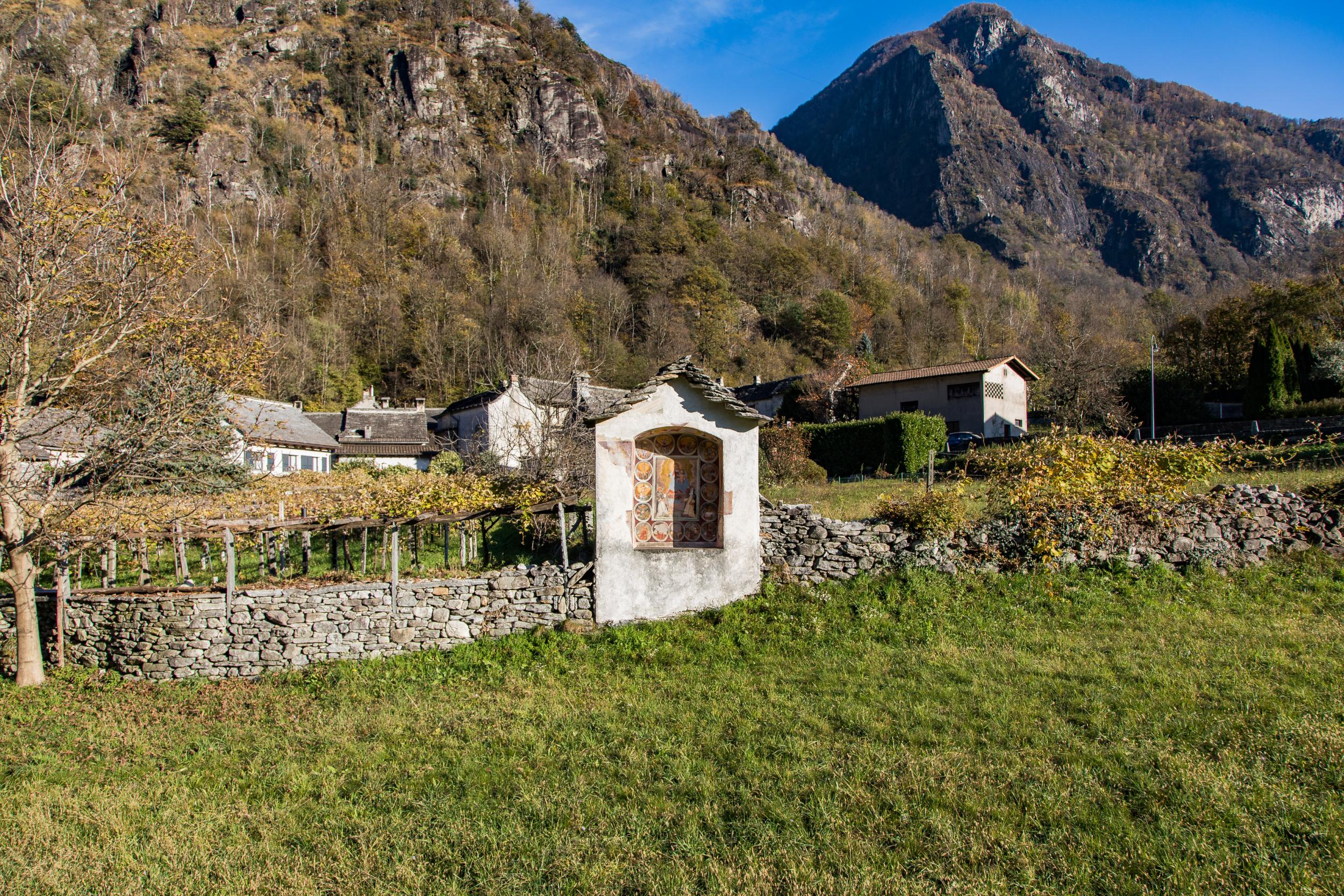
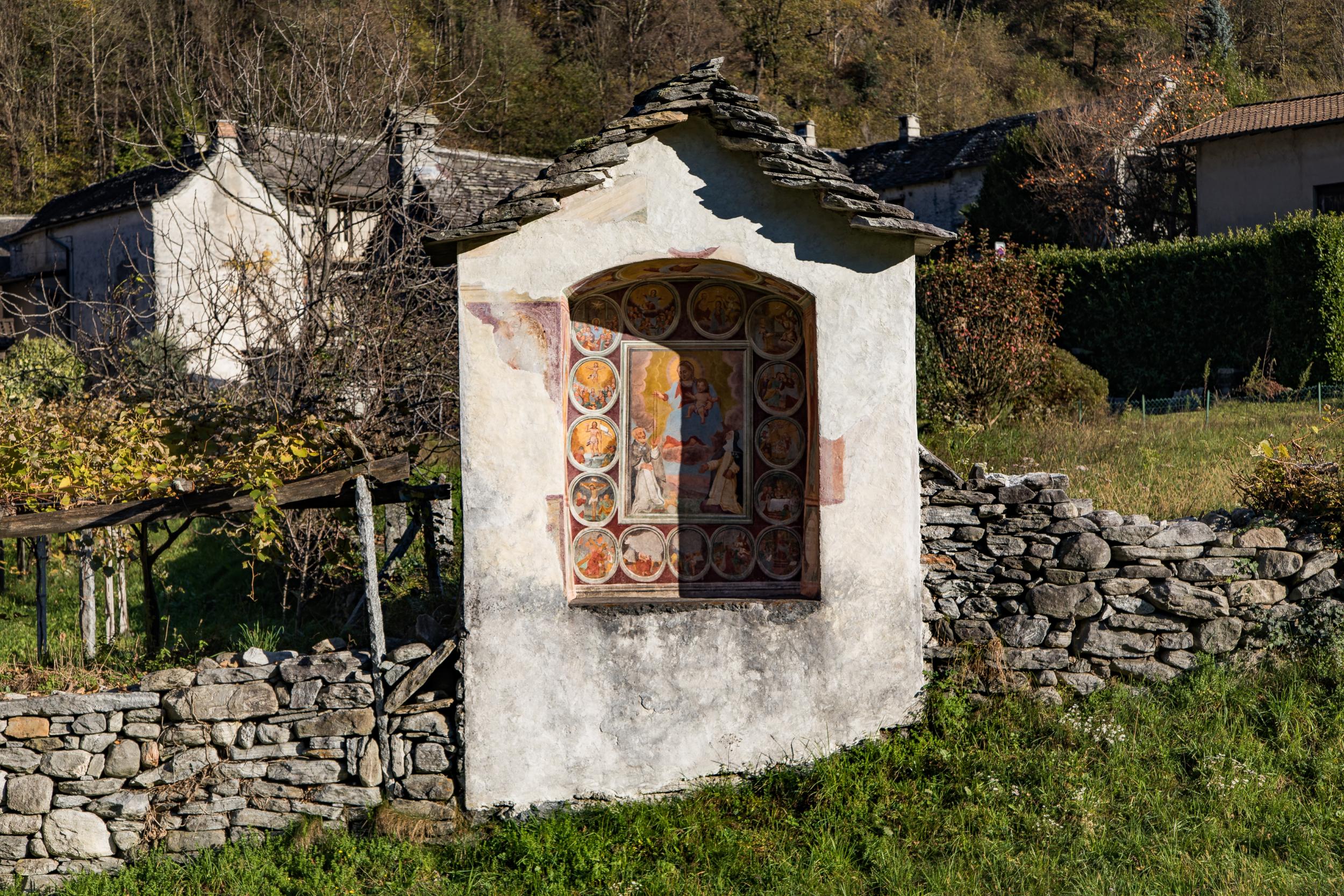
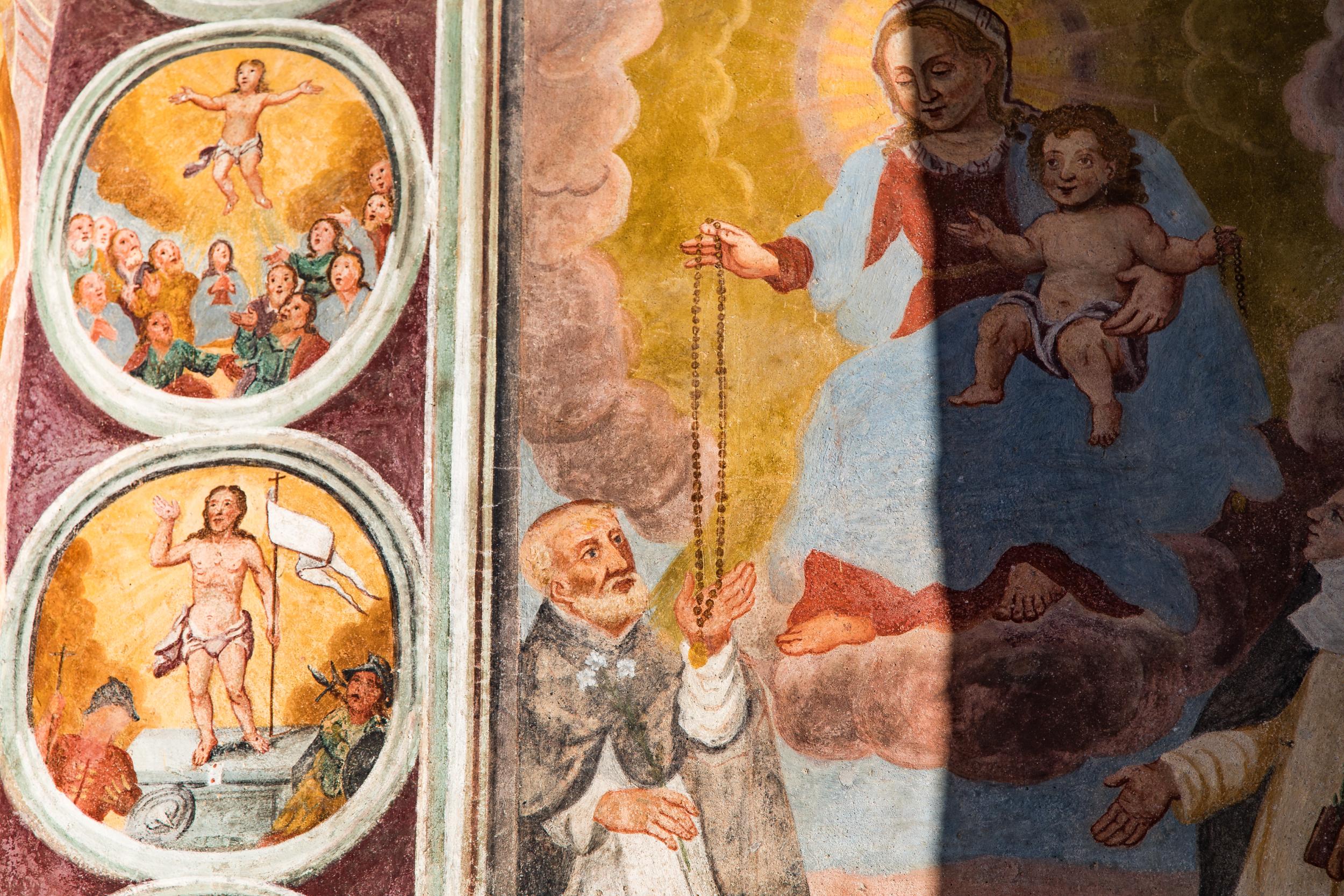
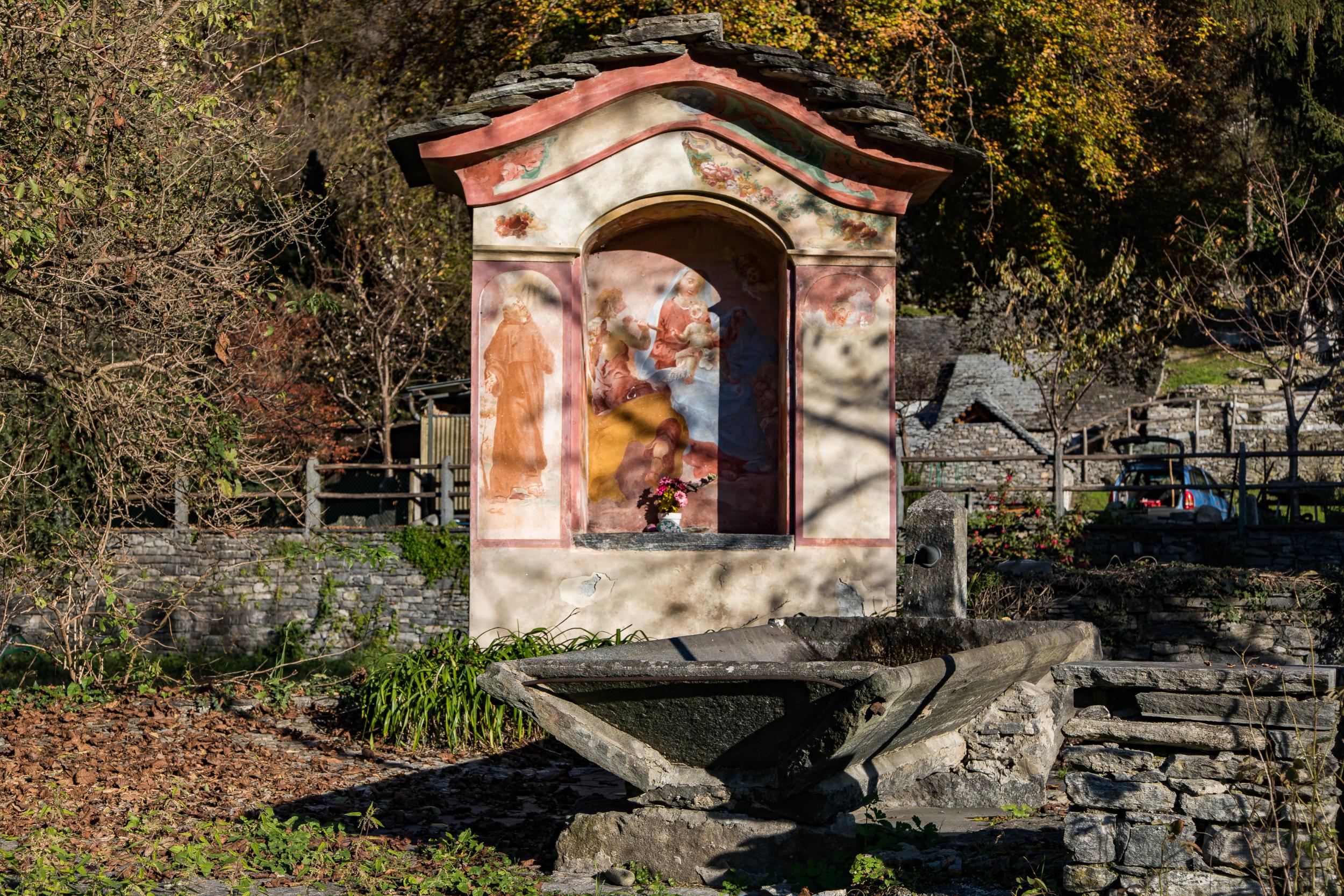
An 18th-century chapel dedicated to Our Lady of the Rosary, depicted in the niche alongside Saint Dominic and Saint Catherine of Siena. Surrounding the image are fifteen medallions representing the Mysteries of the Rosary. The inside of the niche is entirely painted, and there is a fresco also on the back, again of Our Lady of the Rosary. However, unfortunate repairs carried out in the mid-20th century largely obliterated the decorations on the frontispiece and the rest of the main façade.
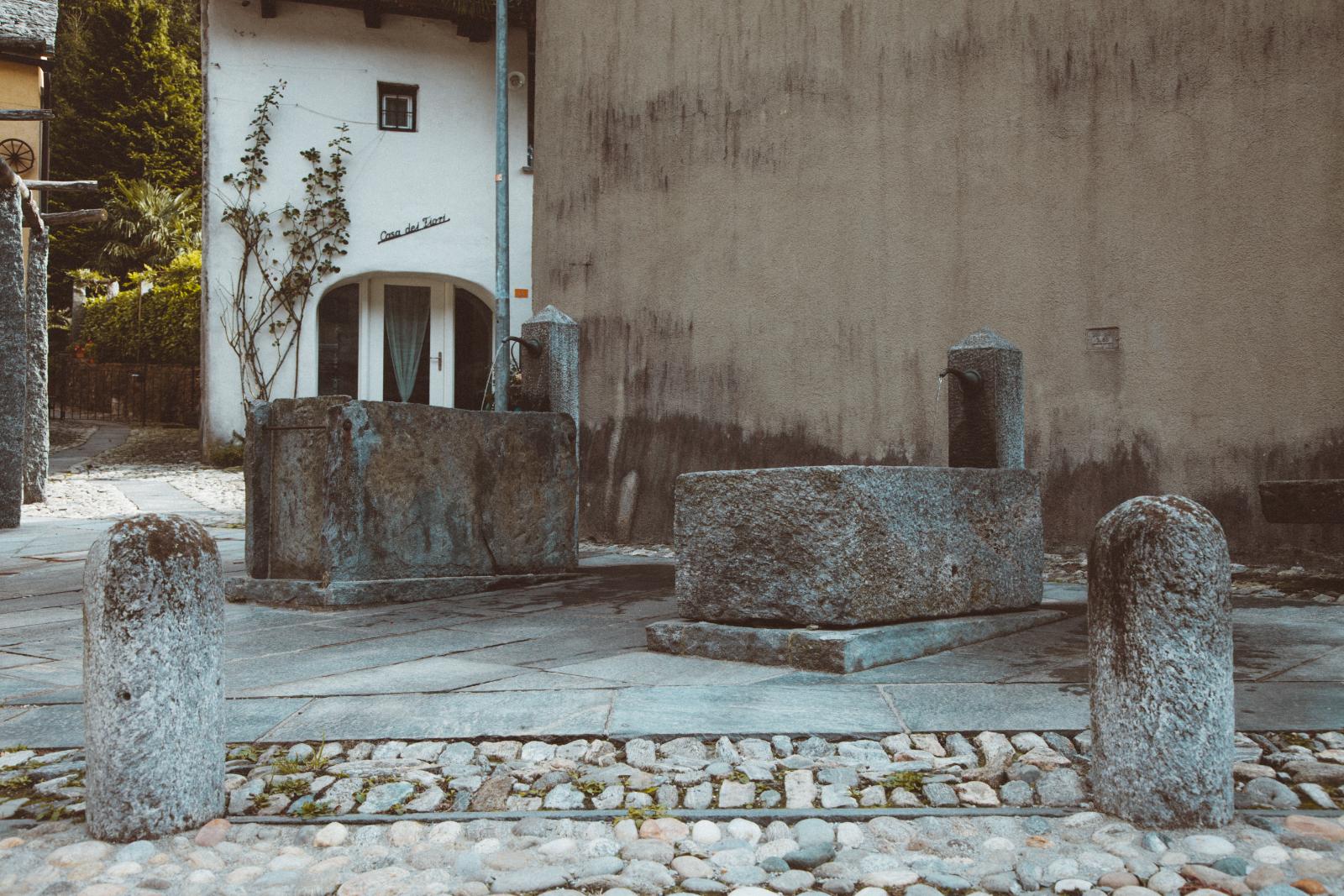
In the small square of Lüdínt, two fountains are placed side by side. The first one, monolithic, was primarily used as a drinking trough. The other consists of stone elements, joined together and sealed with lead, from a split basin that was once installed in a cellar for wine storage. Large containers like this are almost exclusive to Avegno, where they can be found in large numbers in the grotti.
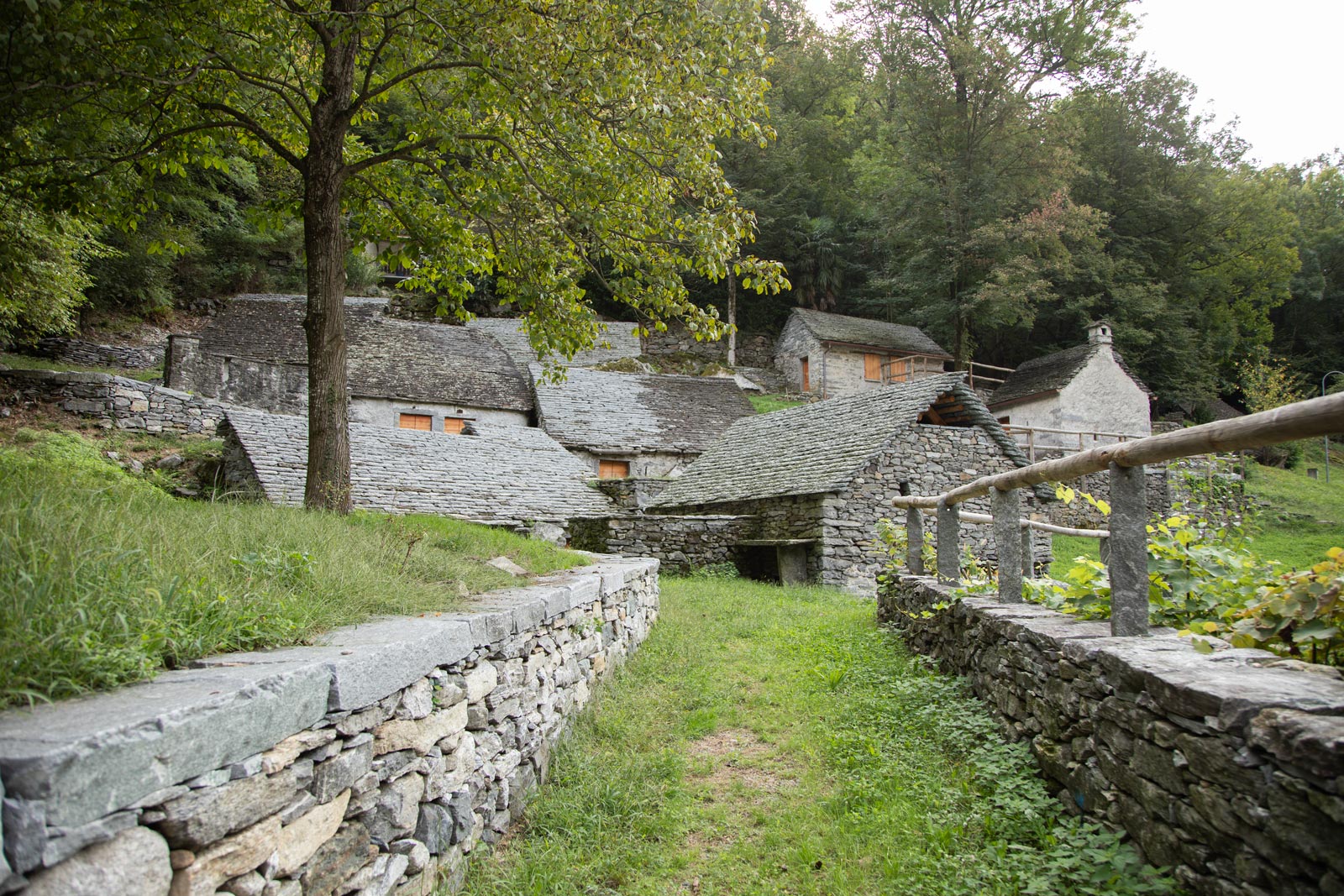
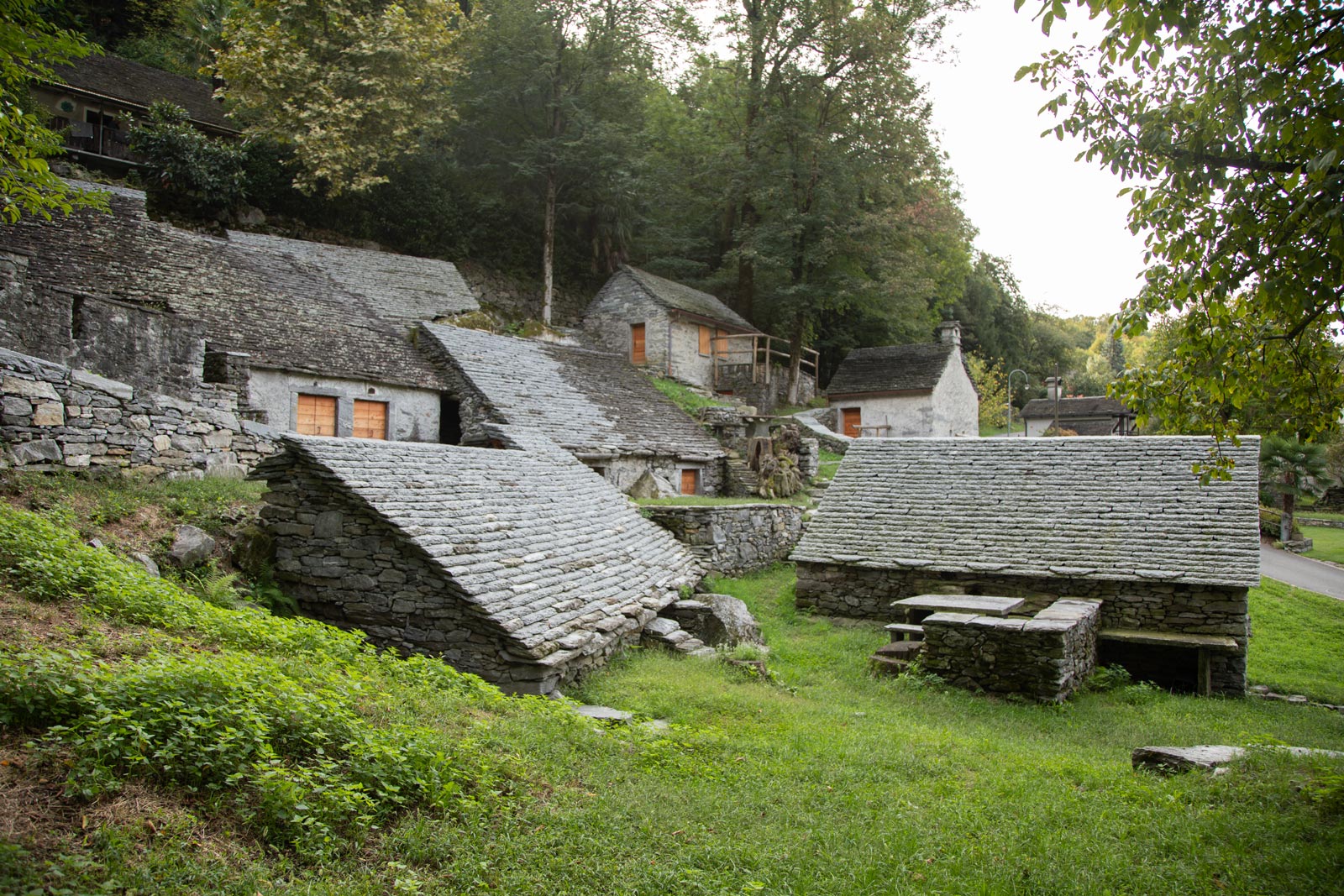
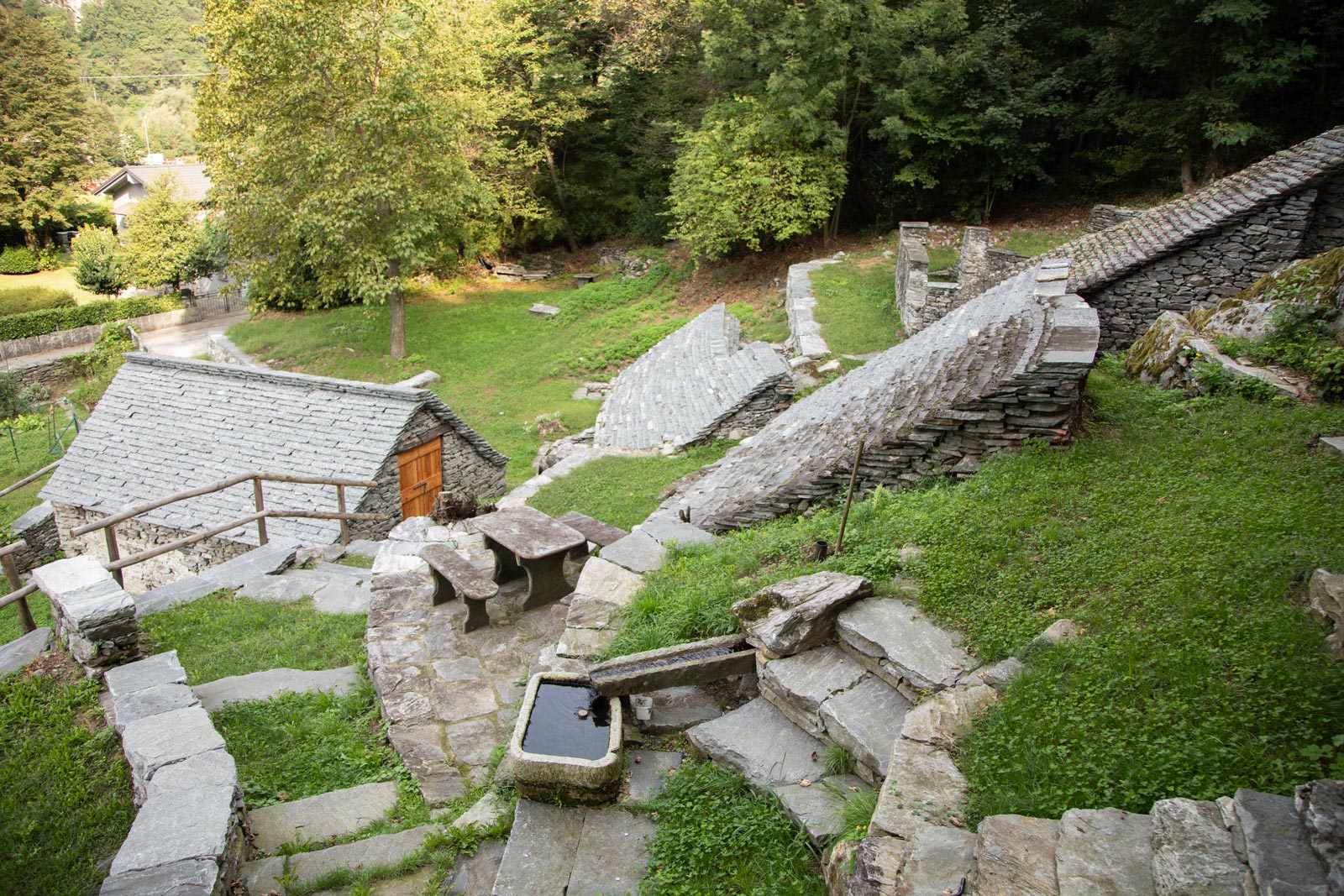
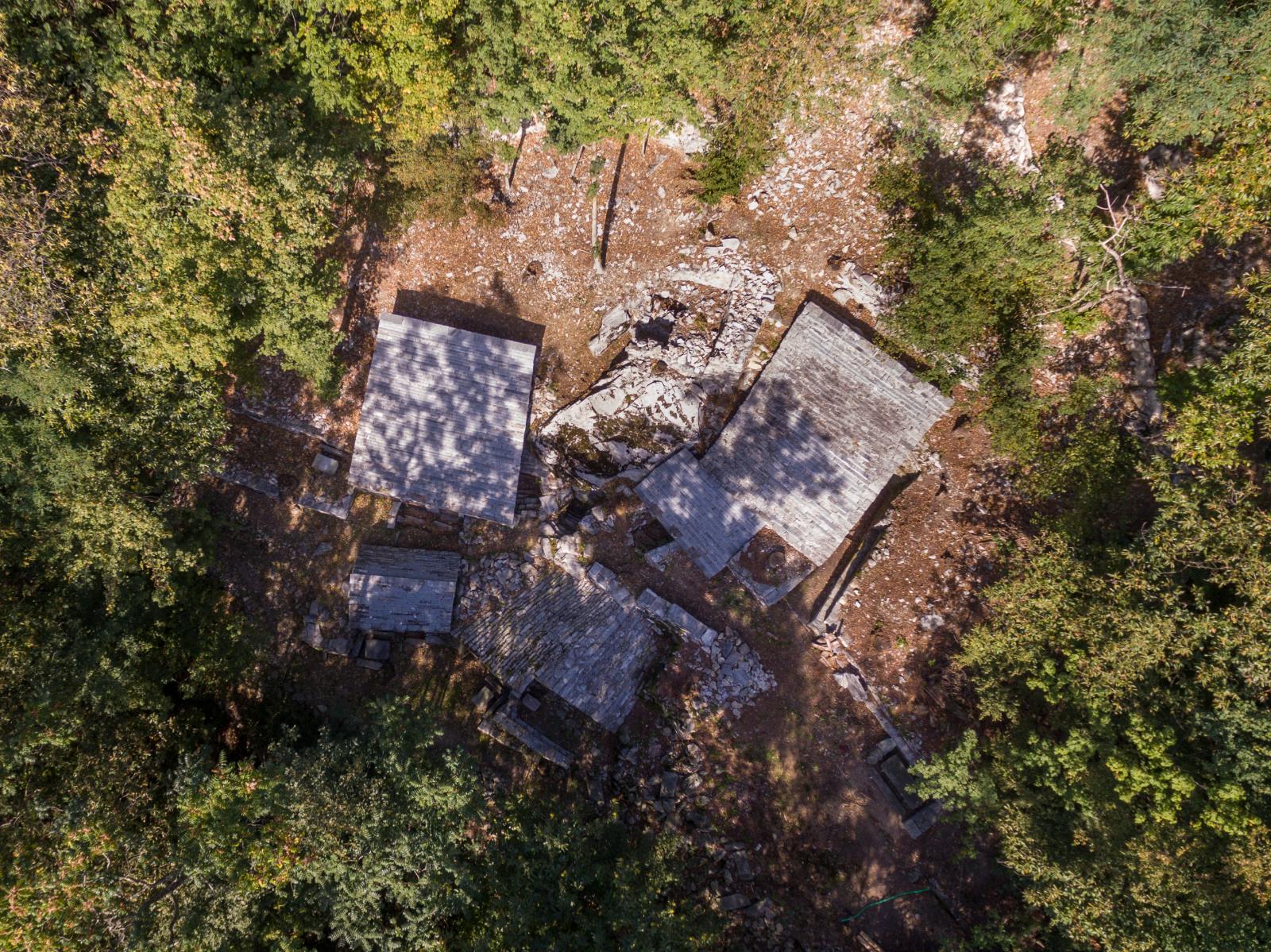
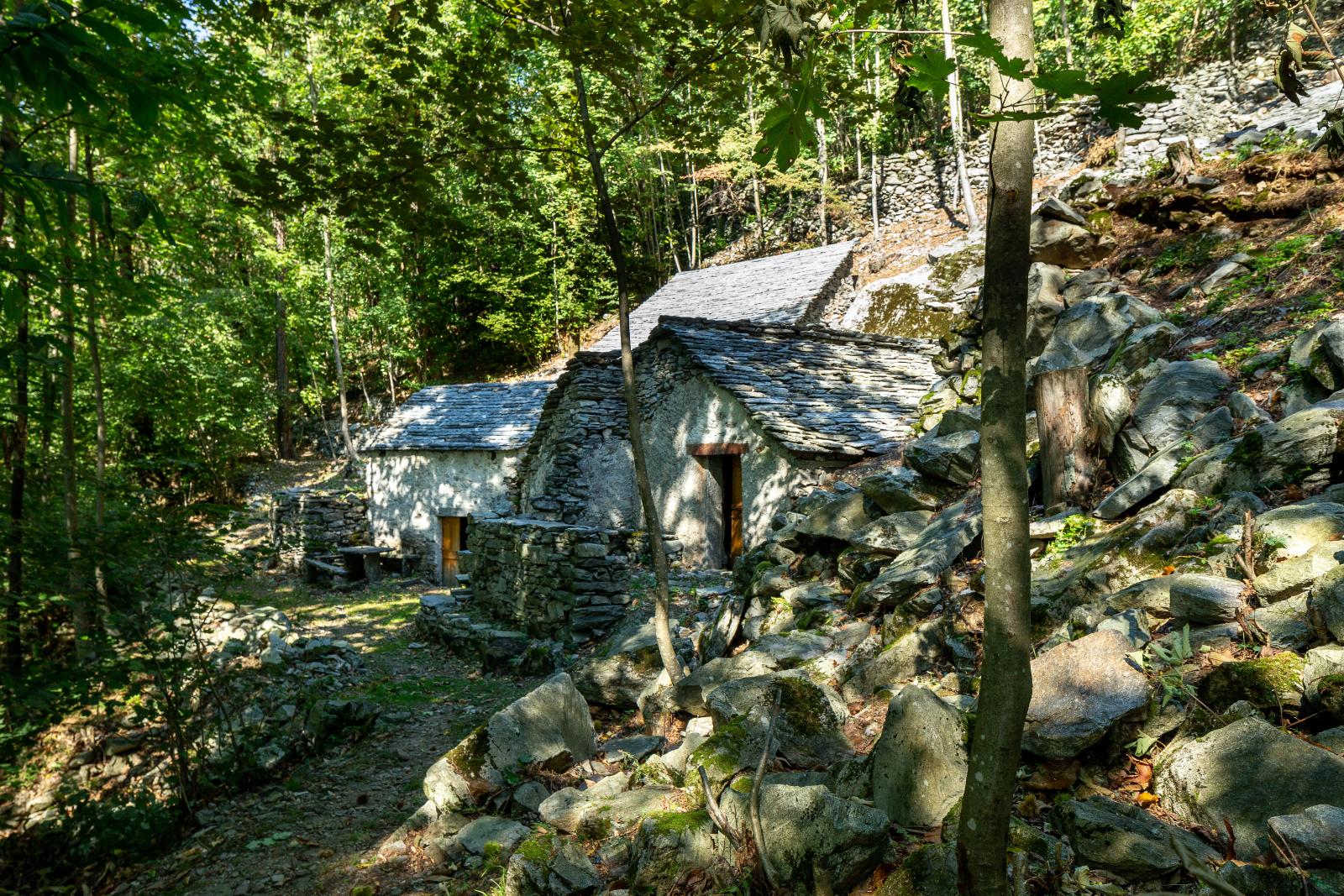
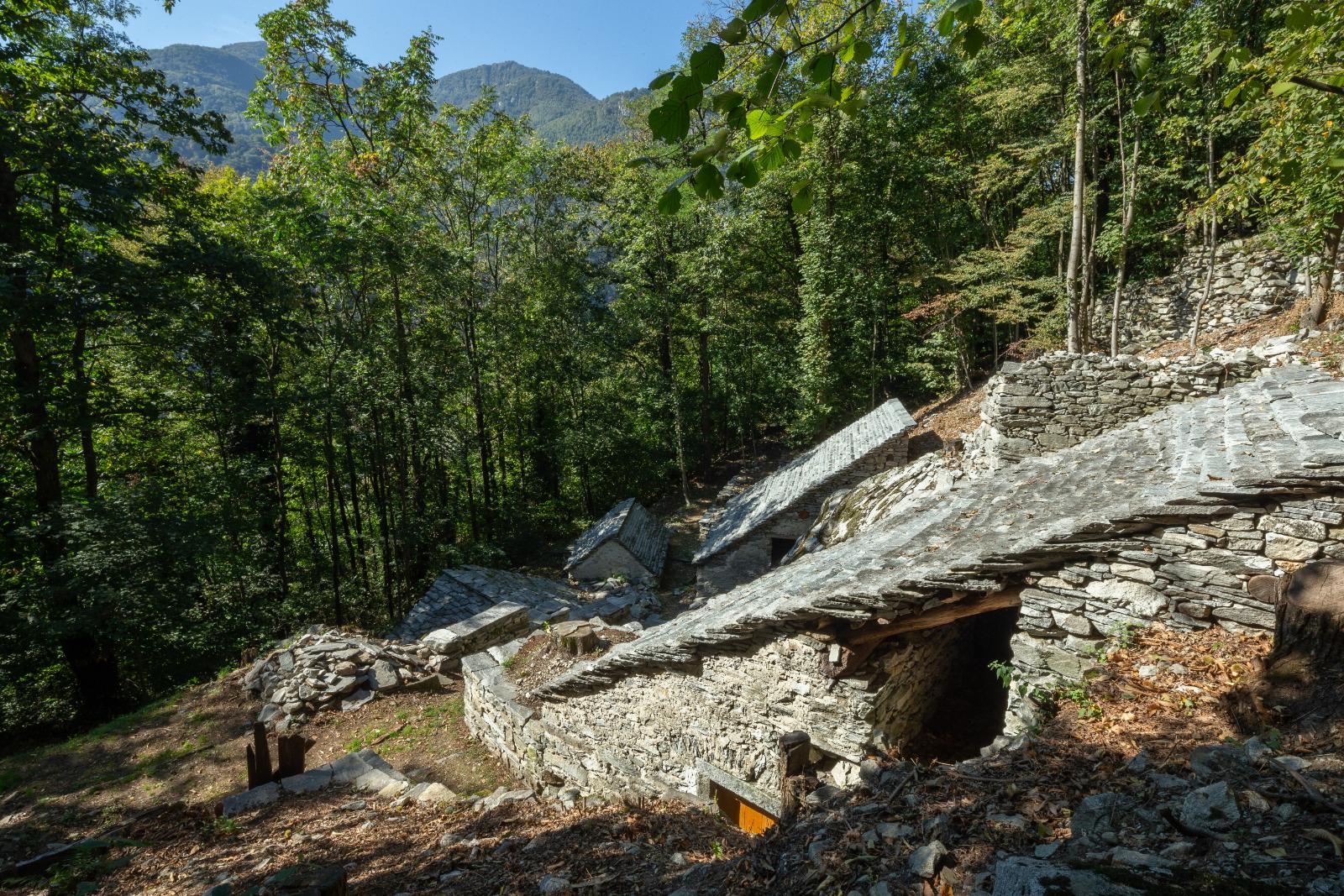
The group of grotti in Lüdínt, on the northern edge of Avegno, is very well preserved today, thanks to the efforts promoted by the Patriziato (patrician families) of Avegno as part of a landscape development project. It consists of a dozen structures tightly clustered together to form a very compact complex.
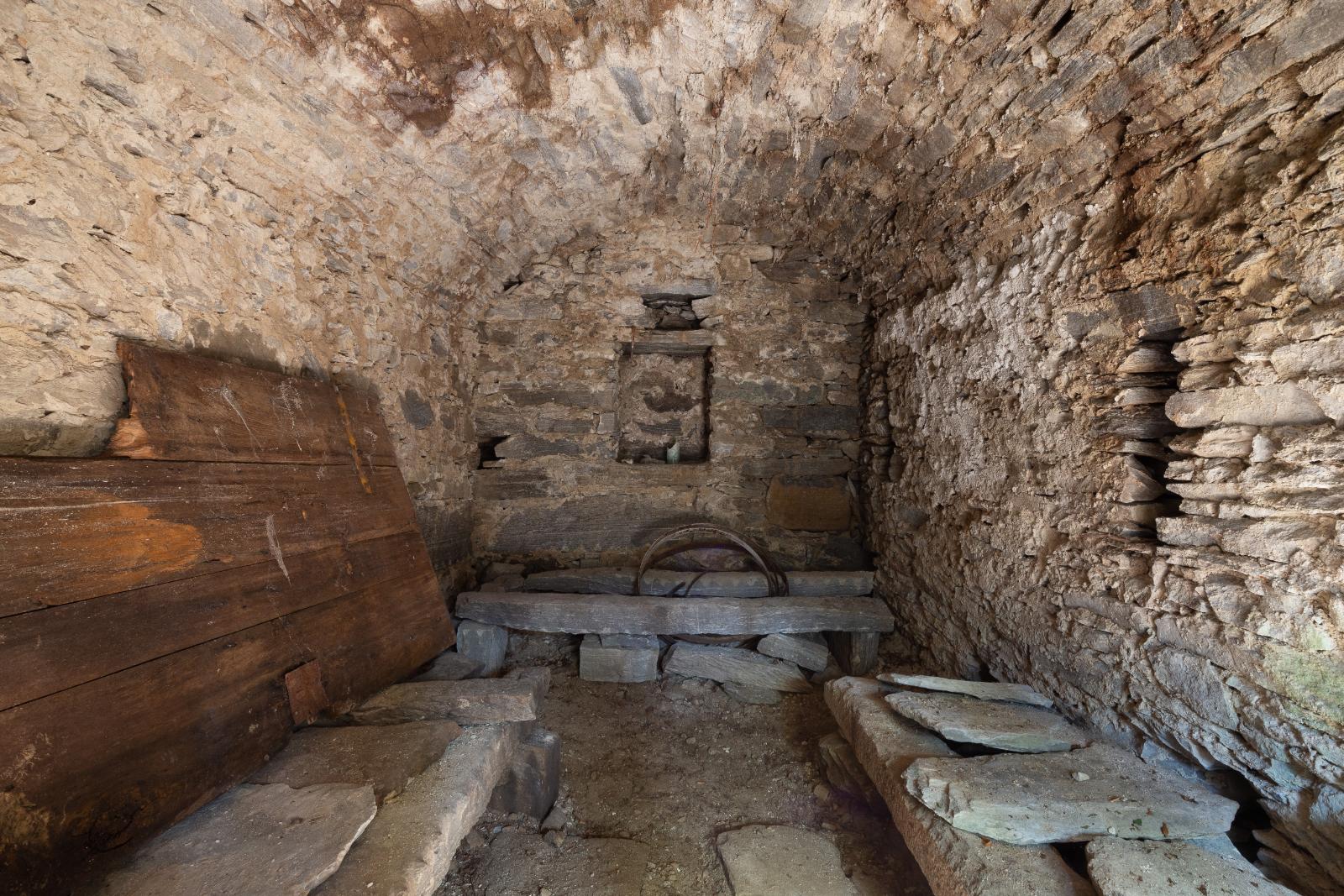
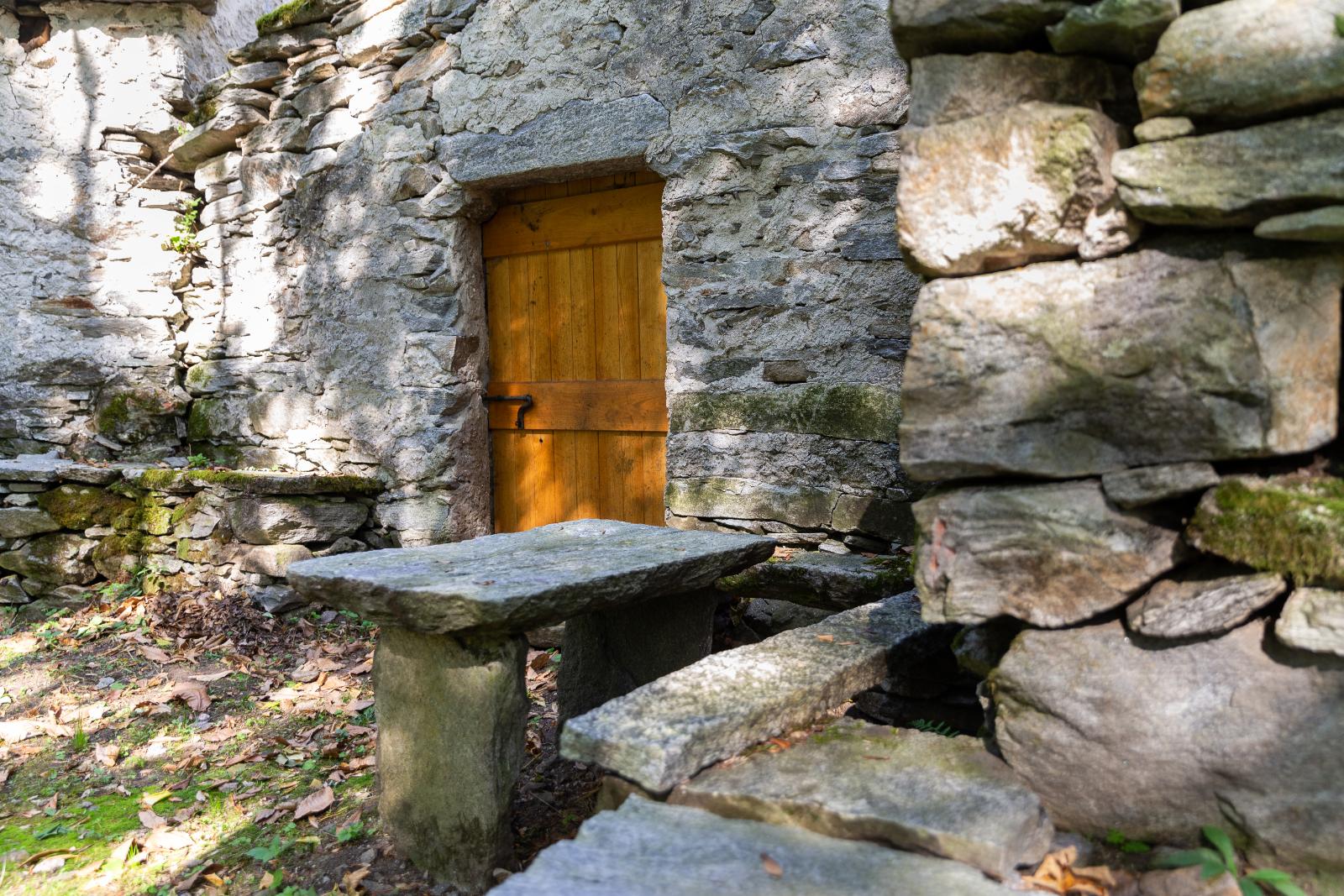
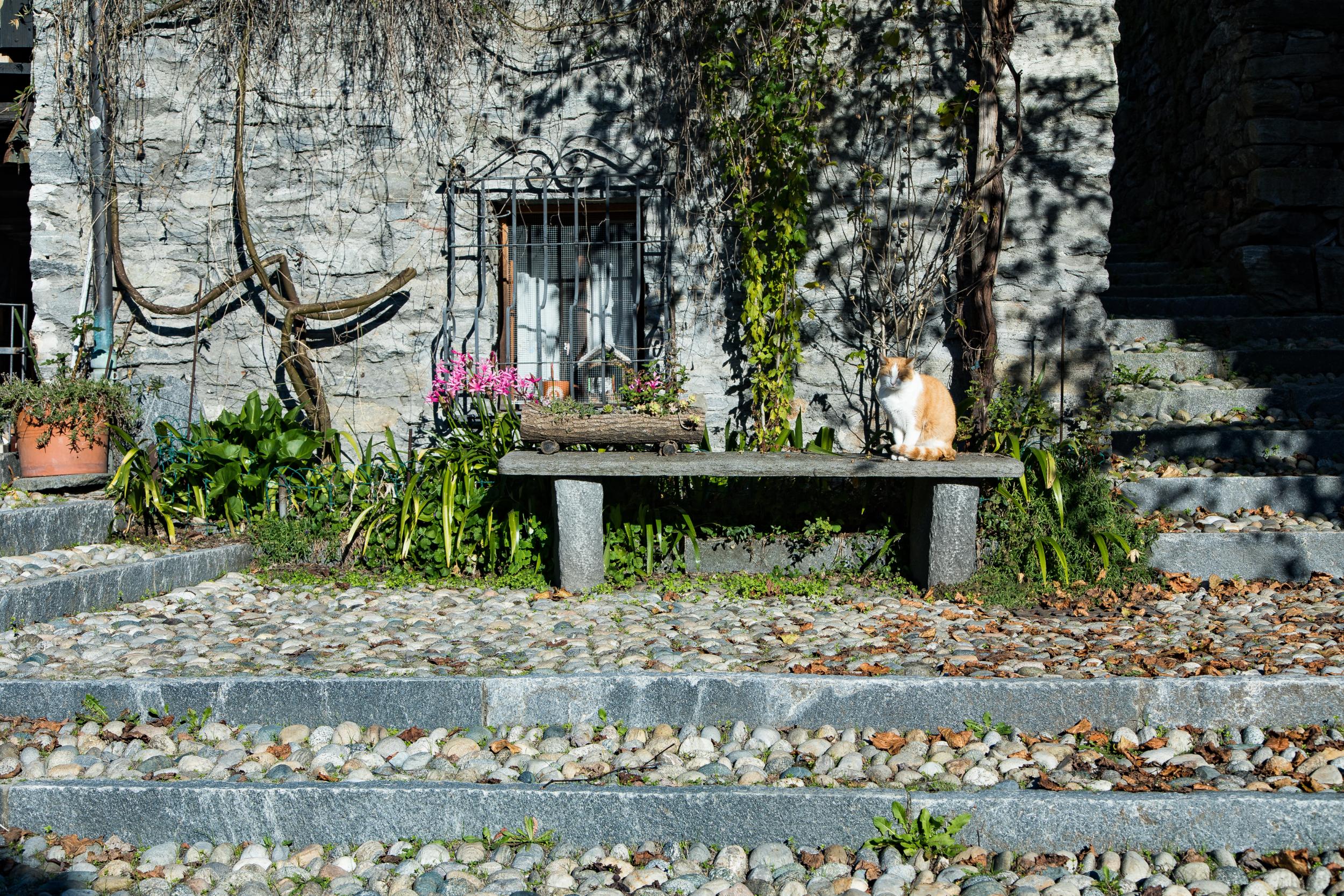
Most of the grotti emerge only slightly above the ground and have a single-pitched roof that follows the slope of the hillside. Their vertical development is primarily below ground level, where spaces entirely or partially carved into the rock and streams of cool air were used for the preservation of local wine, as evidenced by the numerous artefacts still preserved inside. The outdoor courtyards, with stone tables and benches, evoke a time when the area was bustling with life, with farmers indulging in a few moments of leisure in good company after working in the fields or with the livestock.
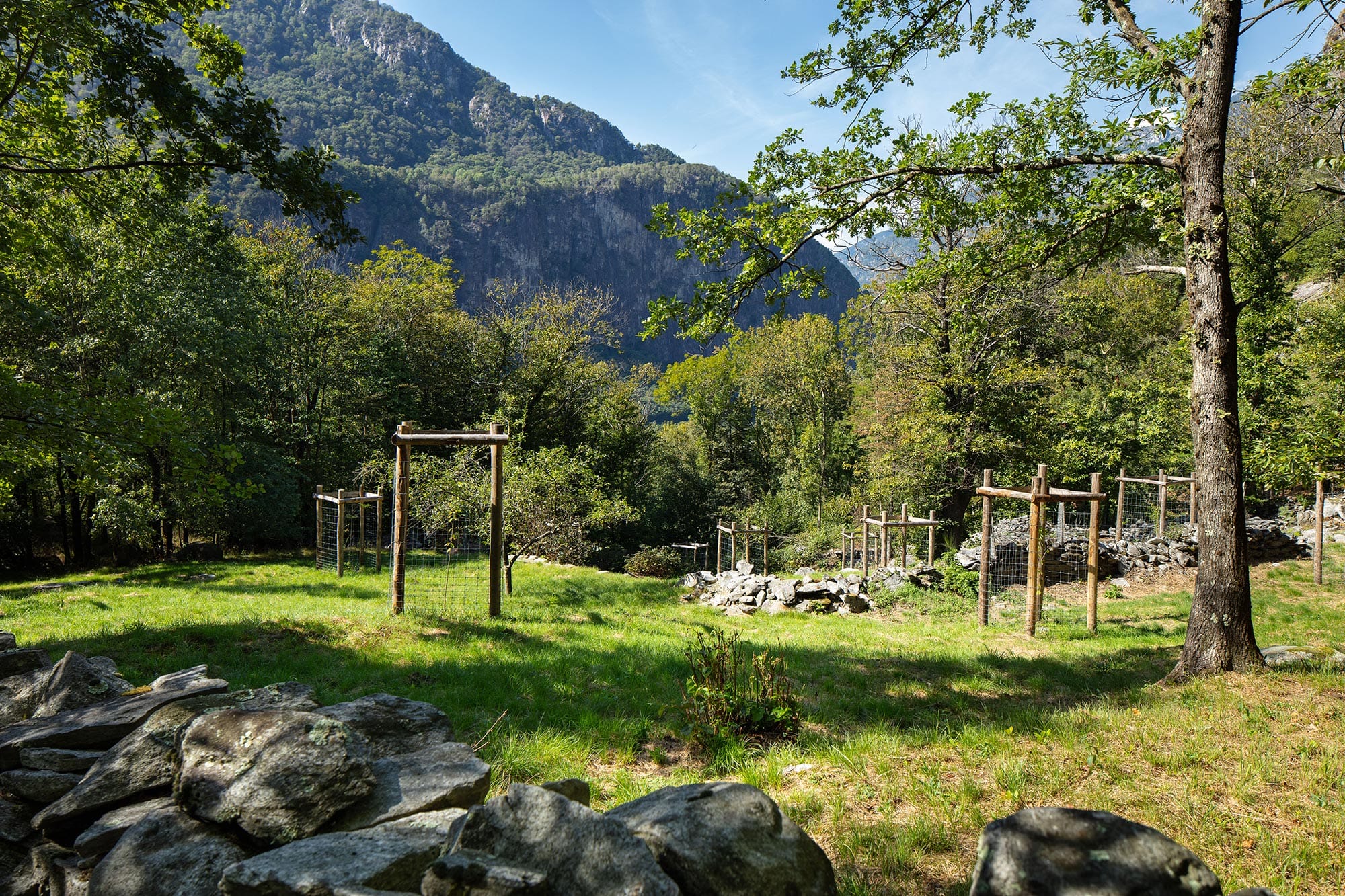
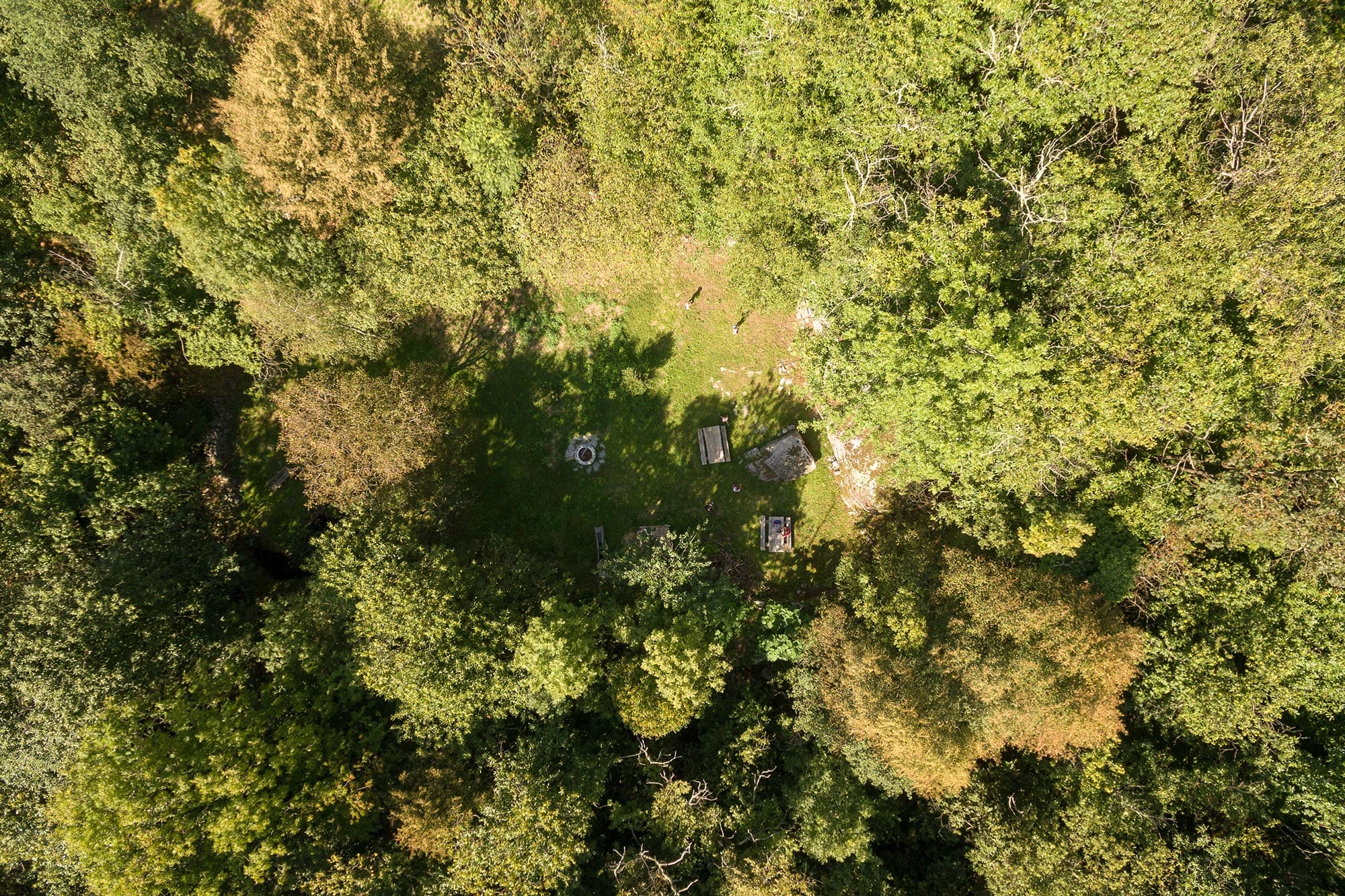
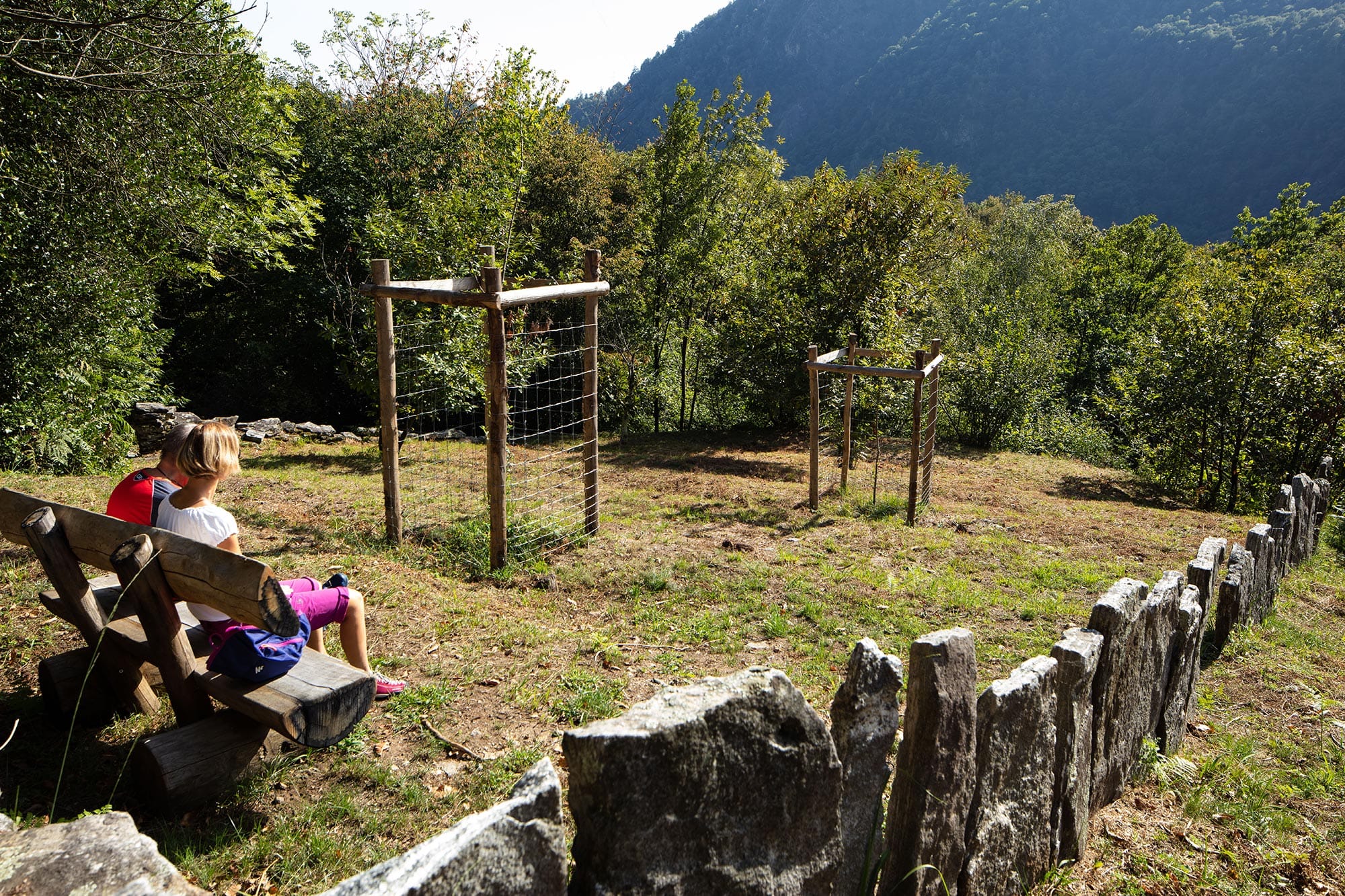
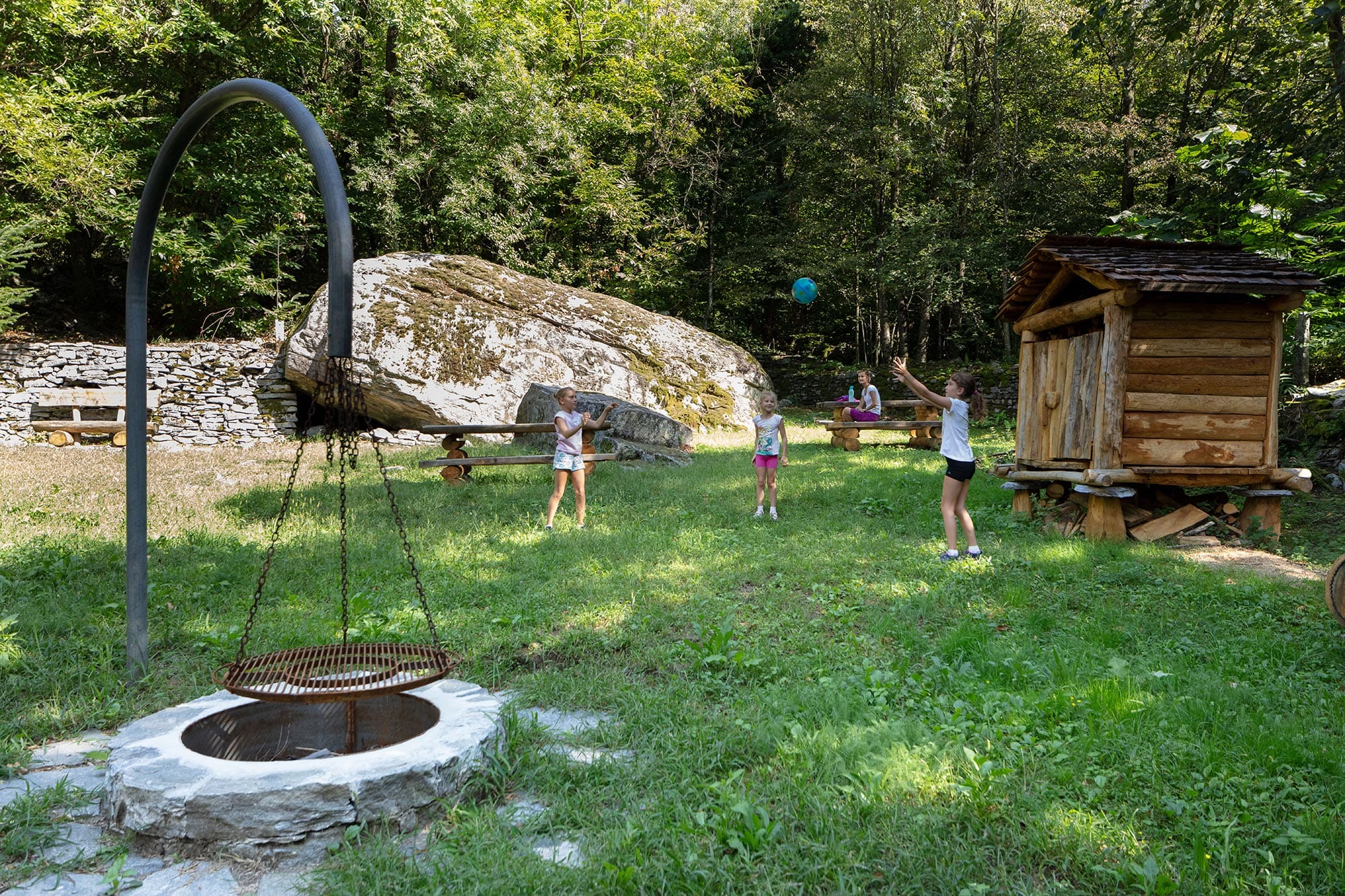
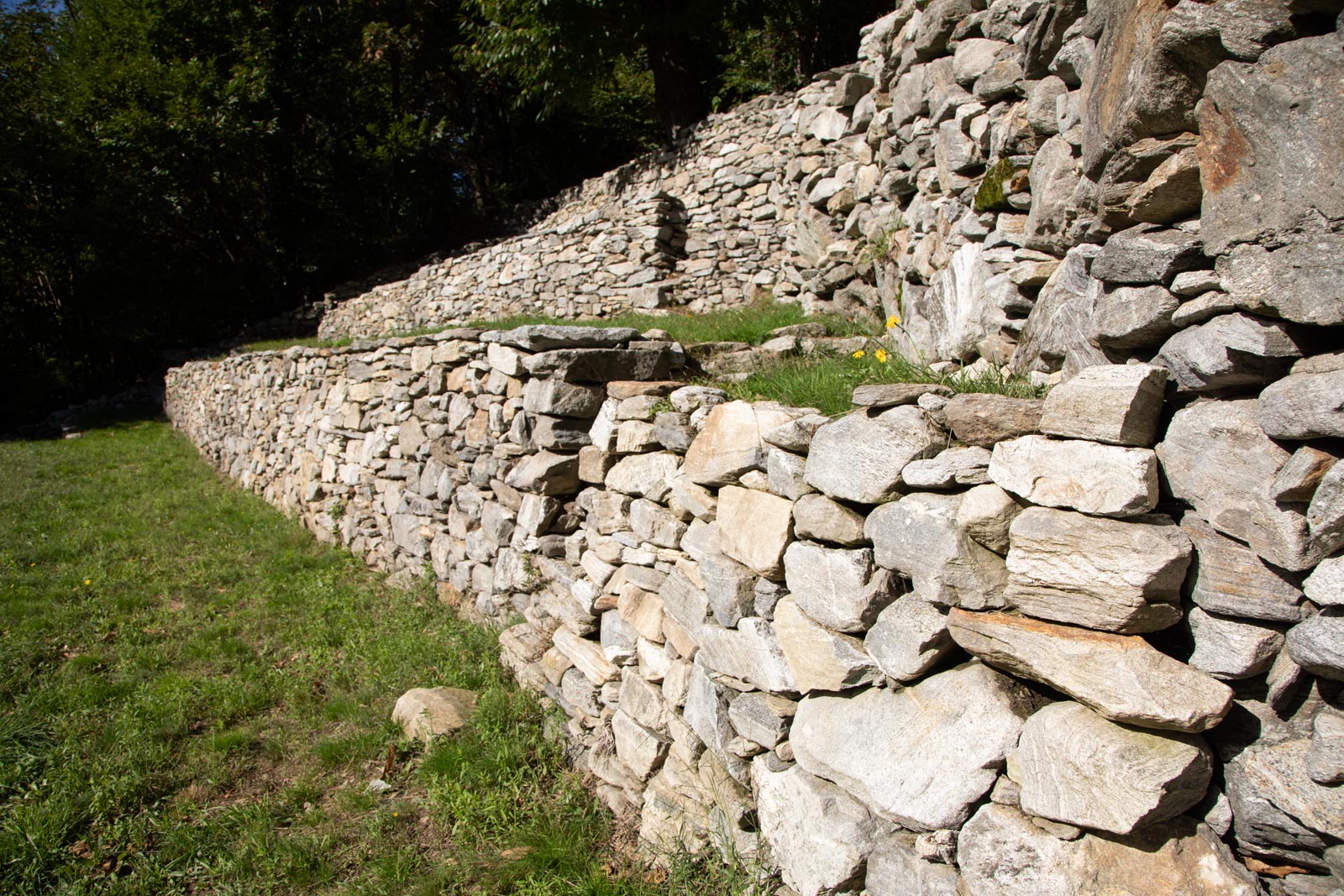
The Al Pianásc recreation area is located in an enchanting glade surrounded by an evocative chestnut grove. The traditional agricultural activities are still widely evidenced by numerous natural stone walls. Once an indispensable means of managing grazing livestock, these walls have now become a prominent feature of the cultural landscape, providing valuable shelter for wildlife: rock lizards, green lizards, snakes, field mice, hedgehogs, birds, snails, and other invertebrates. The Al Pianásc site pays tribute to the traditional rural landscape and is the result of an impressive landscape recovery and development project. The mosaic of meadows, tall fruit trees, vineyards, sparse woods and shrubbery offers a precious habitat to many different species, especially animals. In the wooded expanse around Avegno, for instance, there are at least 9 reported species of bats and 52 species of birds, including the black shrike, the warbler and the lesser spotted woodpecker. Both the municipality and the Patriziato are working hard to preserve the traditional agricultural landscape, which is crucial for maintaining biodiversity.
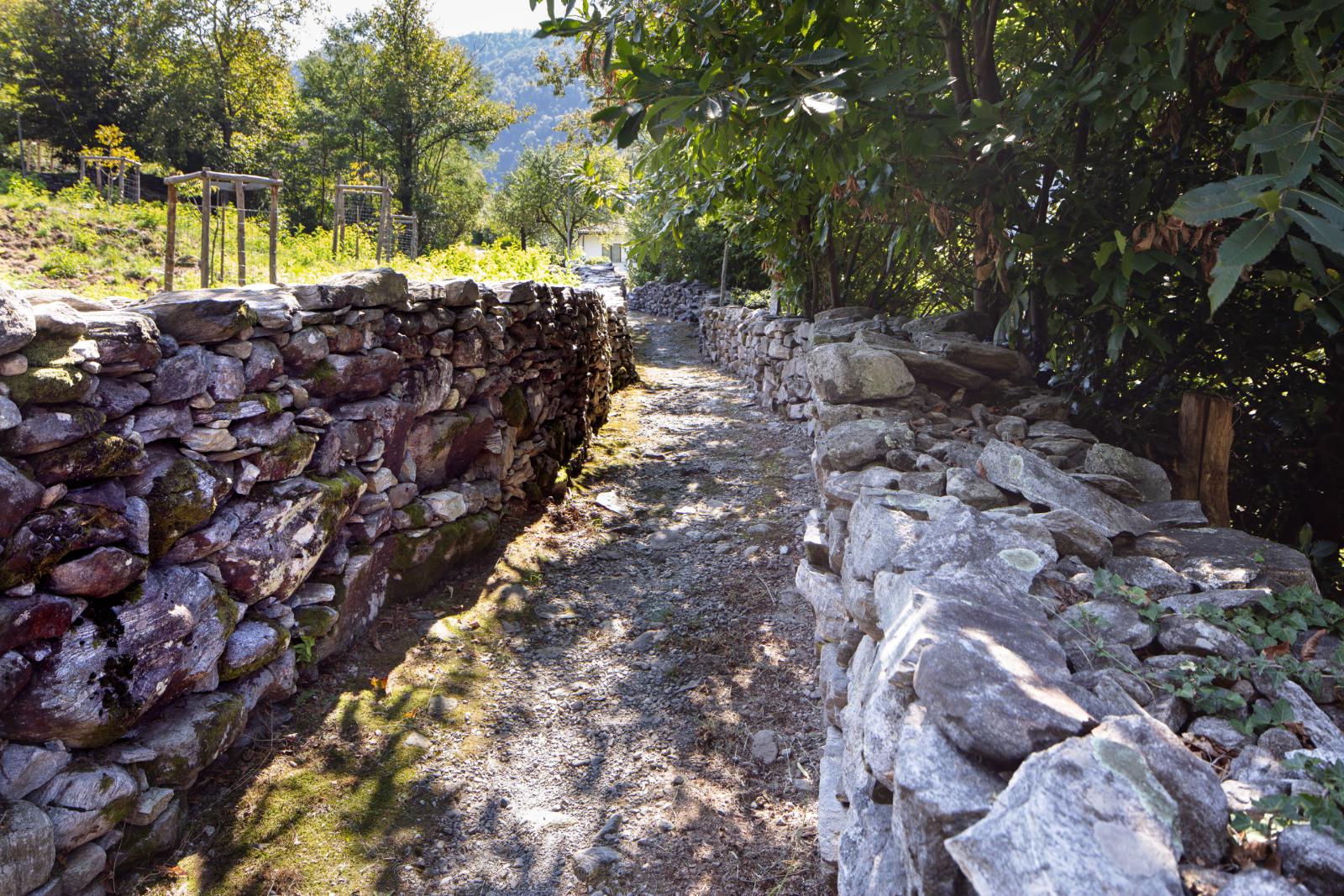
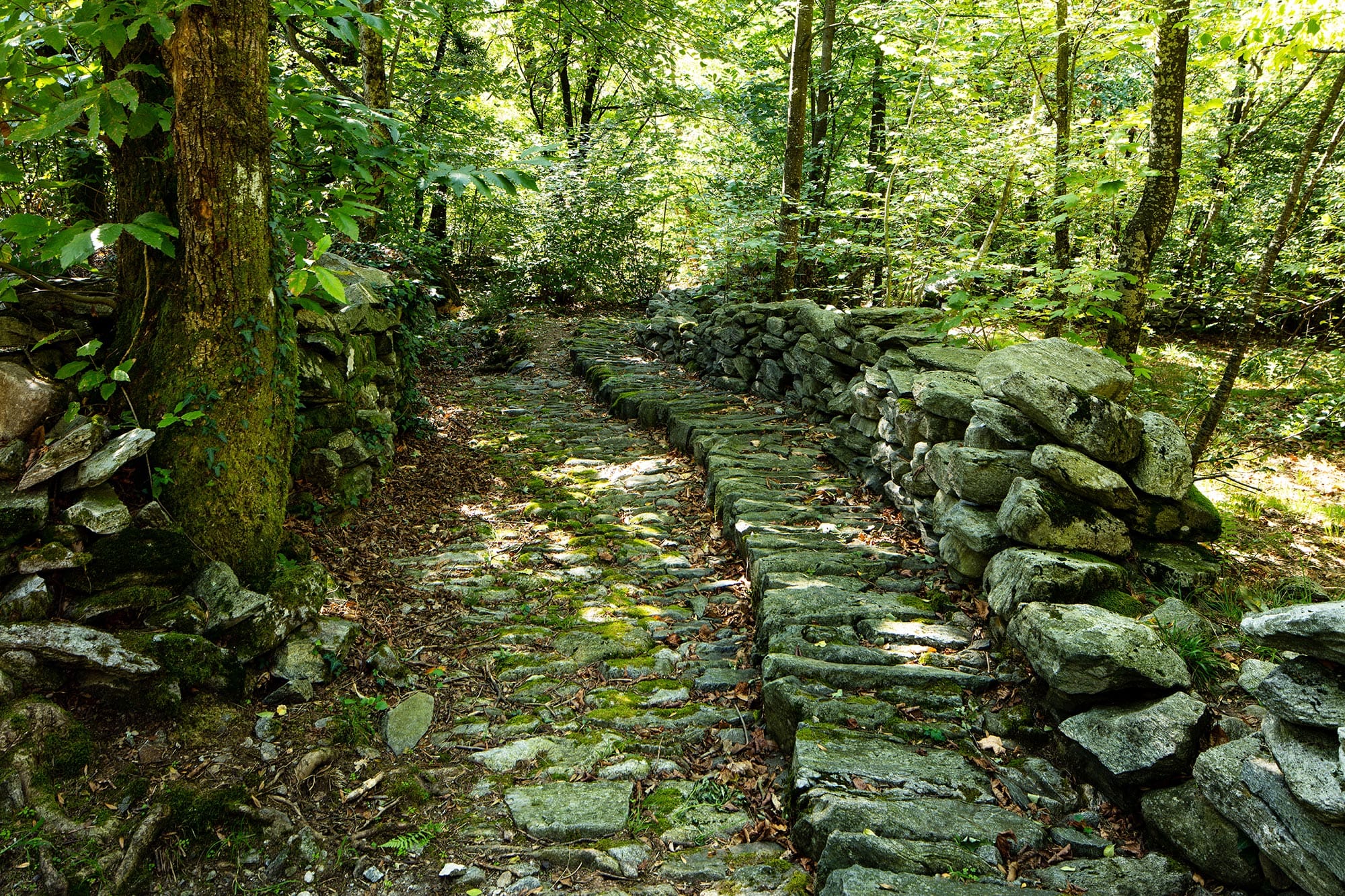
The so-called “Roman” trail is the footpath that in the past connected the three historical hamlets of Avegno – Vinzótt, La Gésgia, and Lüdínt. This name was often given to artefacts that were considered particularly ancient, even without any specific reference to the Roman civilisation, which was nonetheless present in the lower Maggia Valley. This mule trail, which winds its way through picturesque views of the village and past numerous well-preserved remains of rural and pre-industrial civilisation, is enclosed by dry-stone walls, which also mark out the boundaries of the surrounding land and were used to prevent livestock from straying into the cultivated areas.
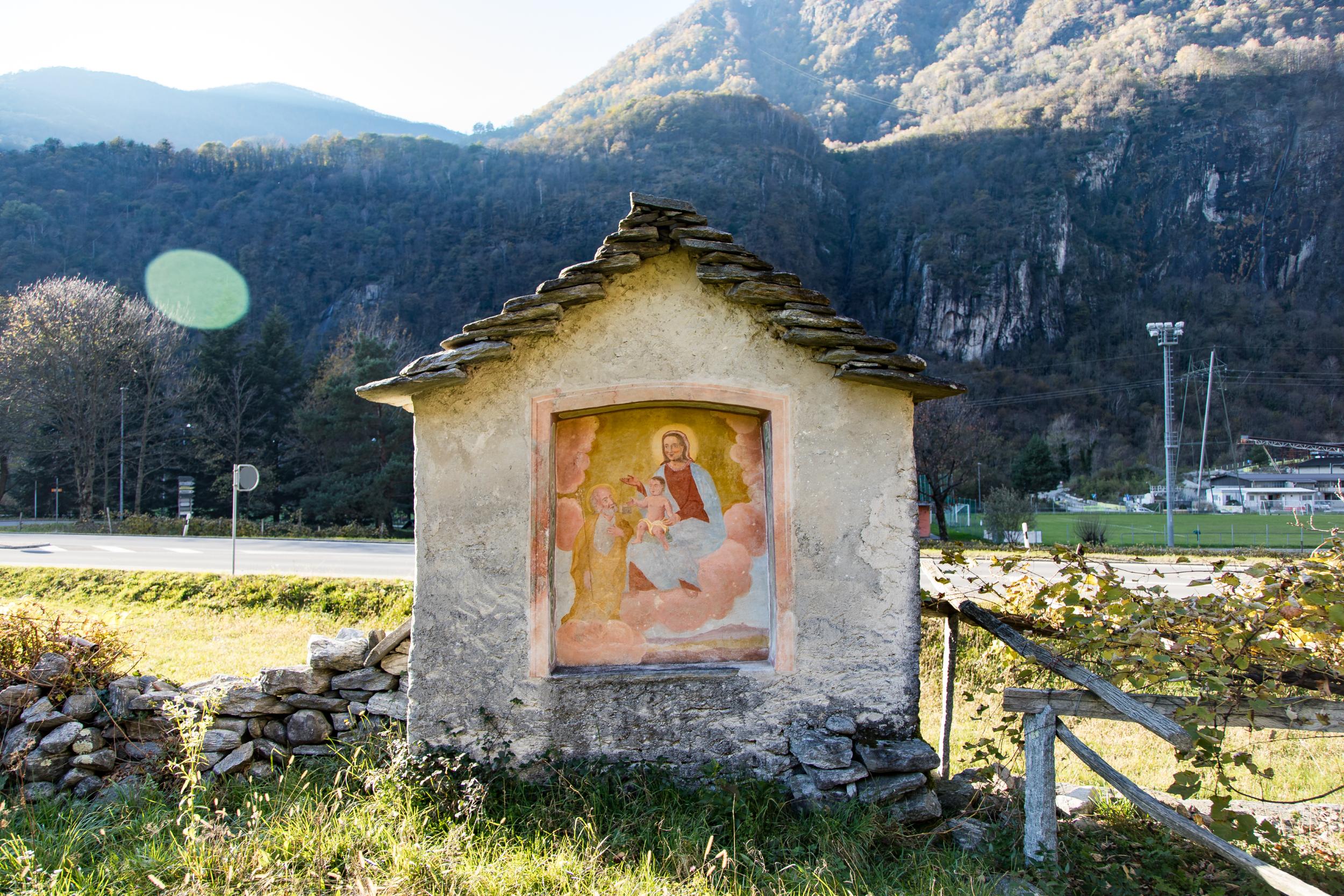
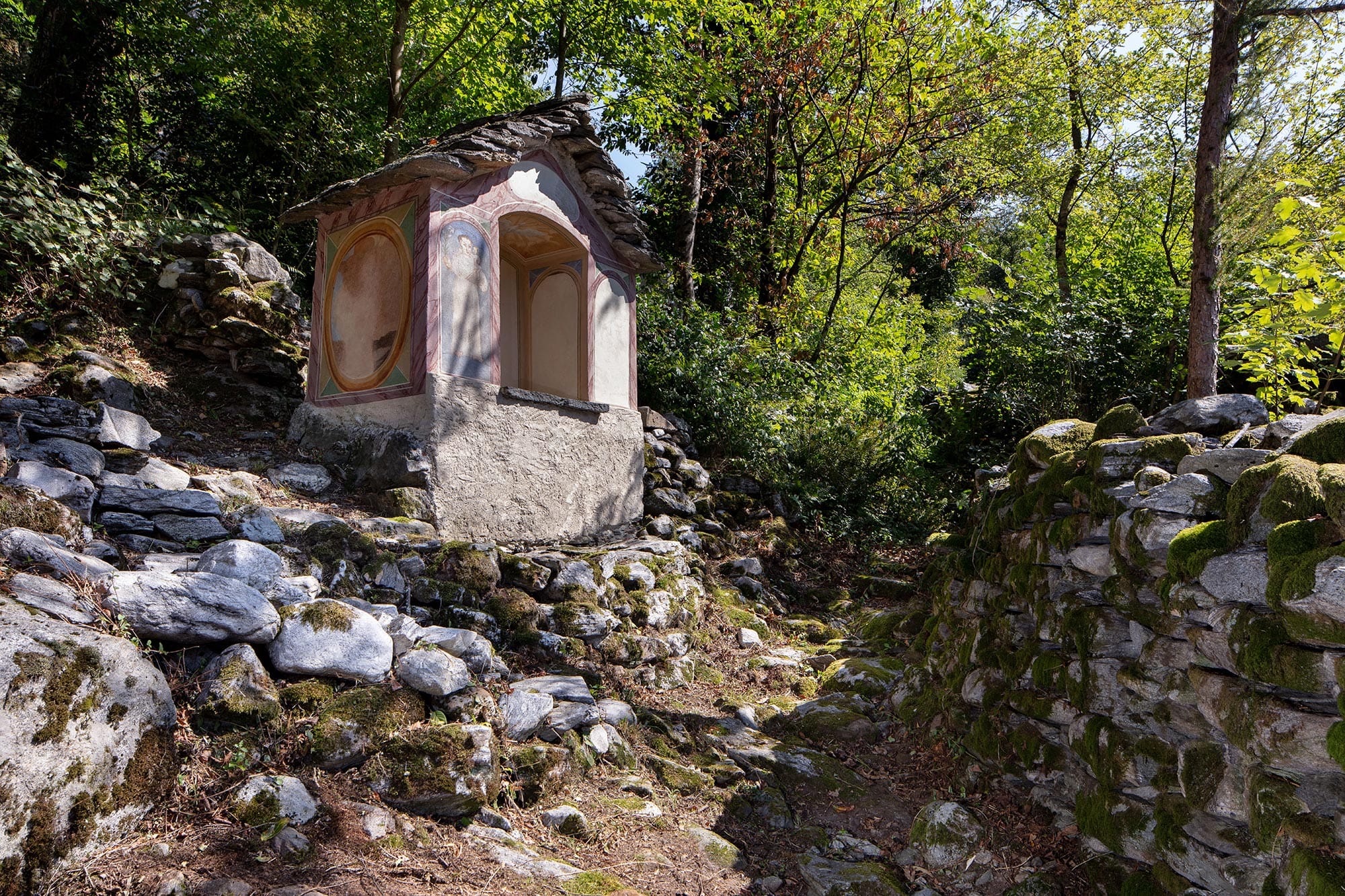
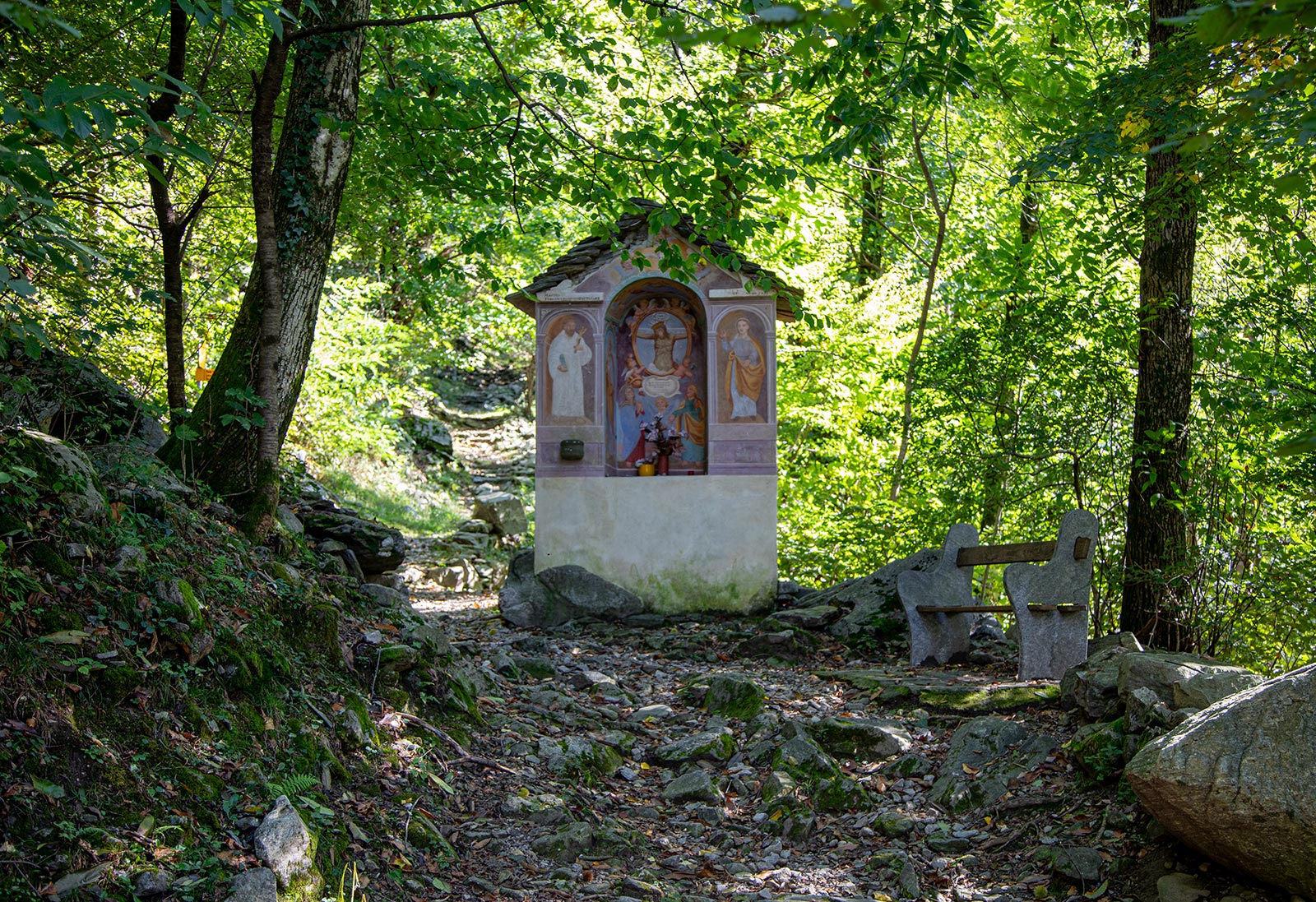
The Capèla di Ronc'itt stands along what is now the drainage canal of a small stream, but formerly marked the beginning of the ancient cará (stone path) leading to the Mónt dint area. It was restored as part of a local redevelopment project in 2020, following an earlier restoration effort carried out between 1950 and 1955. Some of the original paintings have been partially preserved. They were painted by an anonymous artist who worked in the Maggia Valley, as well as in Minusio and Mergoscia, during the second half of the 18th century: in the niche, the Madonna with Child is depicted in the centre, with Saint Joseph to the left. On the front, Saint Anthony of Padua is identifiable, though the inscription, which was presumably located on the cartouche of the frontispiece, has disappeared.
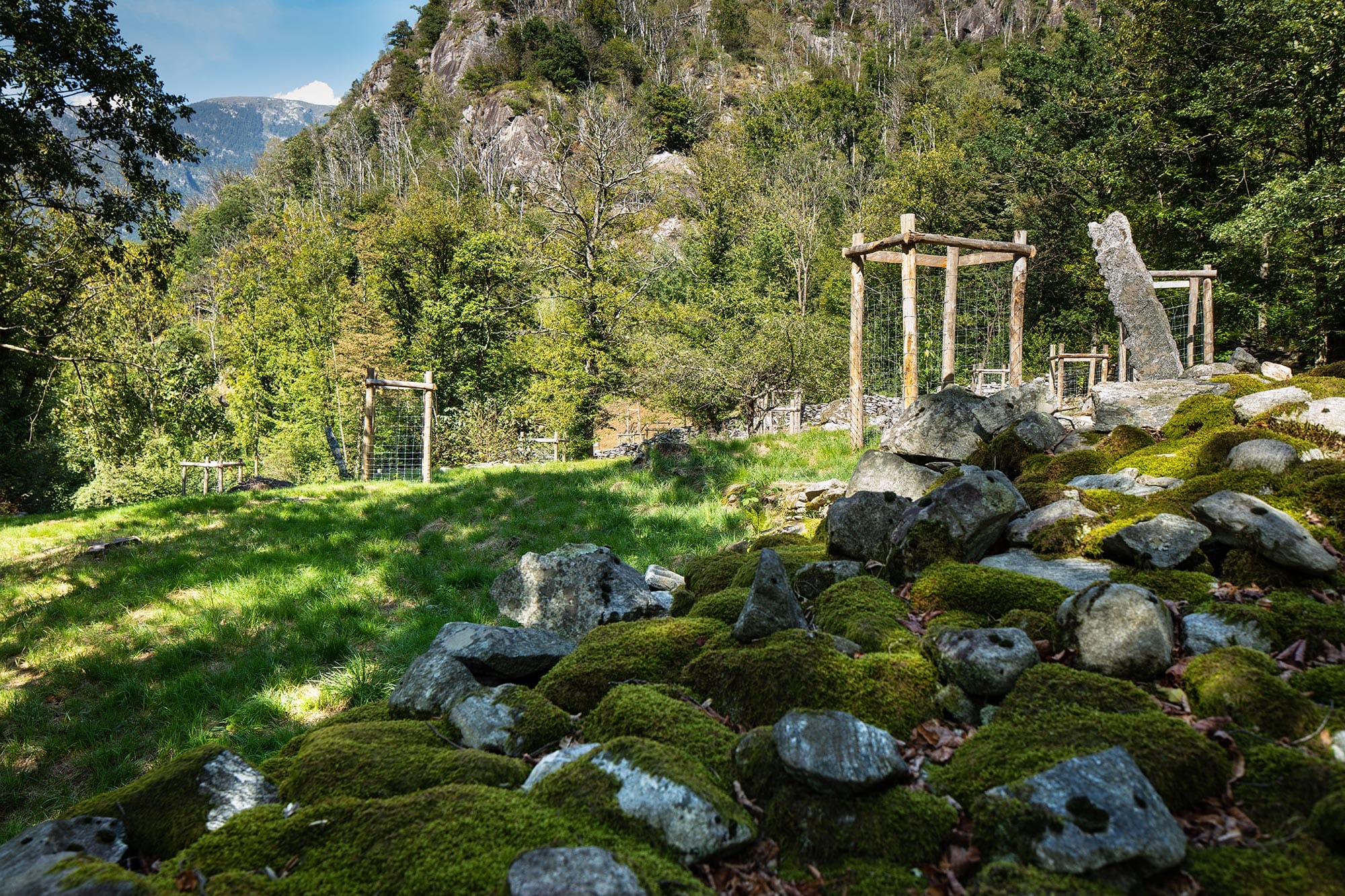
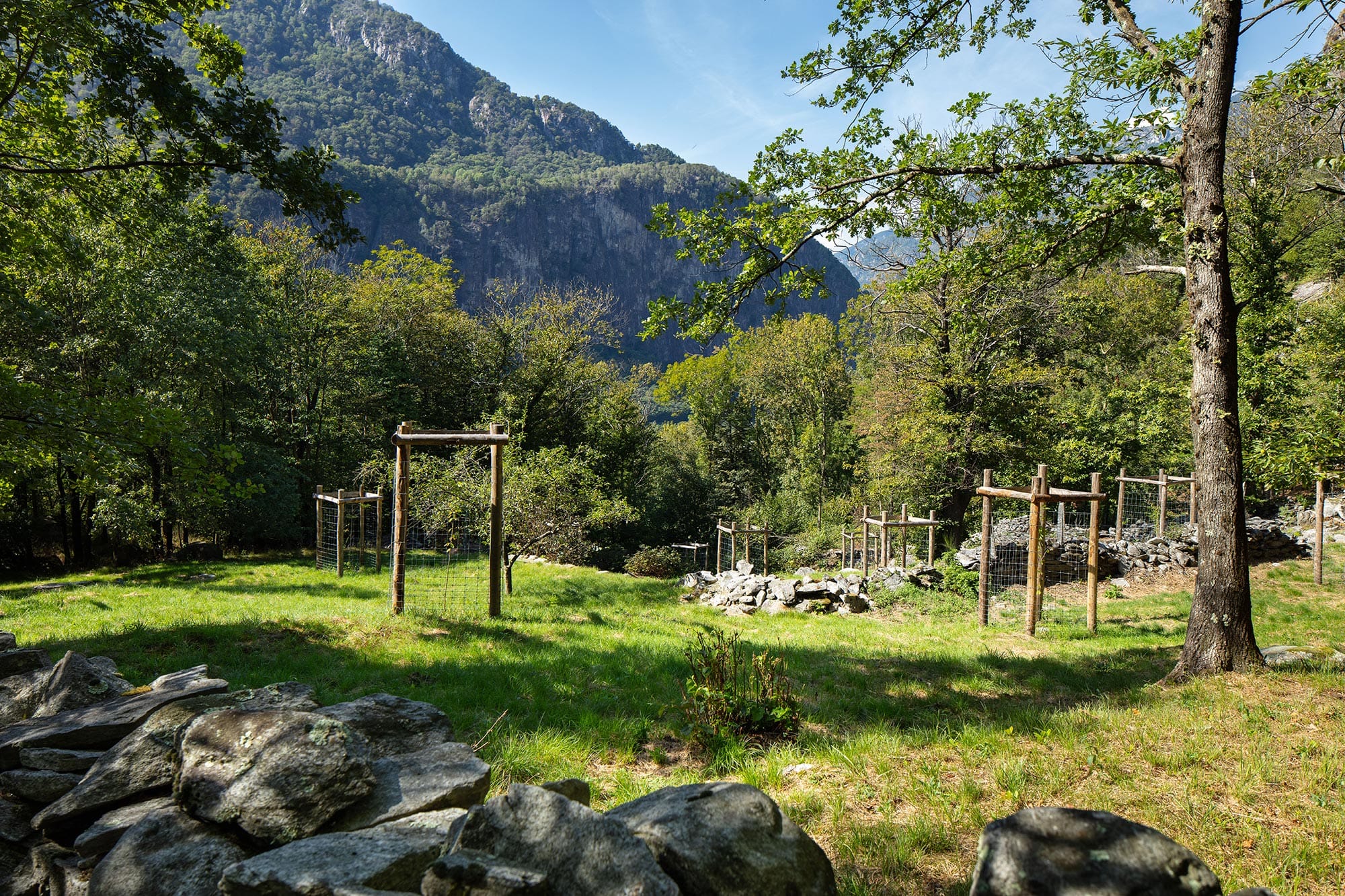
As part of the local redevelopment project, alongside the restoration of agricultural land and the conservation of numerous rural heritage structures, new orchards have been planted using hard-to-find varieties of indigenous plants, among which walnut, apple, pear, cherry, purple apricot and medlar trees.
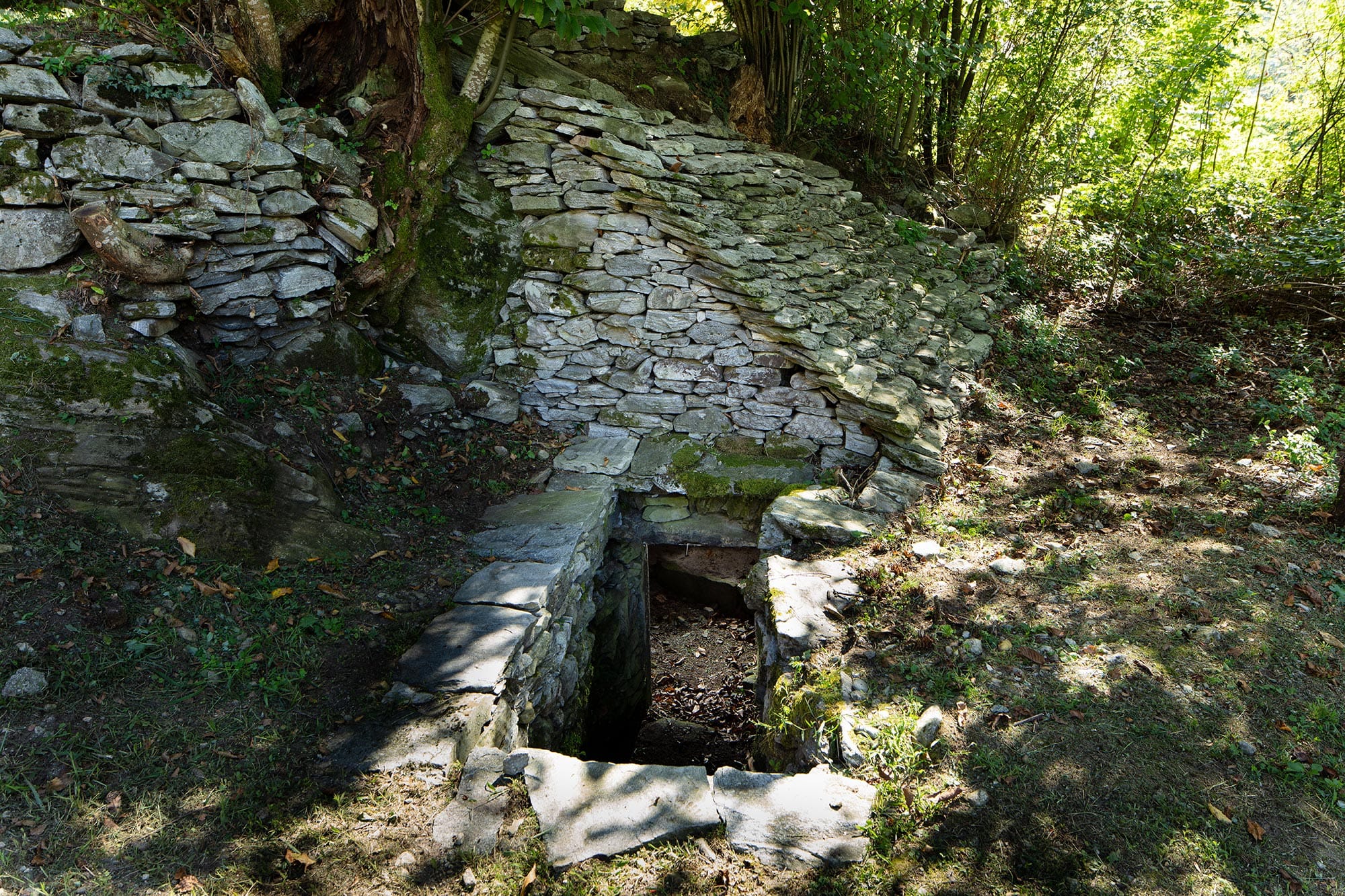
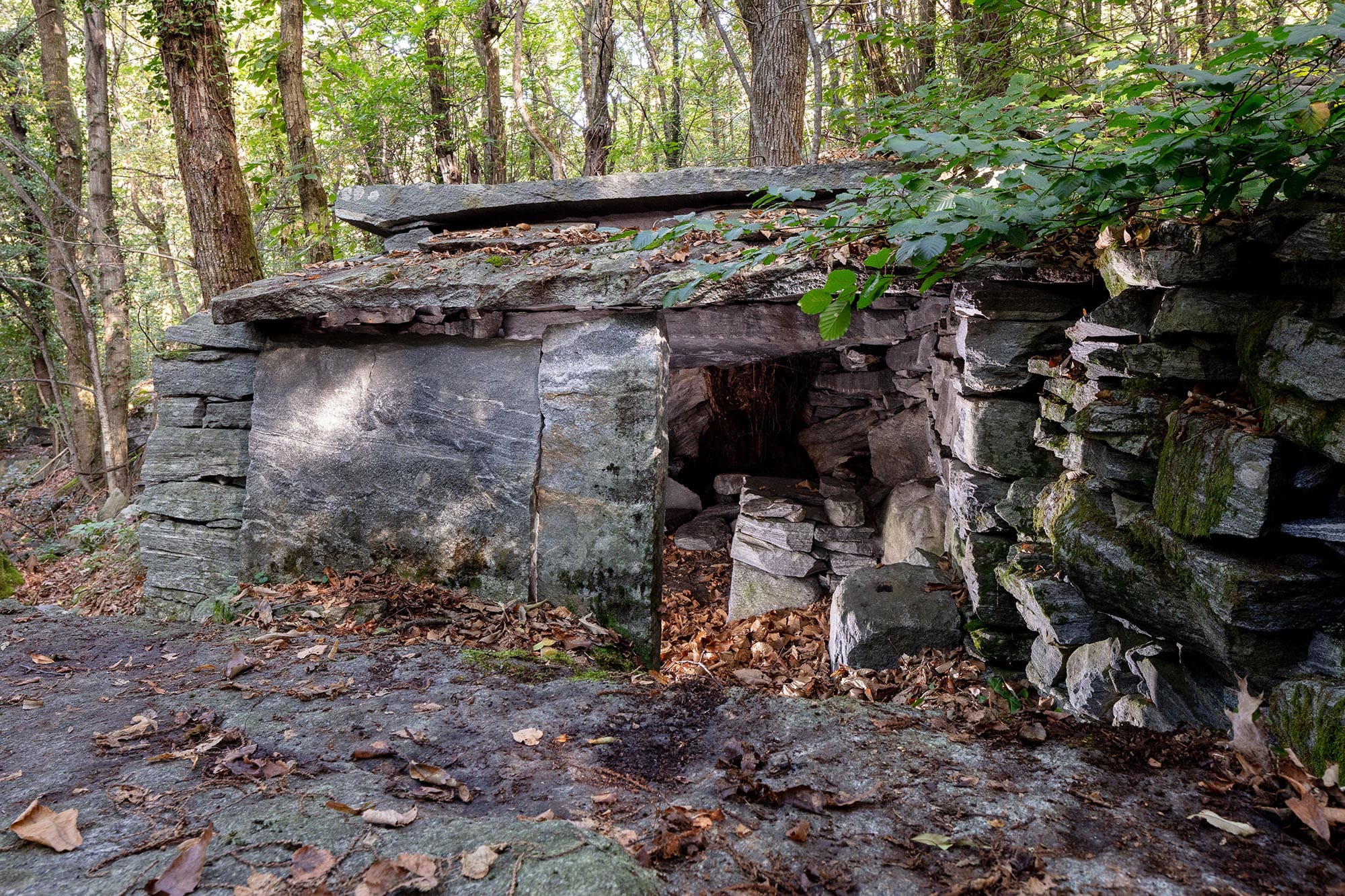
A peculiar structure built beneath a rock, with dry-stone masonry and a beautiful single-pitched slate roof – the only architectural element protruding from the ground. It was built to complete the partial coverage of an overhanging boulder, which also serves as the eastern wall. A stone staircase leads up to the entrance of the partially vaulted room. Inside, some traces of its previous use as a cellar for the storage of wines and cheeses are still preserved: a niche, a stone base, and hooks hanging from the ceiling.
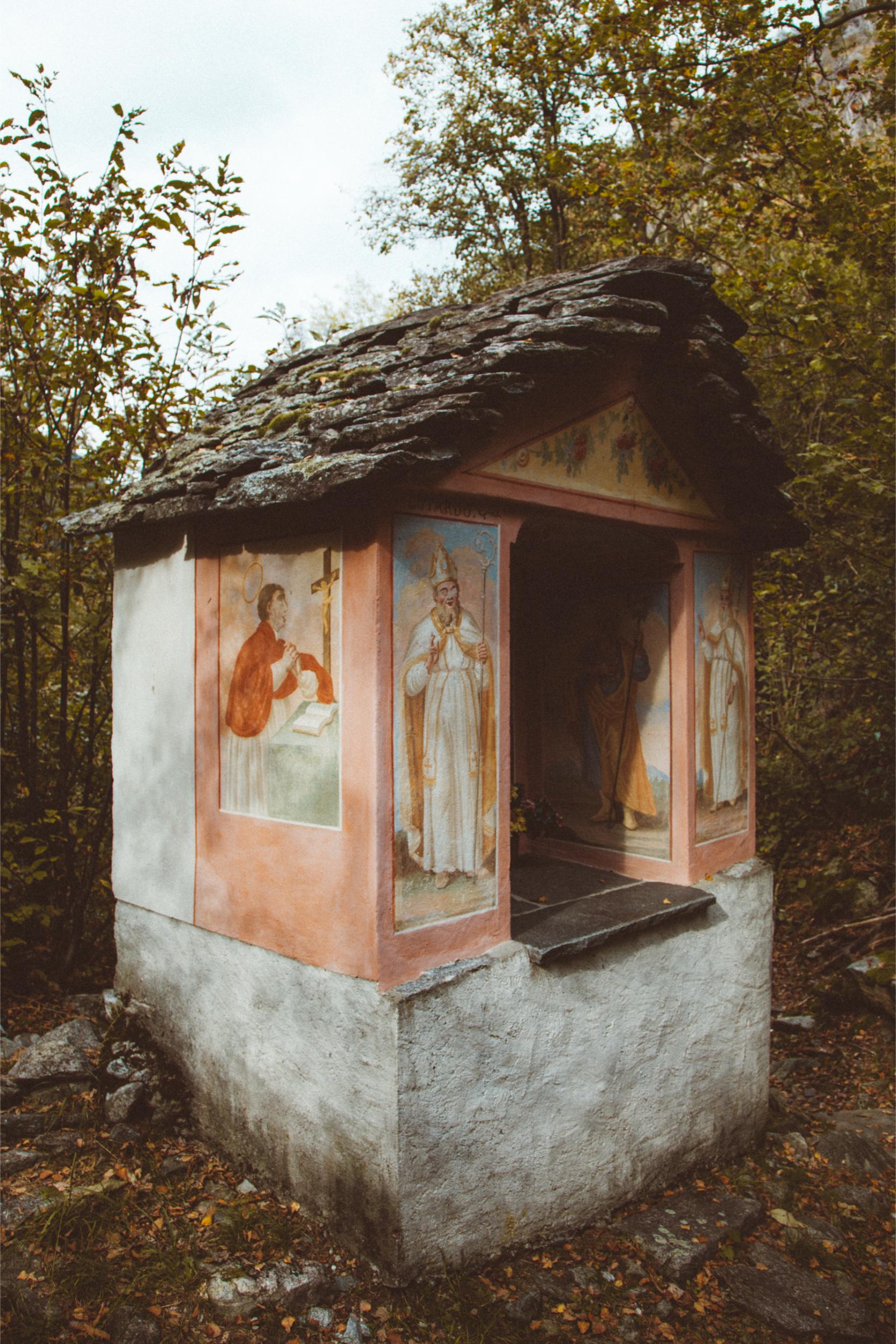
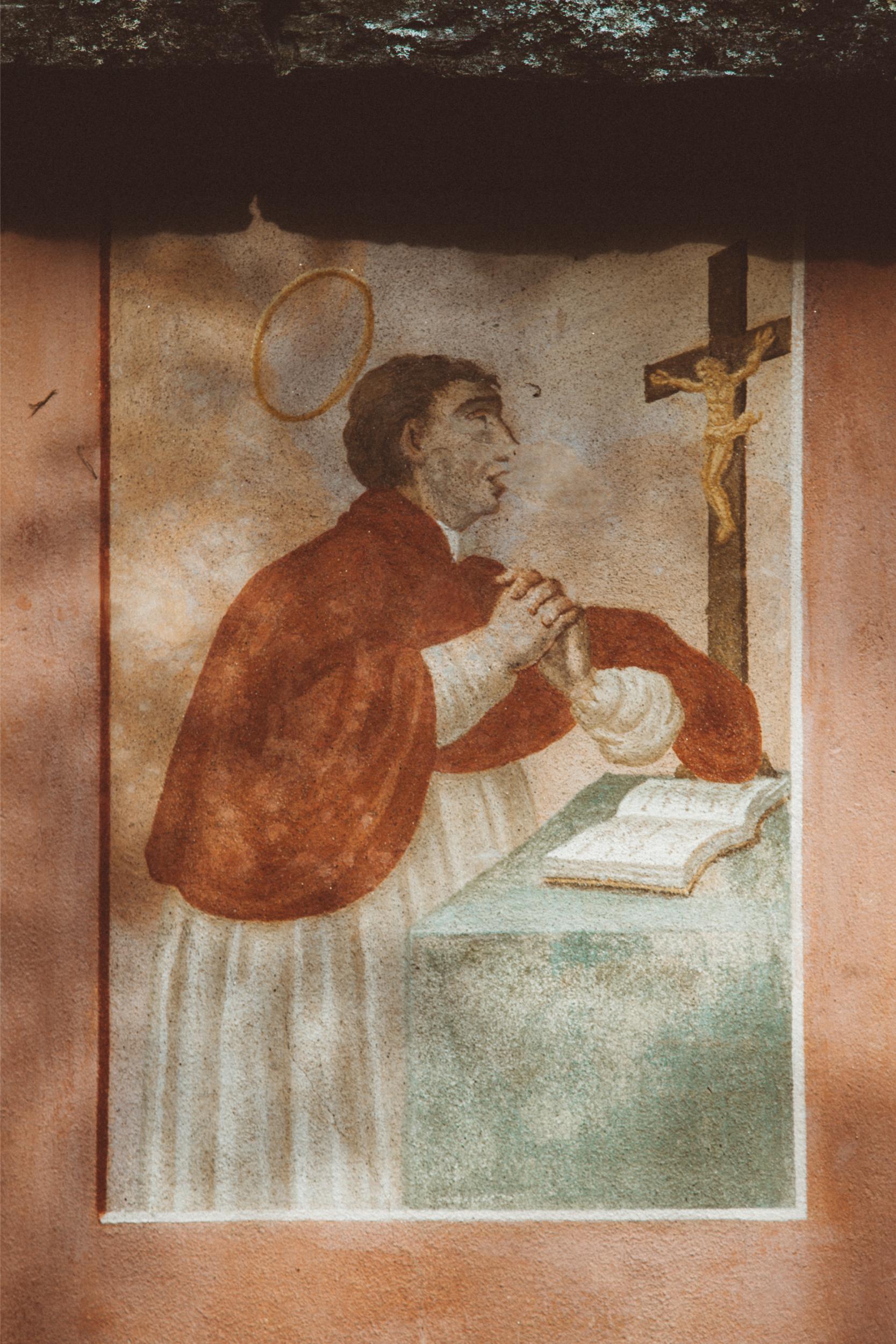
The chapel dates from 1814, has an elegant slate roof and is richly decorated on three sides. After a restoration with questionable results carried out between 1955 and 1960, the paintings regained their former splendour in 2006 thanks to new, more respectful interventions. The central motif, the Baptism of Jesus, is depicted between the Immaculate Conception and Saint Joseph, while all around it are the images of Saints Gotthard, Abbondio, Charles Borromeo, Dominic, and Roch, important figures in the Catholic Church and venerated with great devotion in the region.
A scenic stone path that takes the hiker along the old trail to Mónt dint, a toponym that refers to the whole mountain to the right of the Ri Grand valley. It is named after Riccardo Tomasetti, who in the 1940s paved the initial stretch up to the Capèla do Pianásc.
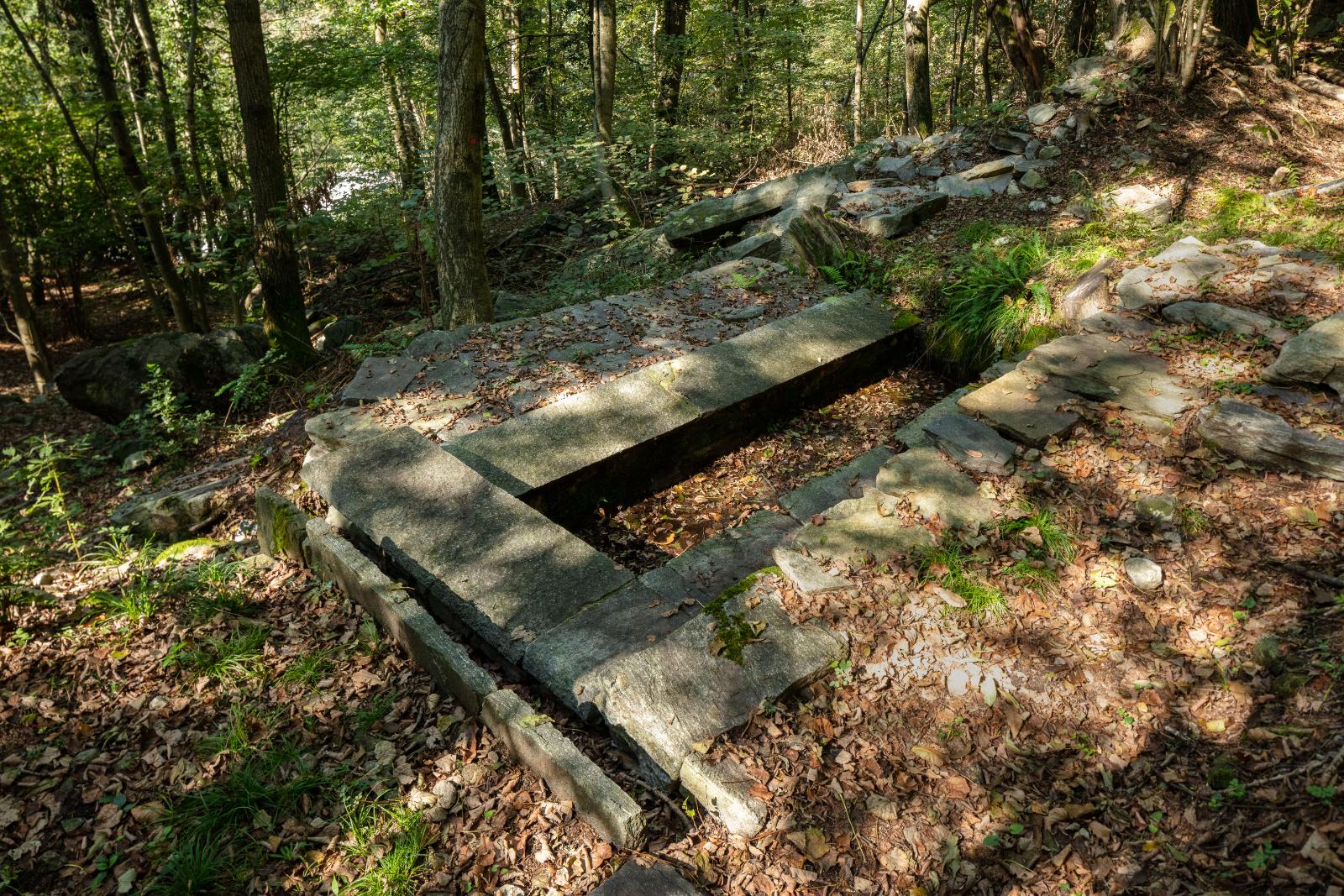
A simple and rustic refuge made entirely of stone, which preserves traces of the work of Tóni Tolátt (Antonio Bianchi), who used to temper points and chisels here for cutting stones used in the construction of buildings, slate roofs, and the characteristic carásc (stone posts for vineyards). In the surrounding area, scattered over a fairly large area, stones with clear signs of processing can be seen, some even extracted using explosives. This is not a real quarry, but rather the recovery of large boulders.
Ebe Stoira recalls her father Prospero Bianchi who, upon returning from a strenuous working day, would say to his wife Piera «A sóm stracc, ma mi asséi da mia podée naa ciapaa un fiasc’ da vin al gròtt» (“I’m exhausted but have enough energy for a bottle of wine at the grotto”). Given the considerable distance between the houses in Vinzótt and the grotti, this anecdote reflects the traditional rural customs and provides a glimpse of how important these cellars were to the local population.
The grotti of Vinzótt were built on the scree of the G’ána di G’èit, formed at the foot of steep rocky cliffs after a prehistoric landslide. A landslide deposit is a porous terrain with natural cavities, while in the crevices between the blocks, air currents flow due to the temperature difference with the outside. Properly channeled into the buildings, these currents help maintain a consistently low temperature, making the grotti the ideal place for aging wine and preserving perishable food.
Built with masonry and vaulted cellars or over natural chambers, the grotti of Vinzótt – around ten in total – form a very compact cluster at some distance from the residential area of the hamlet. Inside some of the buildings, you can still see the supports for the wooden shelves (bèlti) used to store cheese wheels and other products, as well as a stone vat for storing wine. The small outdoor spaces are furnished with stone seats and tables. Remarkably fine finishings, such as the top of door jambs and lintels, are worth mentioning.
A project sponsored by the Patriziato of Avegno made it possible for most of the structures to be renovated and the ceiling of the large central grotto to be completely rebuilt. The spacious flat area, once used for playing boules, and its supporting wall, previously damaged by the fall of a large boulder, have also been restored.
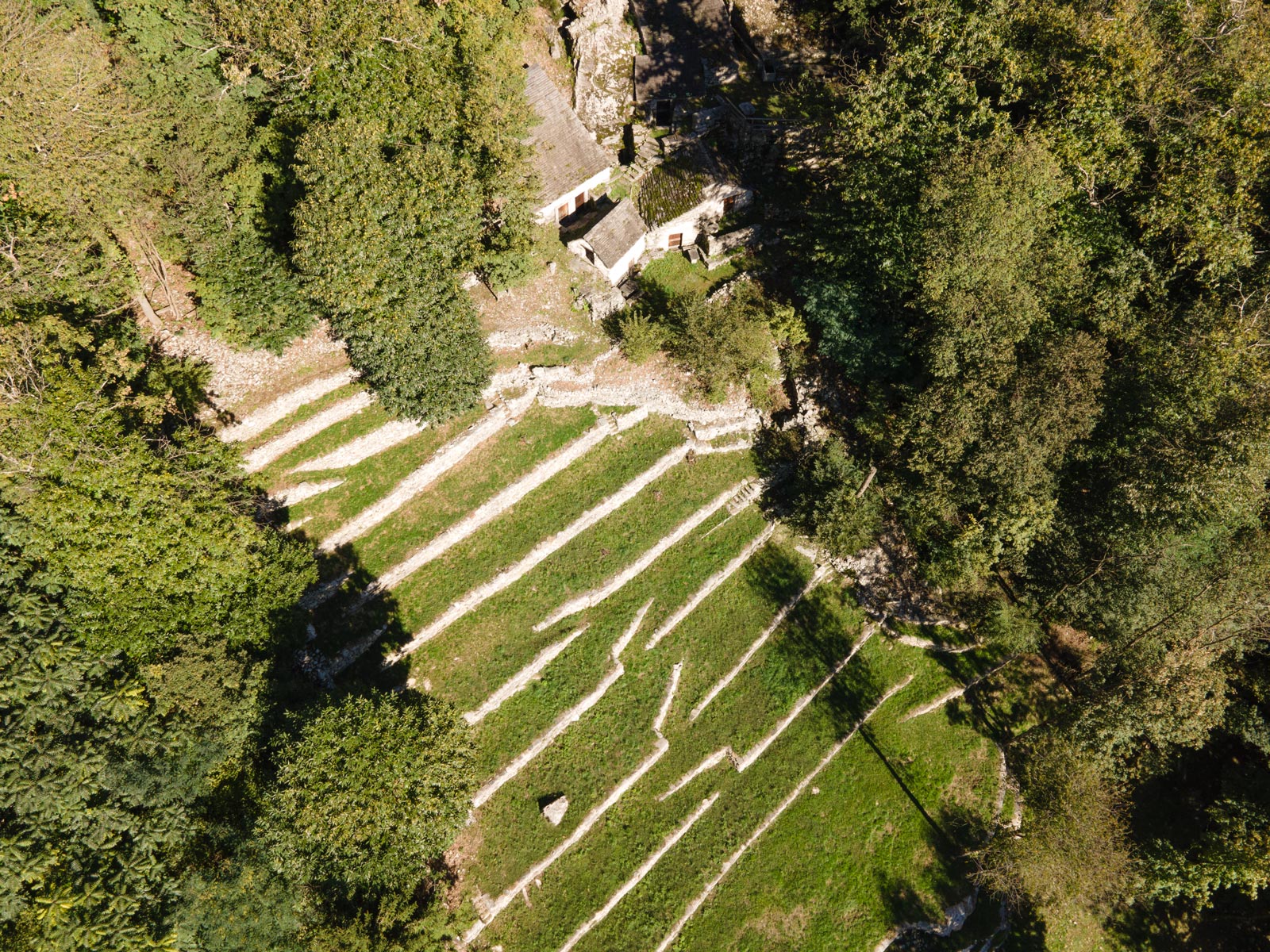
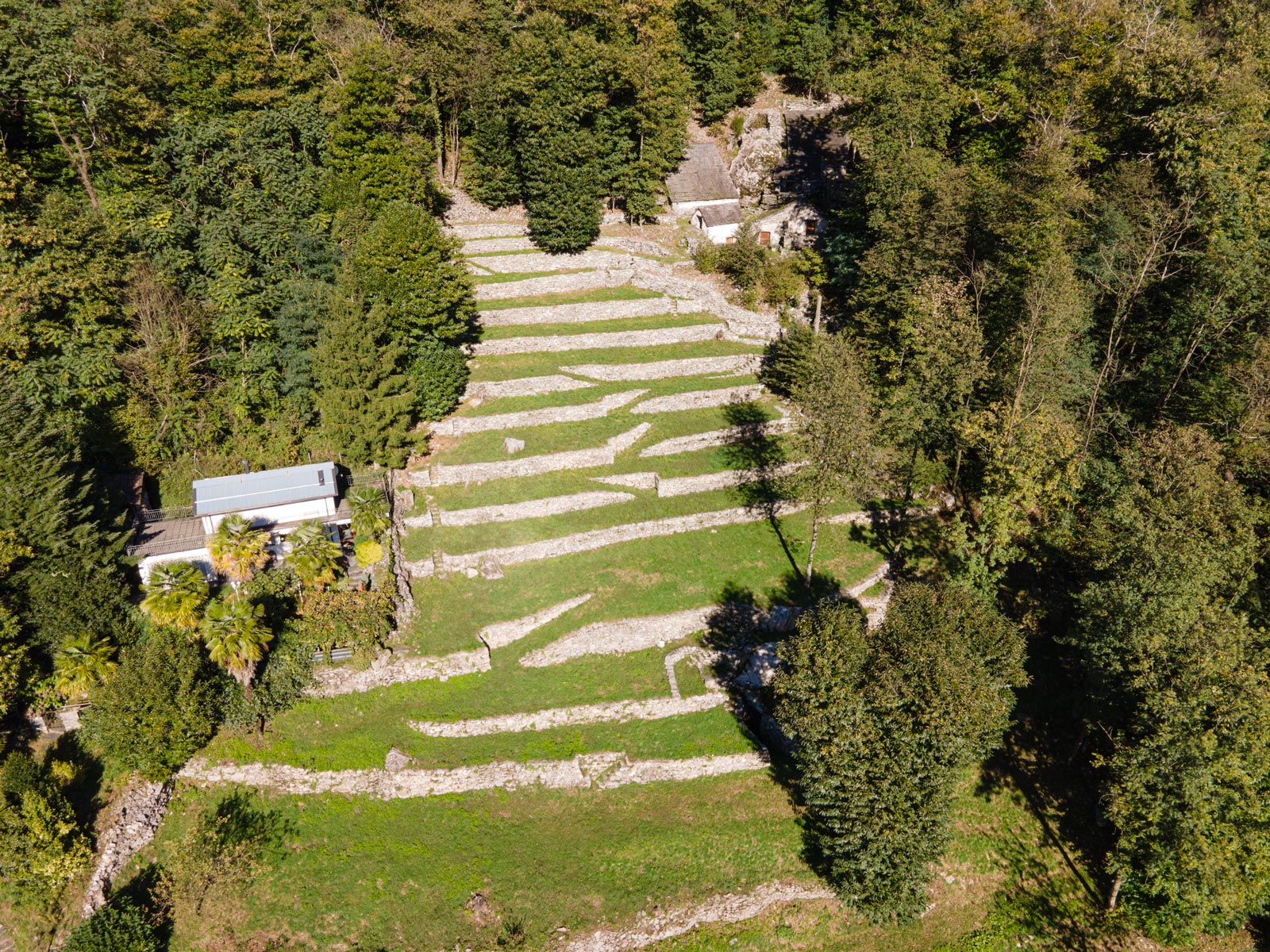
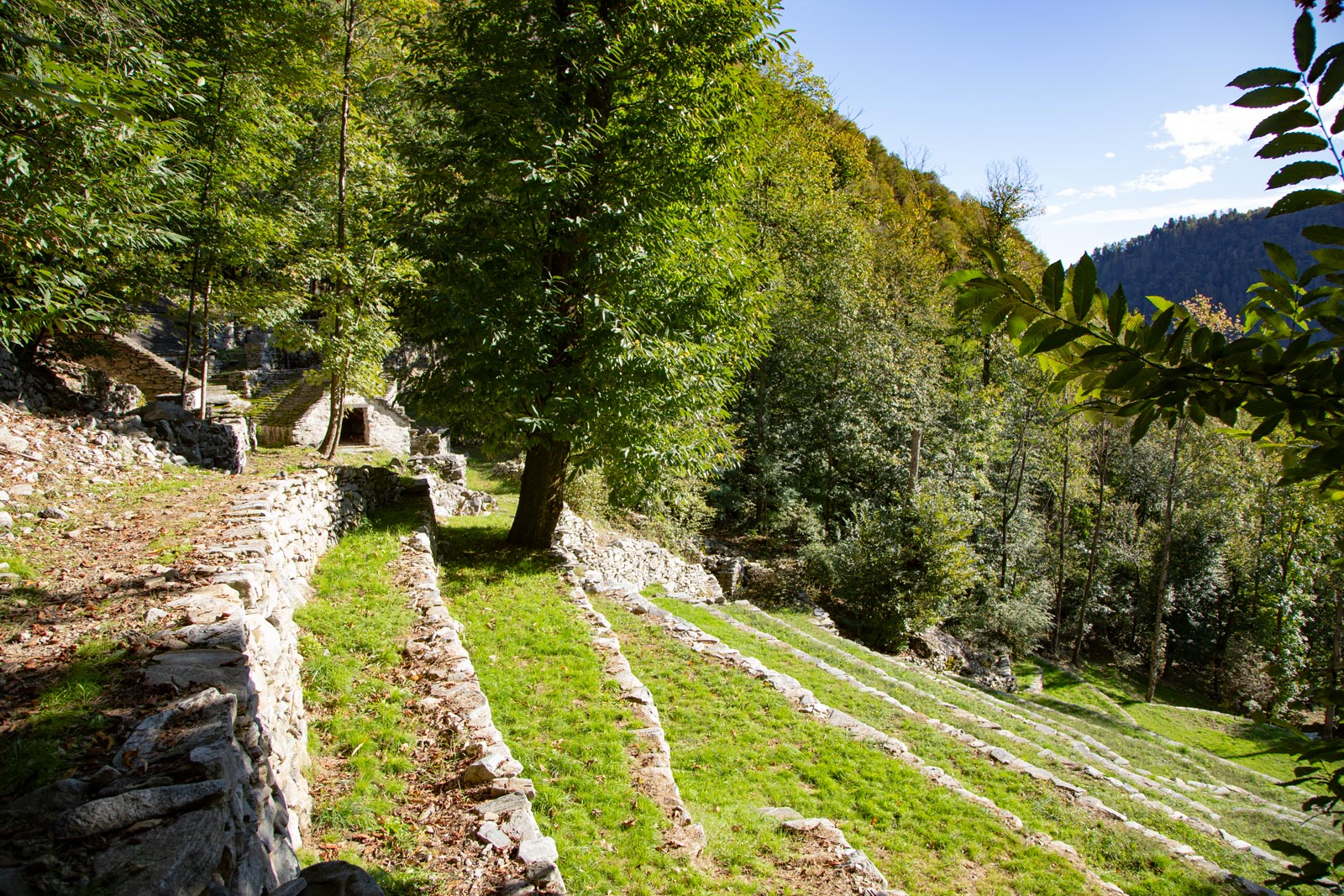
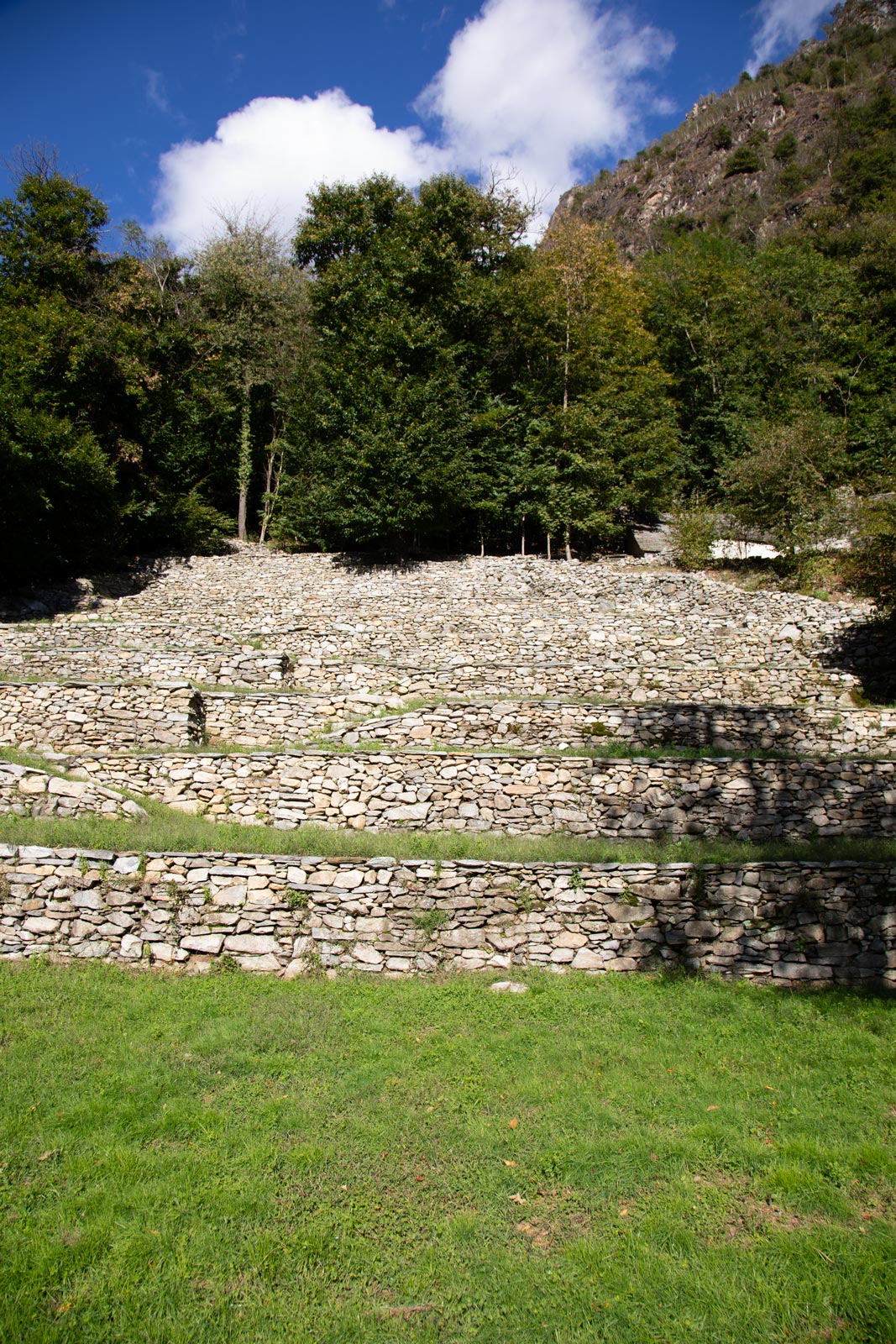
The ronco (terraced hillock) of Vinzótt is a valuable testimony to the care and skill with which, in the past, also the less suitable parts of the land were used for agriculture. Like many other agricultural areas, this ronco, abandoned after the rapid decline of traditional activities following World War II, was quickly taken over by spontaneous tree and shrub vegetation.
The restoration of the terraces was part of the second phase of a project promoted by the Patriziato of Avegno aimed at the functional recovery of the architectural, rural, and historical heritage located uphill from Vinzótt. Initially, the structures were uncovered by clearing the undergrowth and controlling the invasive neophytes. Subsequently, about 460 linear meters of dry-stone walls and a small building under the rock were restored using traditional techniques. Small ramps were also built between the terraces to facilitate future management.
Thanks to the collaboration of the Pro Frutteti and Centro Natura Vallemaggia Associations, a fruit orchard will be planted in 2025 with old varieties of medium- and low-stem trees.
The refined Capèla di Gnèll stands near the grotti of Vinzótt, right at the entrance of the path leading to the Mónt fòra. It is plastered and frescoed on all four sides, and on the frontispiece it bears the inscription: “Martino Fr[a]ncesco Biancho a' fatto fare <...> anno 1733”. In the niche, the “Holy Crucifix of the Nonciata of Como”, surrounded by saints, is depicted, while on the back there is a valuable painting titled “The Death of the Righteous” by the same artist who decorated the chapel at the Grotto Maimorire.
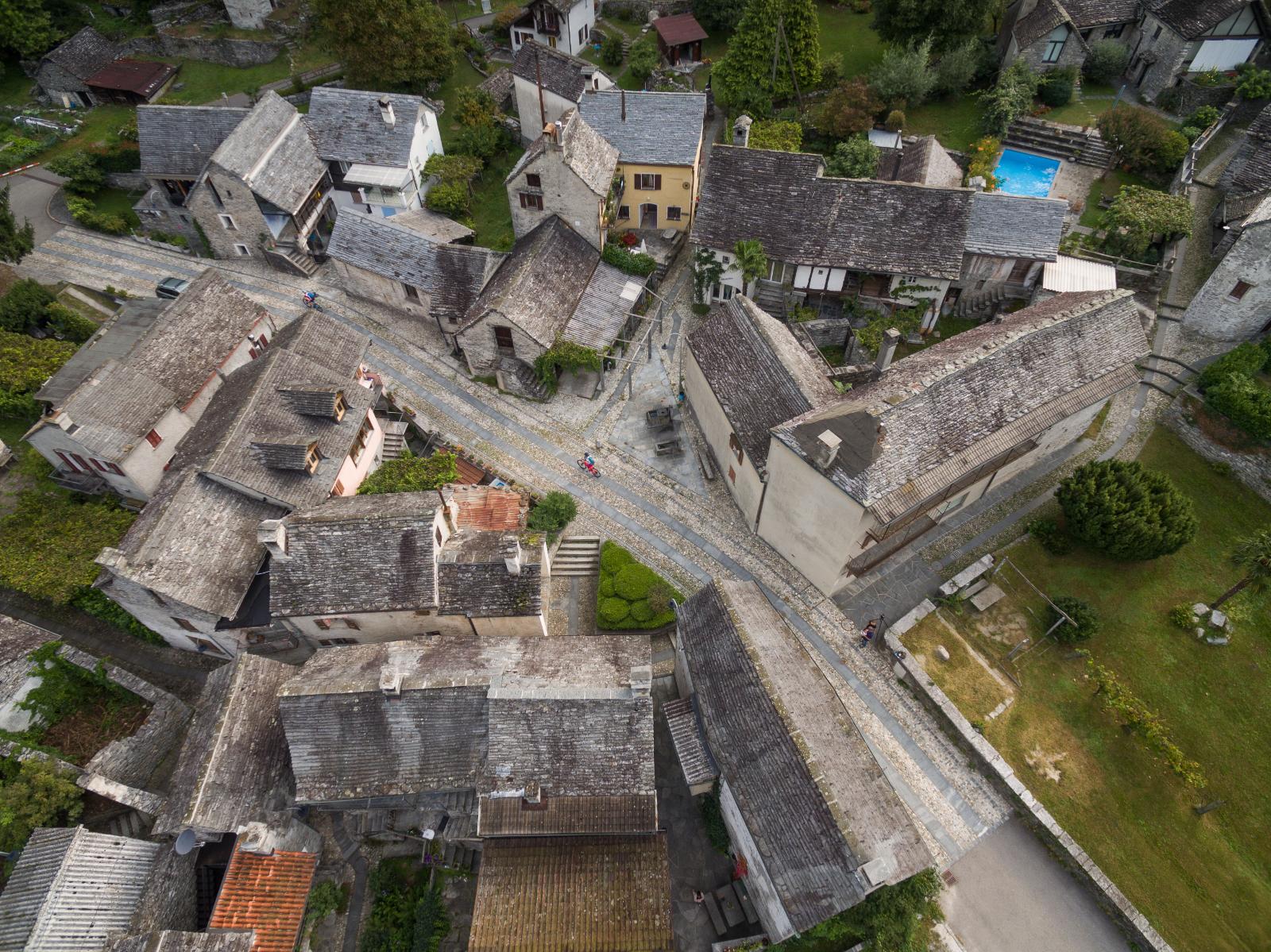
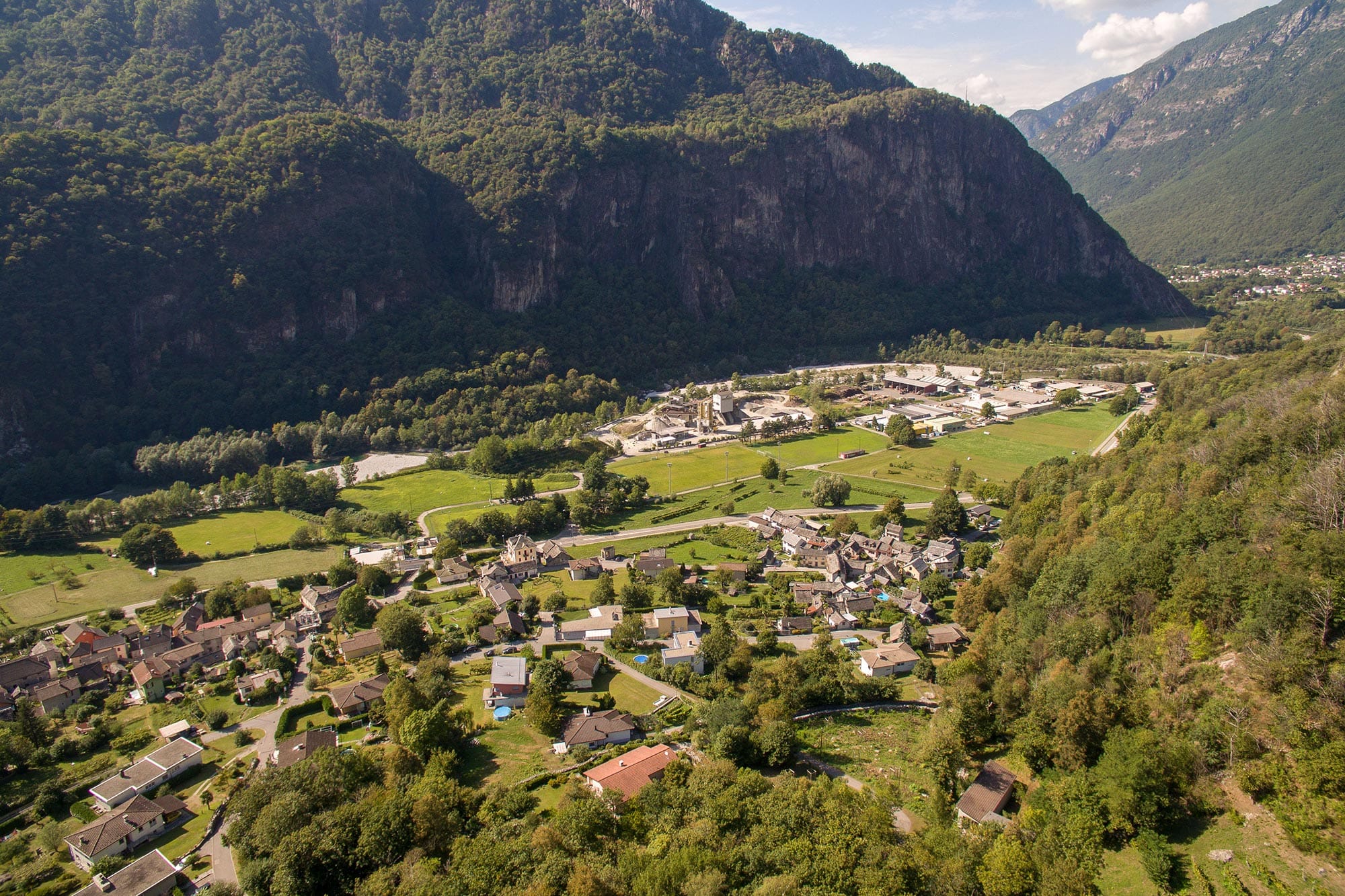
Of the three hamlets of Avegno, Vinzótt is the largest and the one that best captures the rural soul of the village. Many buildings have preserved much of their original appearance, and several traditional houses have been carefully and respectfully restored. Thanks to these exemplary interventions, in 1982 the municipality of Avegno received the prestigious Wakker Prize, awarded every year by the Swiss Heritage Society.
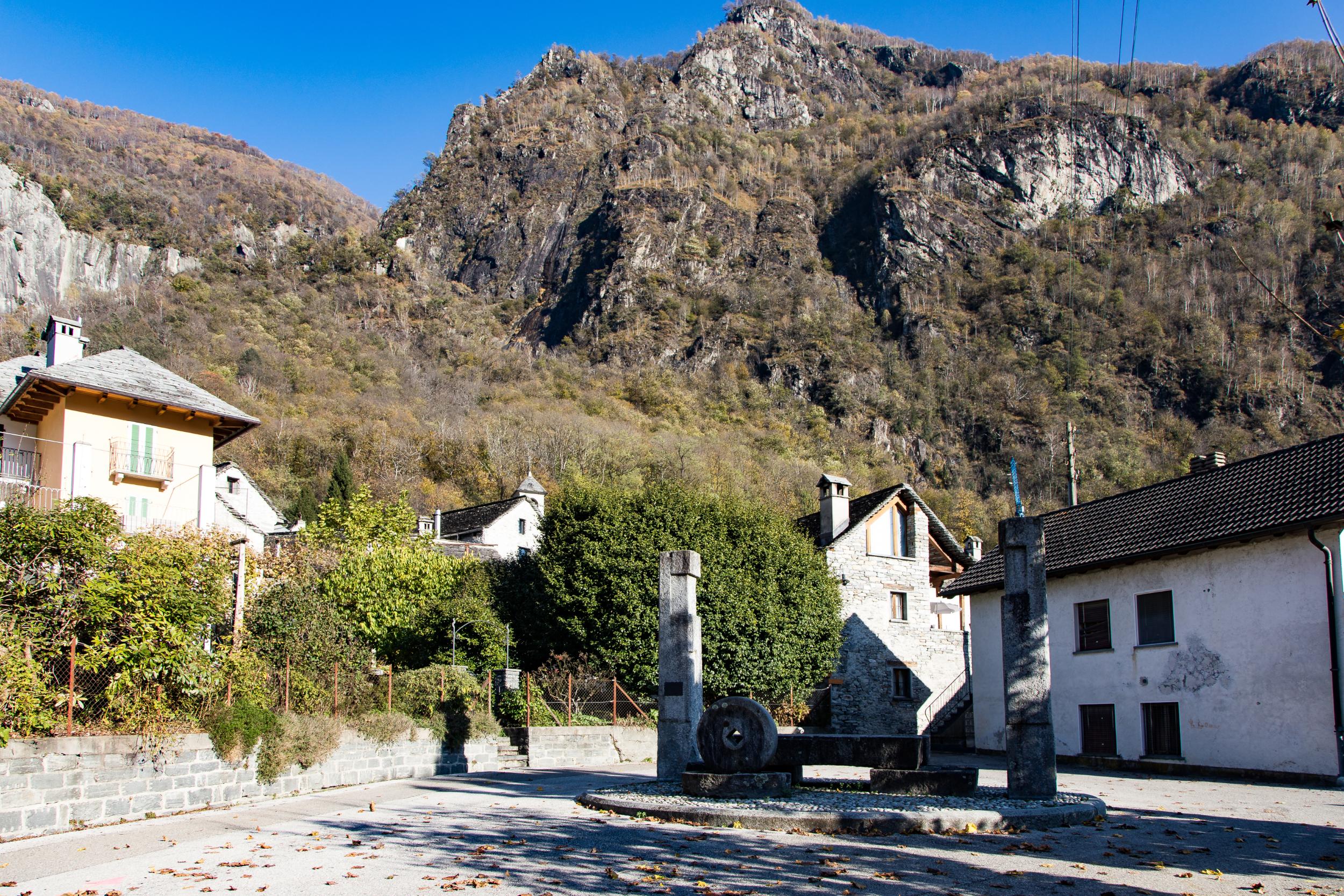
Connected by a network of narrow streets and paths branching off from the small square, in the centre of which stands a sculpture made from the monolithic pieces of an ancient wine press, the houses and stables are built against one another, interspersed with vine pergolas, a wine fermentation room with an upper dwelling, a tower house with an oven, several cellars under the rock, a mill that is no longer in use, and various other buildings linked to rural life.
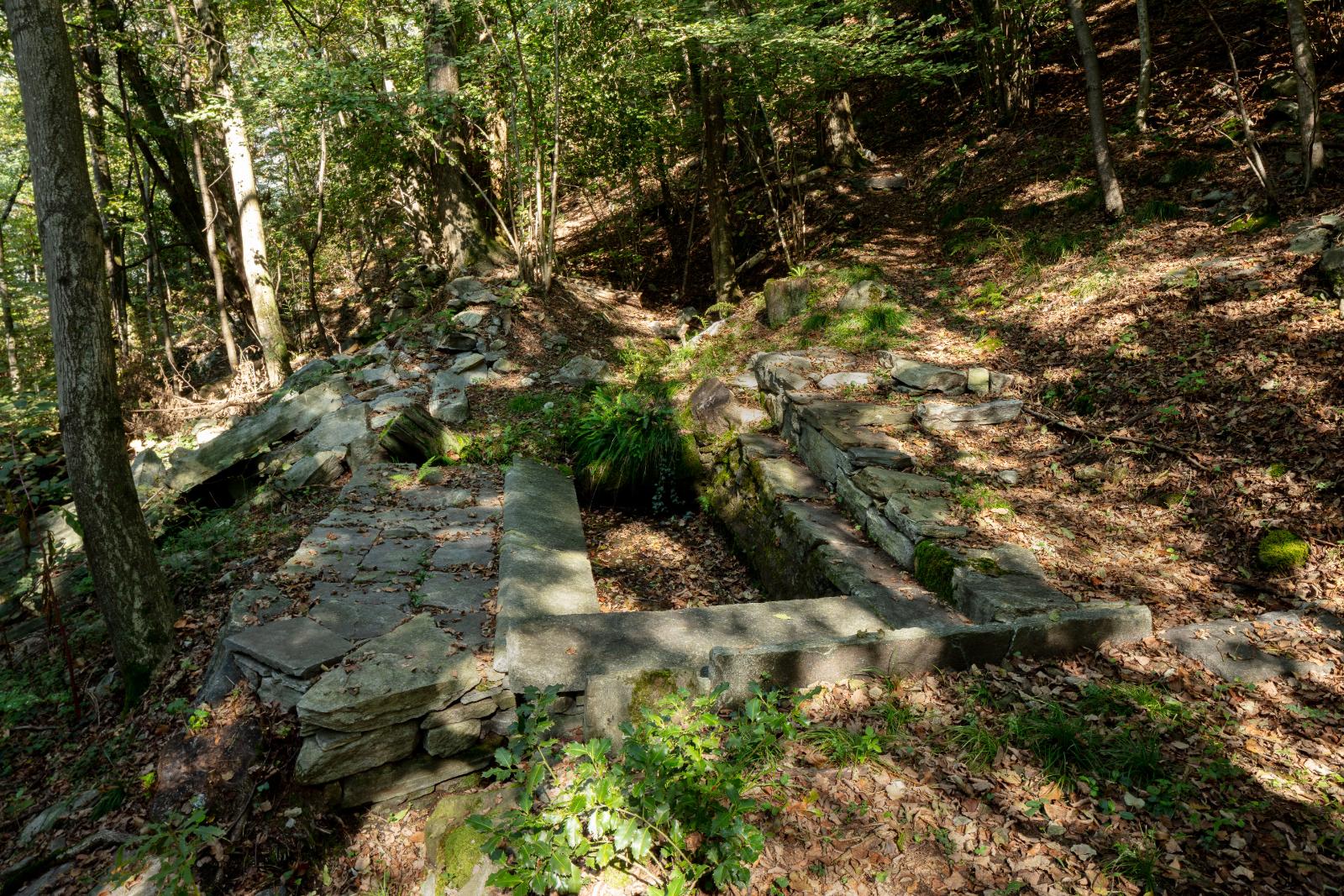
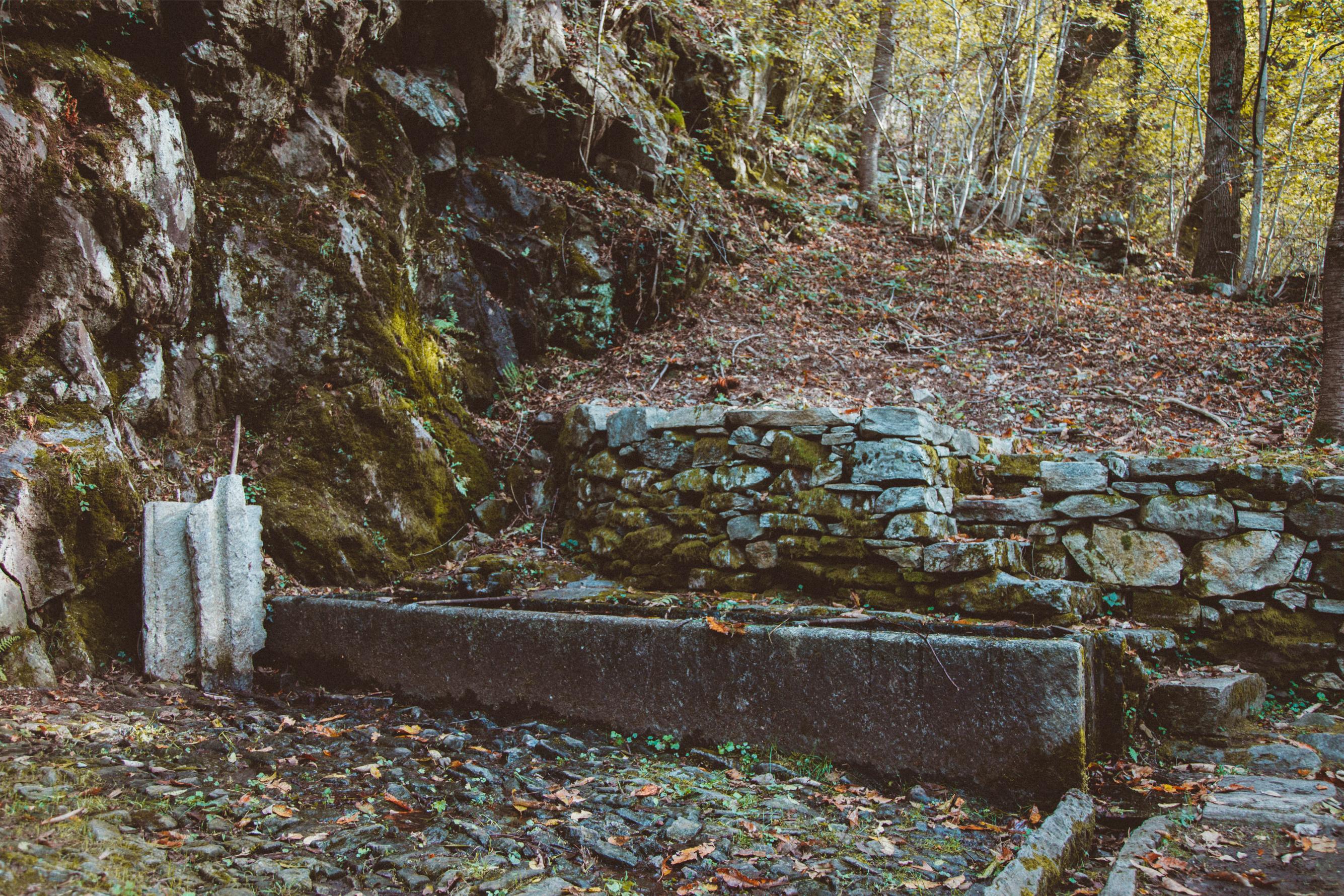
This large rectangular basin, made up of slabs reaching up to four meters in length, was once used as a drinking trough for cattle. Today, the presence of such a large fountain in the middle of the forest may seem surprising, but until the mid-20th century the entire area was planted with vineyards and used for agricultural purposes. Unlike the other fountains in the village, which are fed by the municipal aqueduct, the Da Fid Fountain is supplied by its own spring, which flows out at the foot of a small rock face.
This washbasin is relatively far from the village of Vinzótt, in a rather unusual location but which is justified by the presence of a spring in the Costa do Bosc’ area, that has an almost constant water temperature throughout the seasons. Although this feature may seem almost irrelevant today, in the past it significantly relieved the work of housewives, especially during the cold season. A little further north, dry-stone terracing remains as evidence of the intensive use of this area in past centuries.
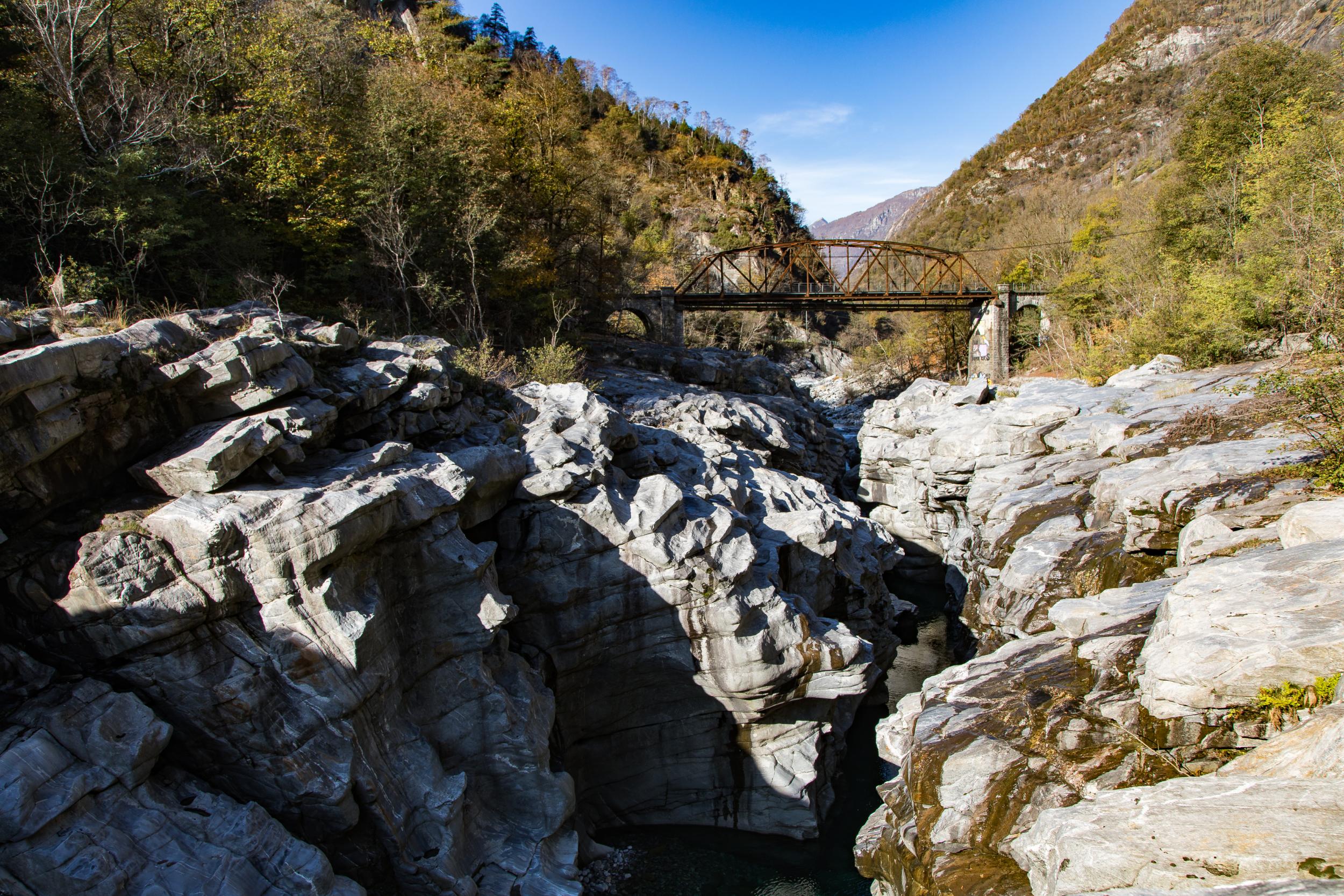
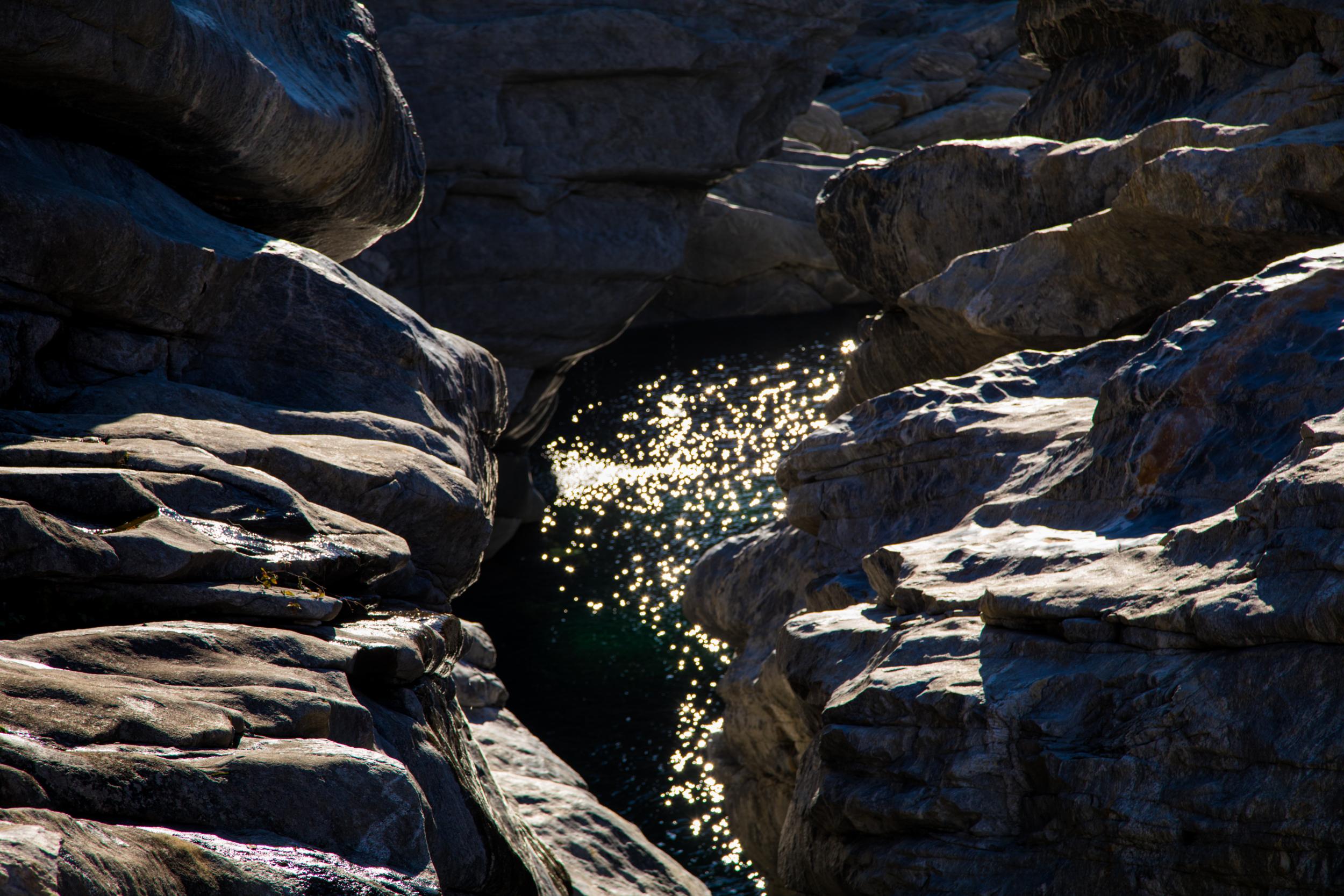
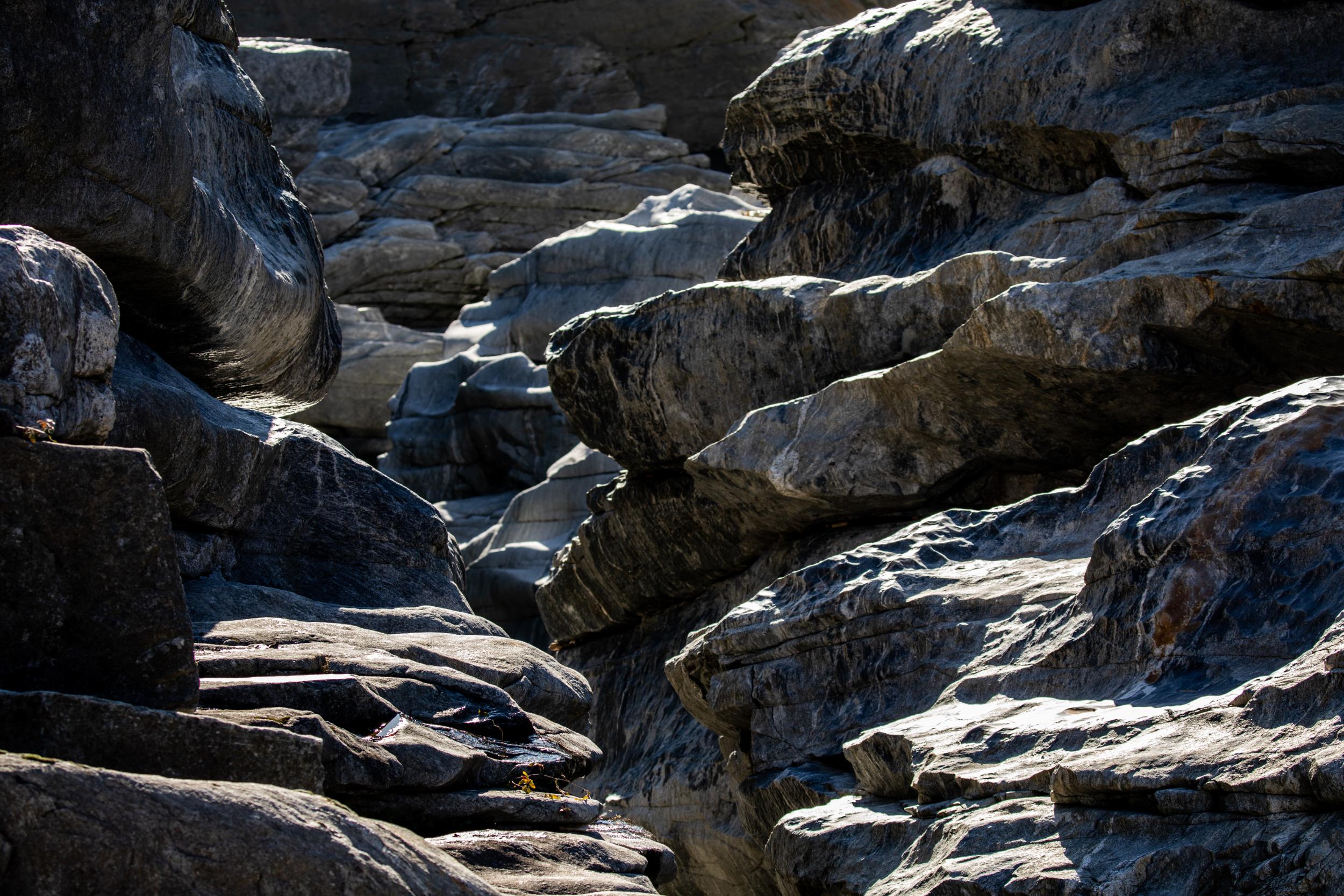
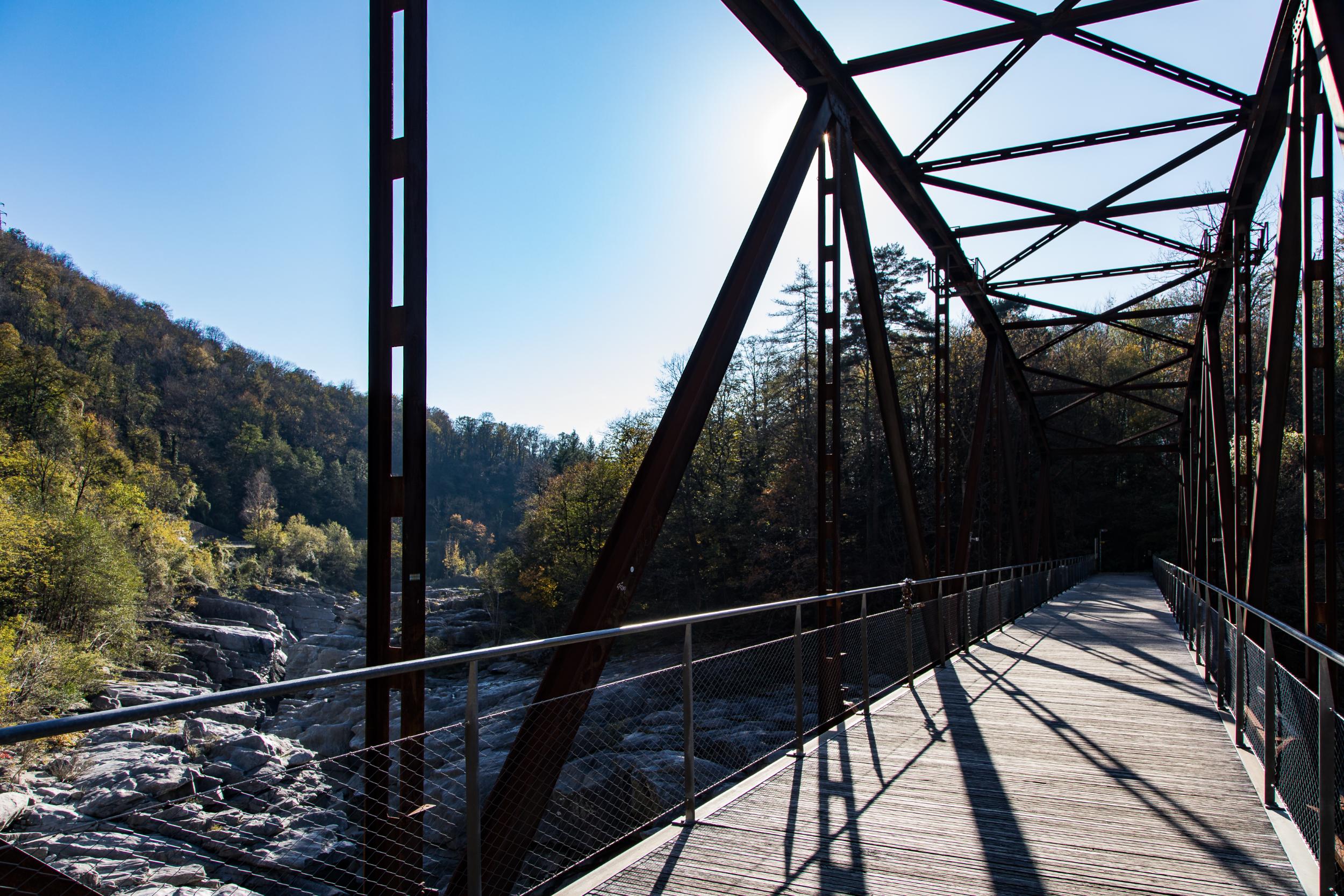
Walking along the river Maggia, it is not uncommon to come across some truly picturesque views. This is the case, for example, of the Gorges of Ponte Brolla, an amazing geomorphological formation that can also be seen from the historic iron bridge, which between 1907 and 1965 was used by the train of the Locarno-Ponte Brolla-Bignasco railway. The origins of the gorges can be traced back to the Quaternary glaciations, in particular the Last Glacial Maximum, around 20,000 years ago, when the thickness of the glaciers in this area abundantly exceeded 1,000 meters. The waters of the Maggia, laden with debris, flowed under the immense weight of the glaciers. The resulting increase in erosion processes led to the formation of geomorphological features that are highly appreciated also from a scenic viewpoint. If you look at the walls, you can see the typical giant’s kettles, basins carved into the rock formed by the erosive action of water. Equally remarkable are the patterns and peculiar colours of the migmatites, i.e. crystalline rocks that originally formed the ancient European basement and later underwent further metamorphic processes during the formation of the Alps.
Descending into the gorges is strongly discouraged, as the rocks are slippery and the risk of injury is high.
Floodplains are natural environments located along rivers and constantly subject to their influence, which makes them particularly dynamic and fascinating.
The floodplains of the Maggia Valley are among the wildest landscapes in Switzerland, and the stretch between Avegno and Bignasco is considered of national importance (the most scenic area is located between Giumaglio and Someo).
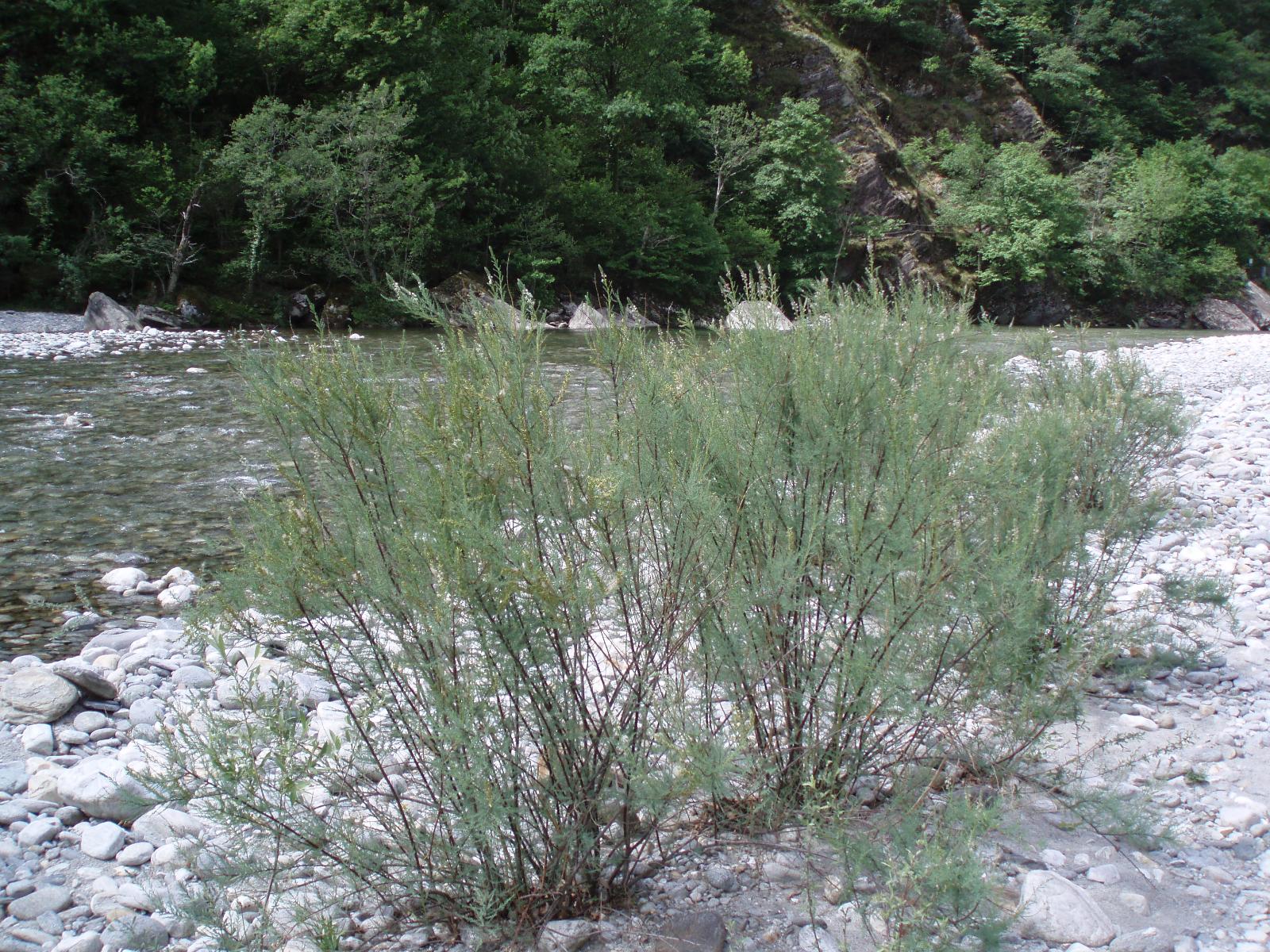
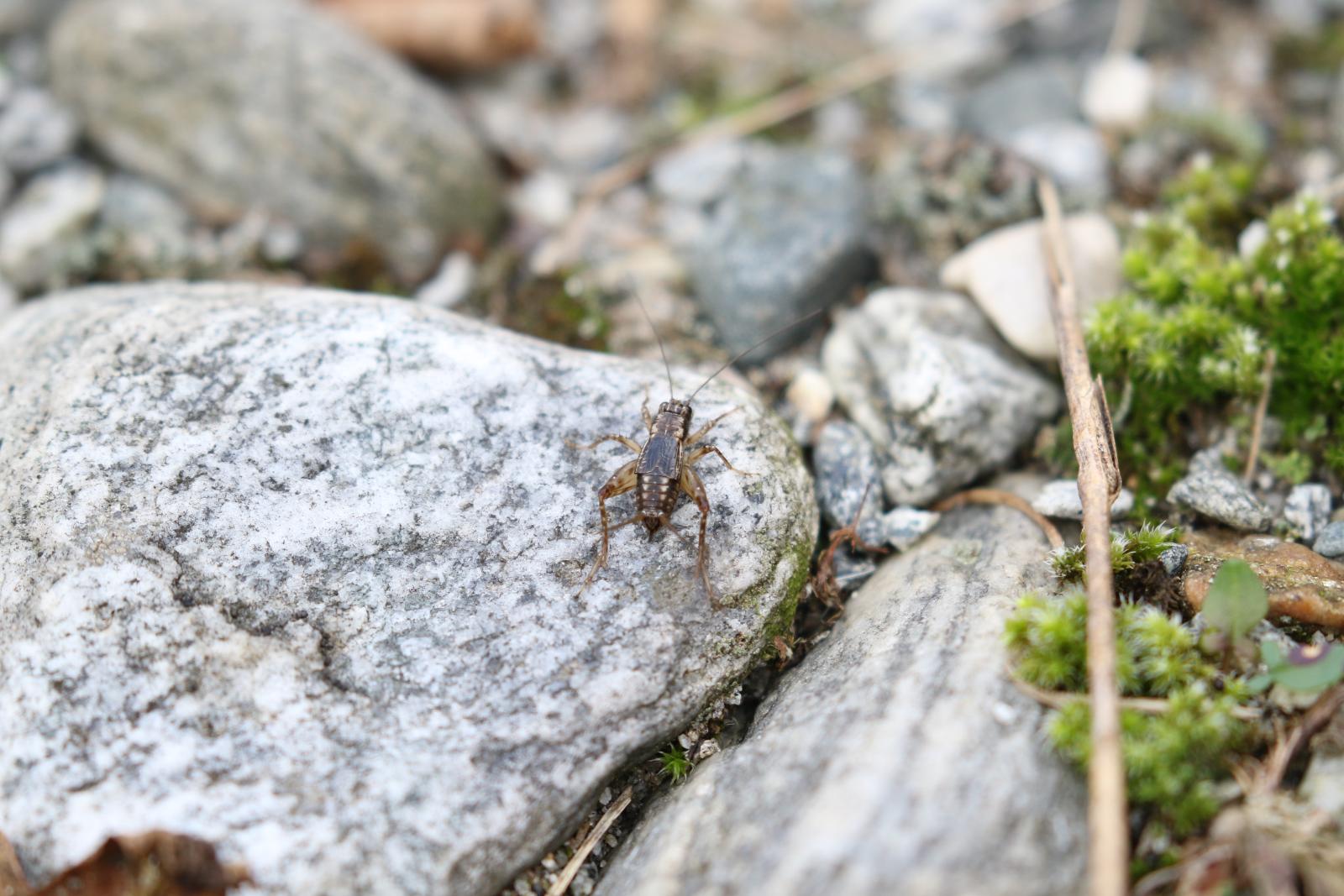
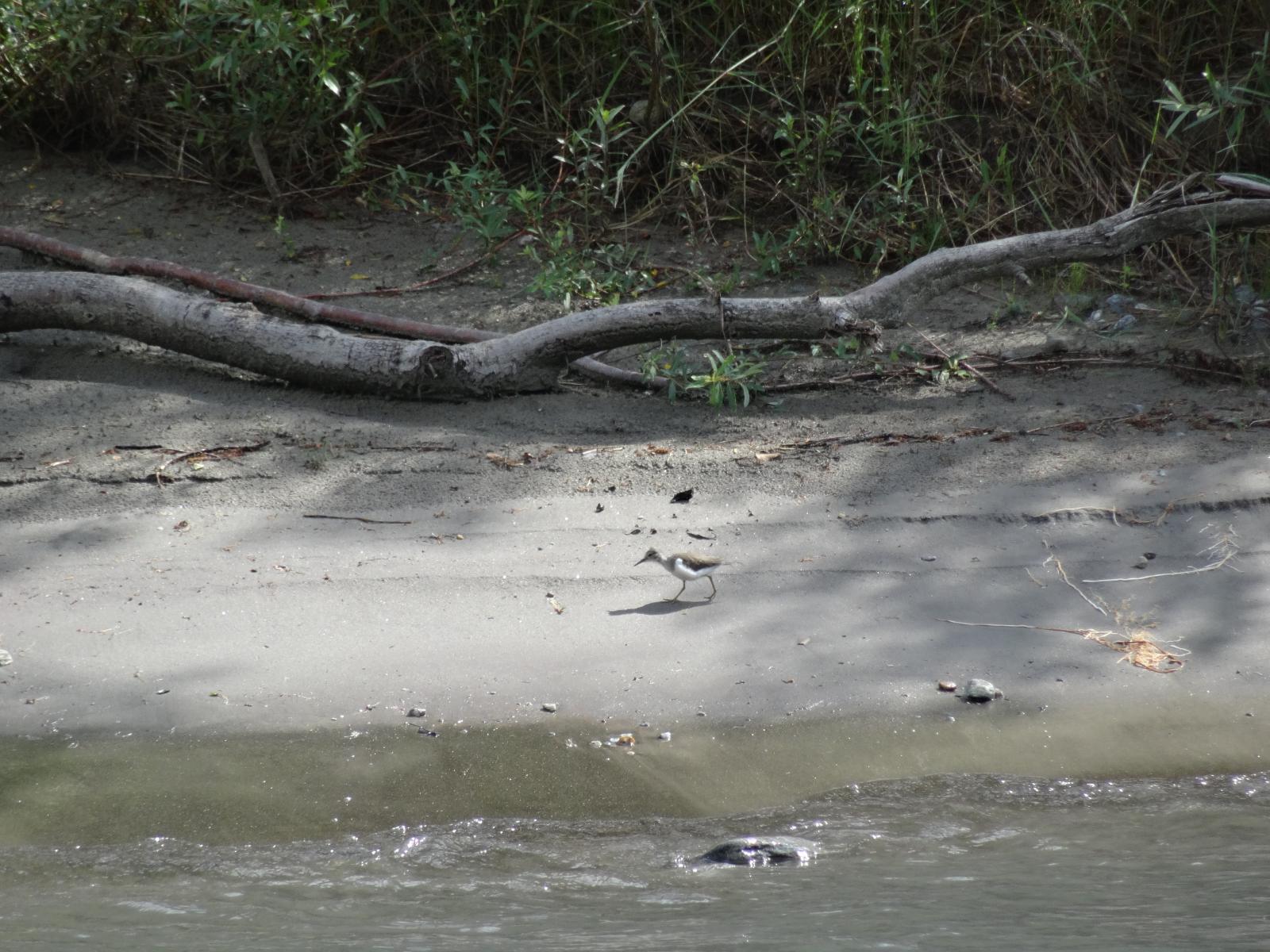
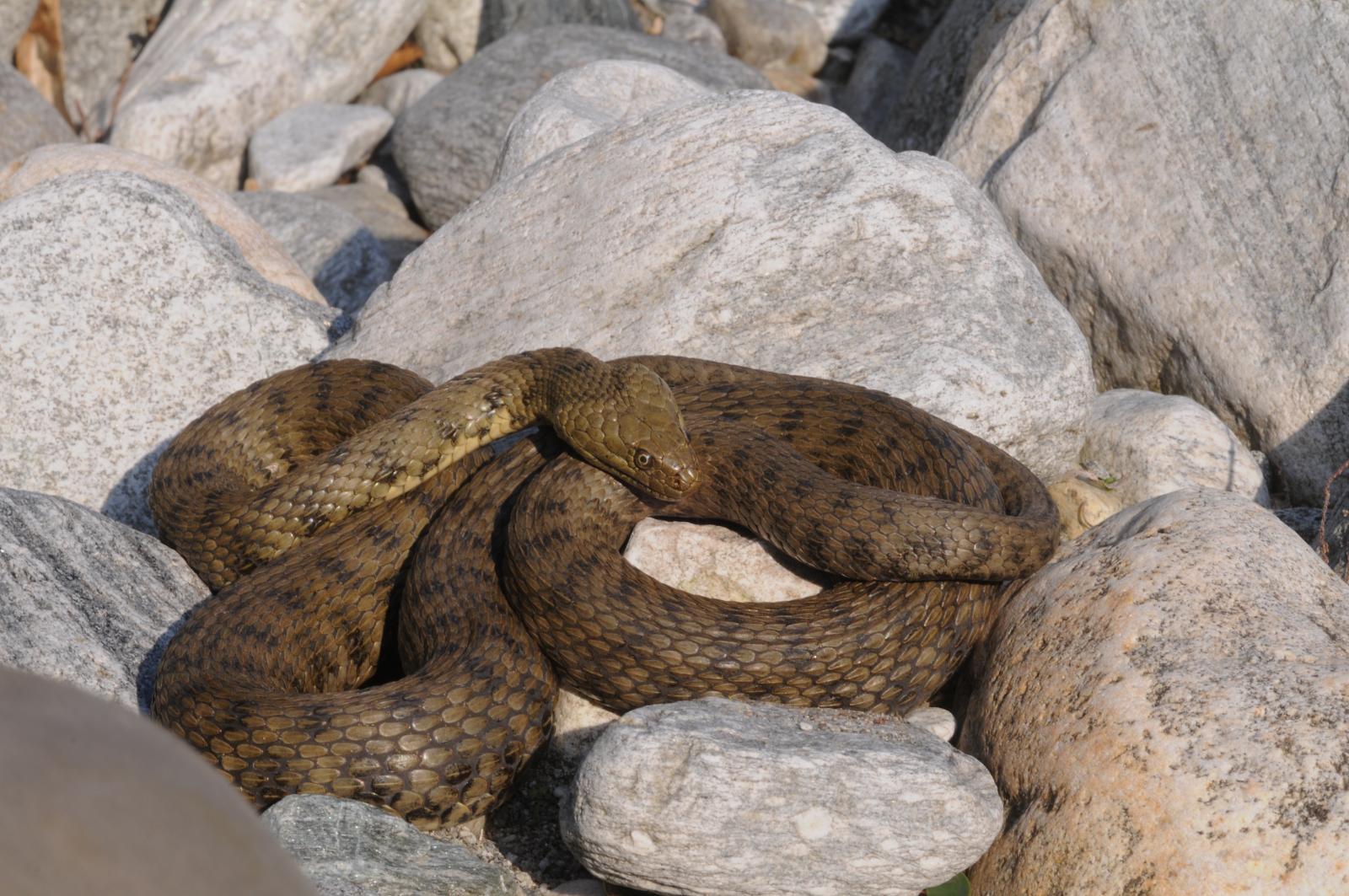
The river Maggia is one of the most torrential rivers in Europe: during heavy rains, its flow can increase by thousands of times in just a few hours compared to dry days. The river’s action constantly erodes, transports, and deposits material, thus changing the landscape with each flood. This creates a mosaic of natural environments: wet floodplain forests, dry meadows, shrubland areas, bare riverbeds, temporary pools, etc., each of which is inhabited by life forms that are often rare and have very specific needs. Worth mentioning are, for example, the little stint, the tessellated water snake, the gravel cricket, and the German tamarisk.
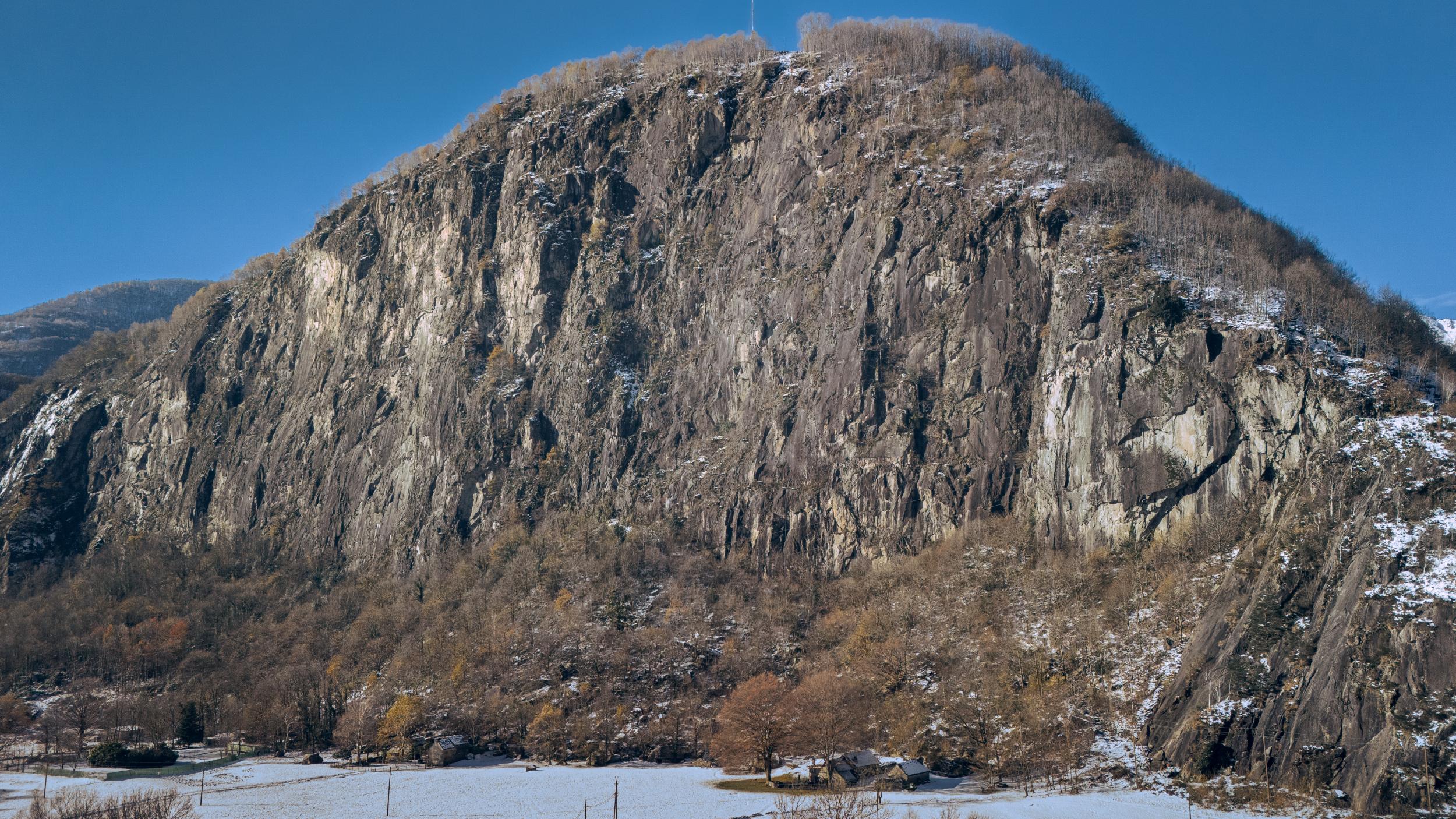
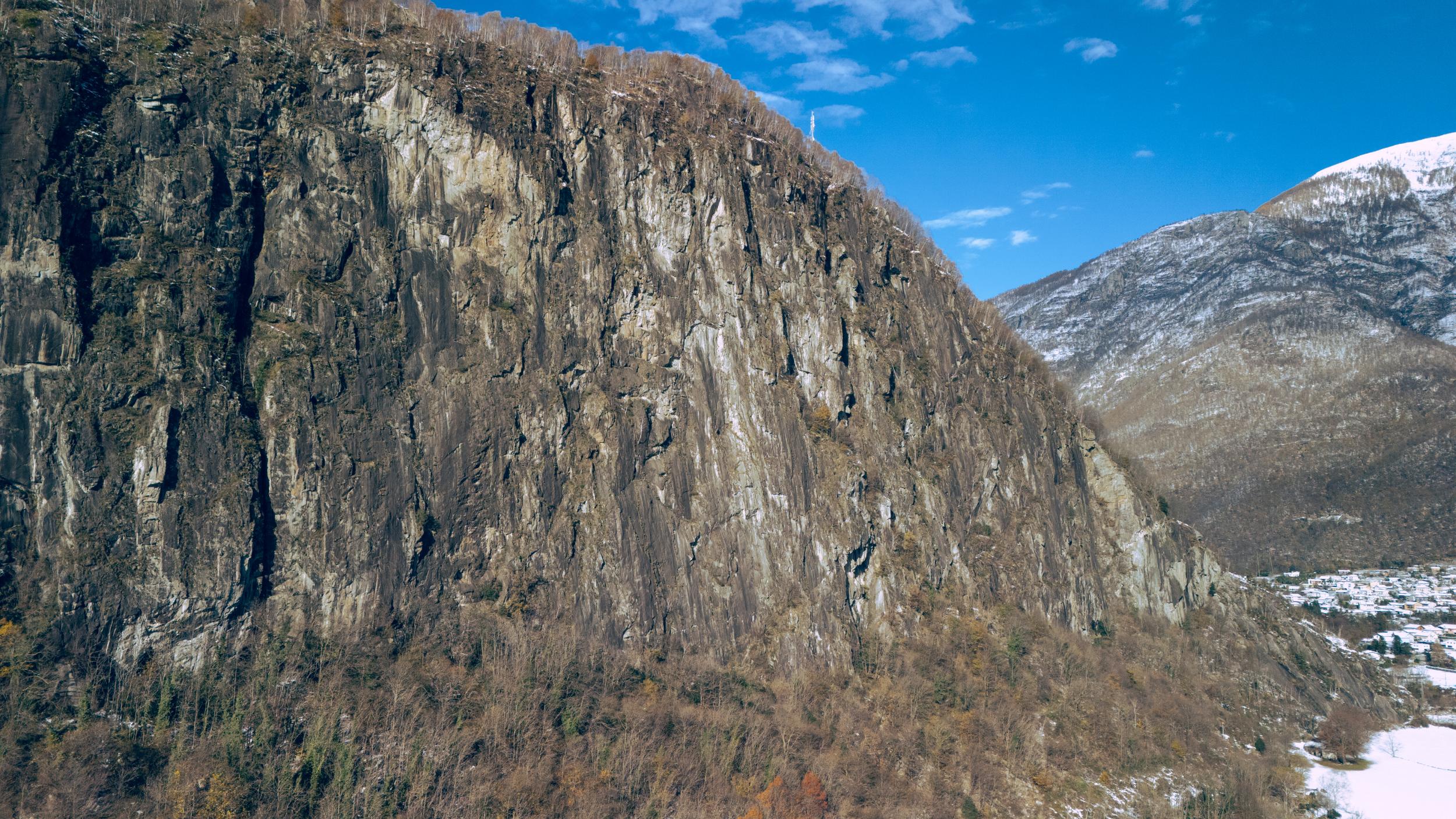
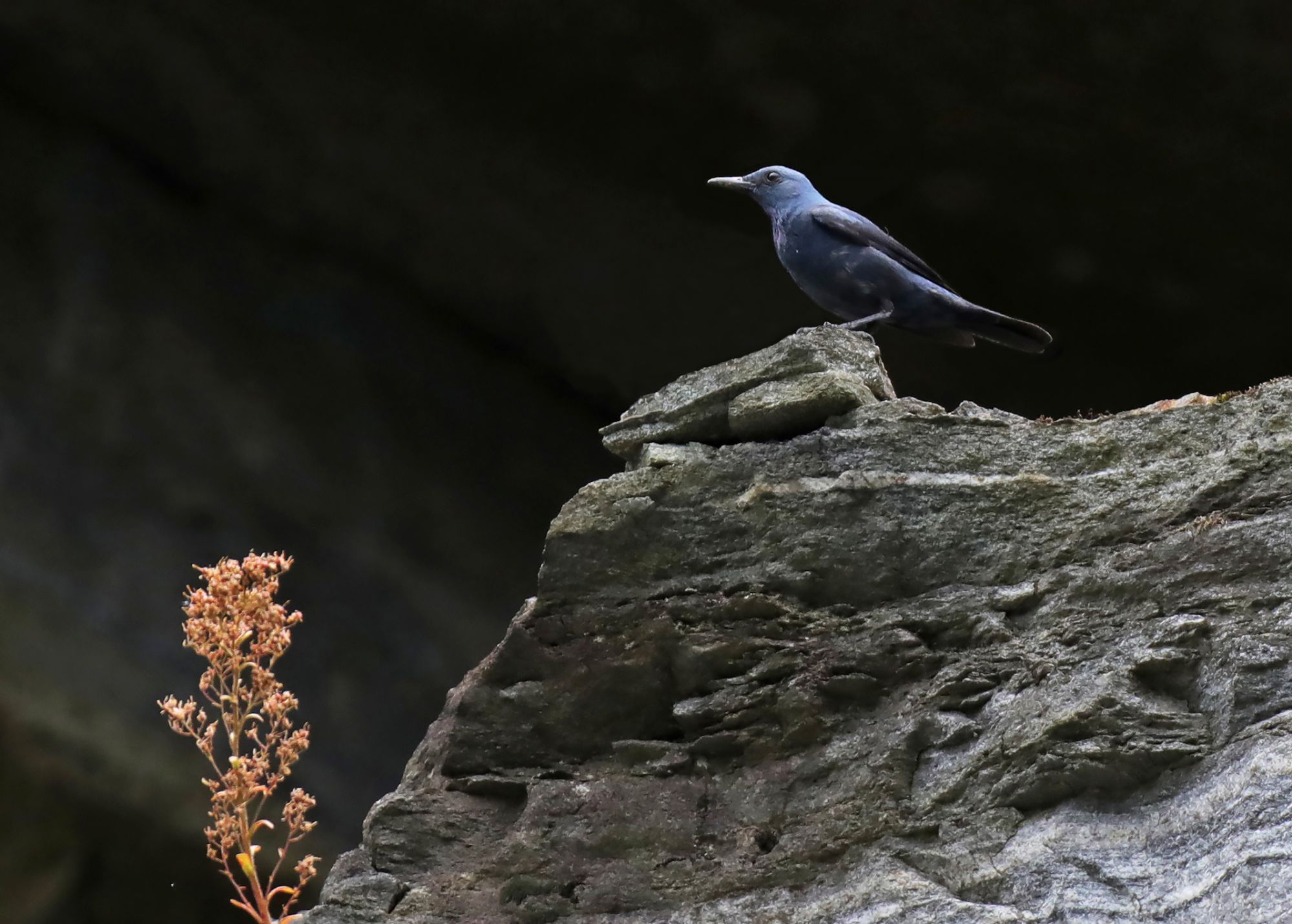
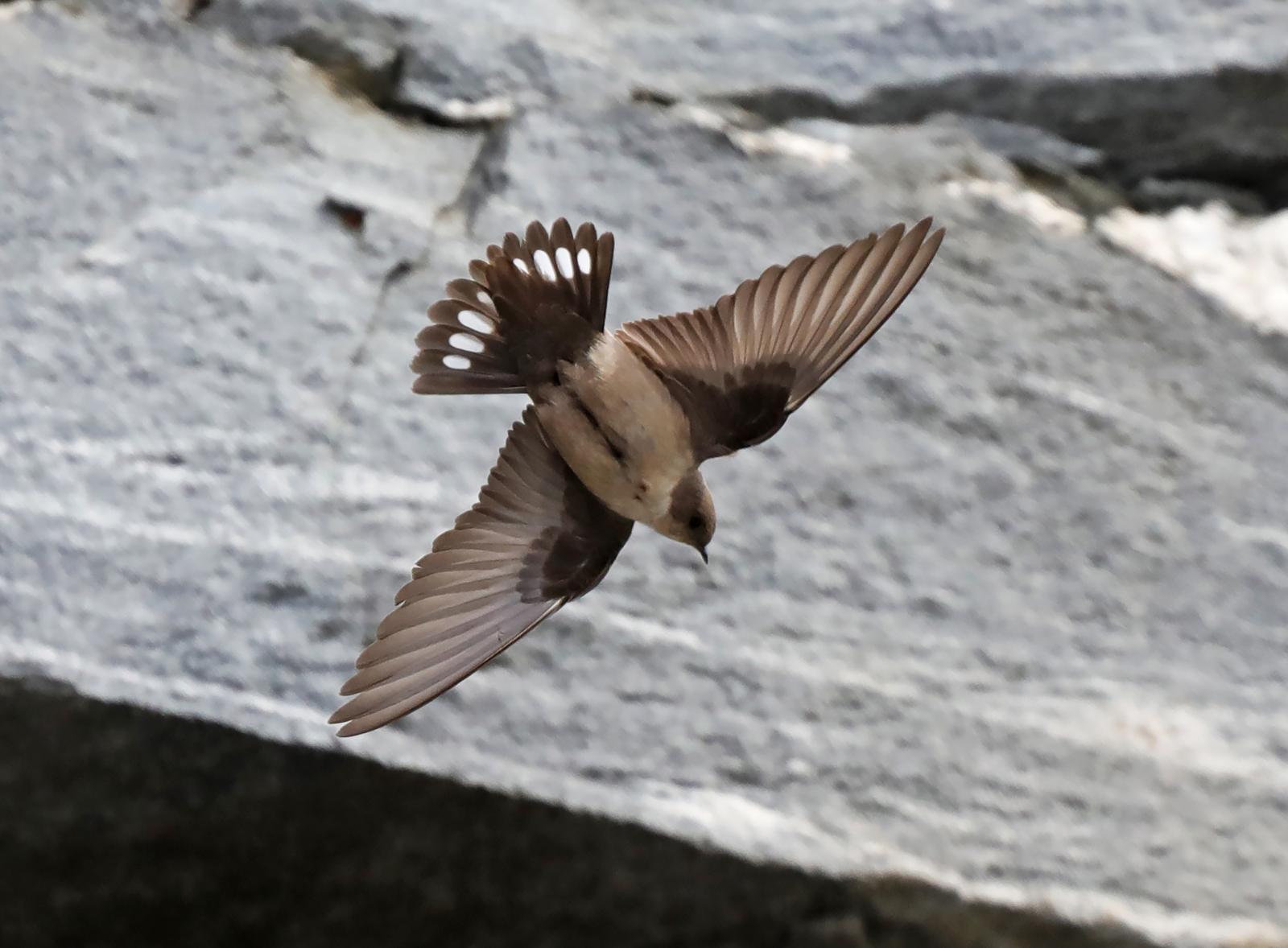
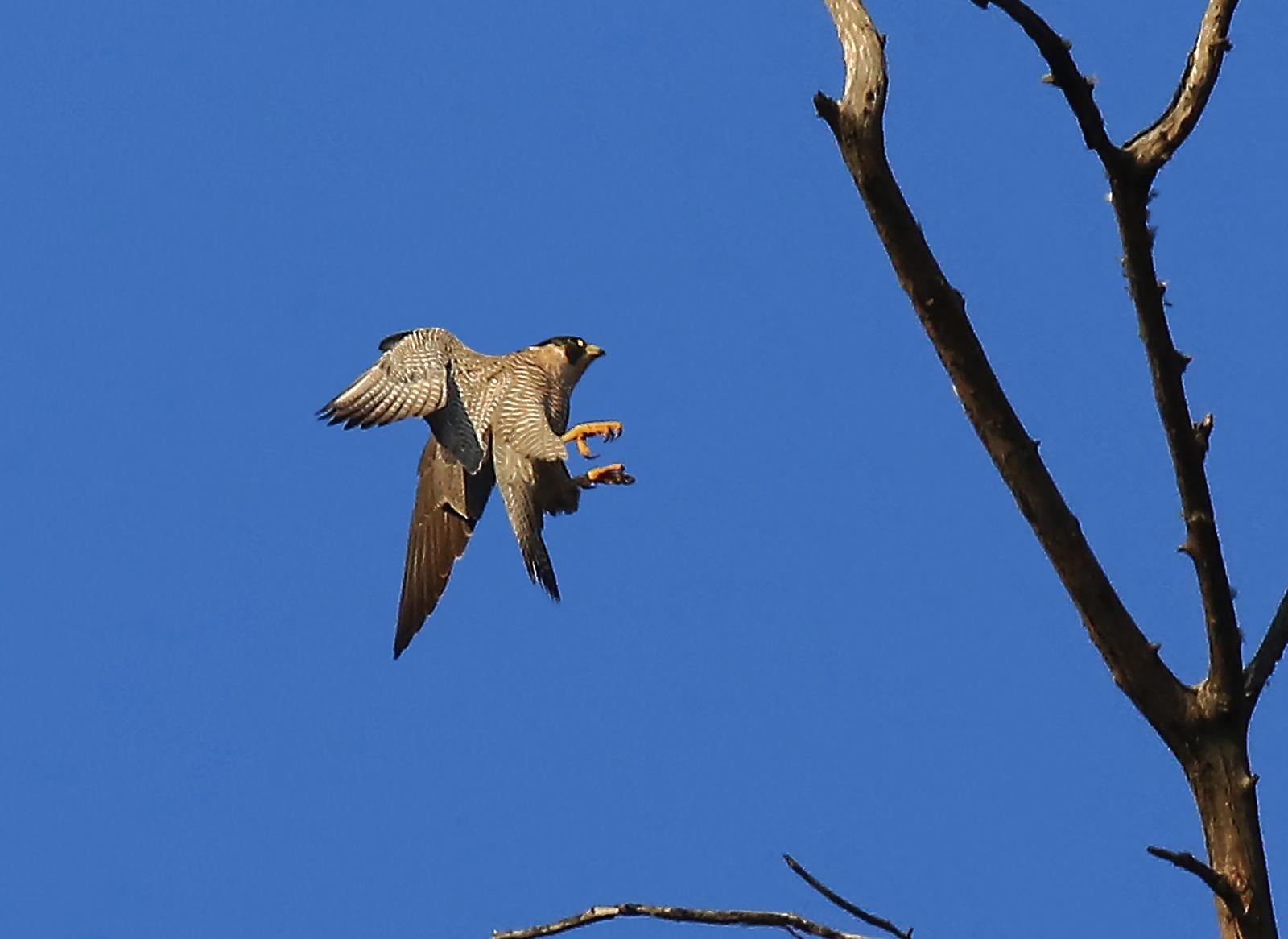
Although they may appear to be a barren and inhospitable environment, rocky walls are actually a crucial habitat for some animals. The large rock face that overlooks the Torbeccio area provides a valuable shelter for many bird species, some of which are particularly sensitive or even threatened, such as the solitary sparrow, the peregrine falcon, and the Eurasian eagle-owl.
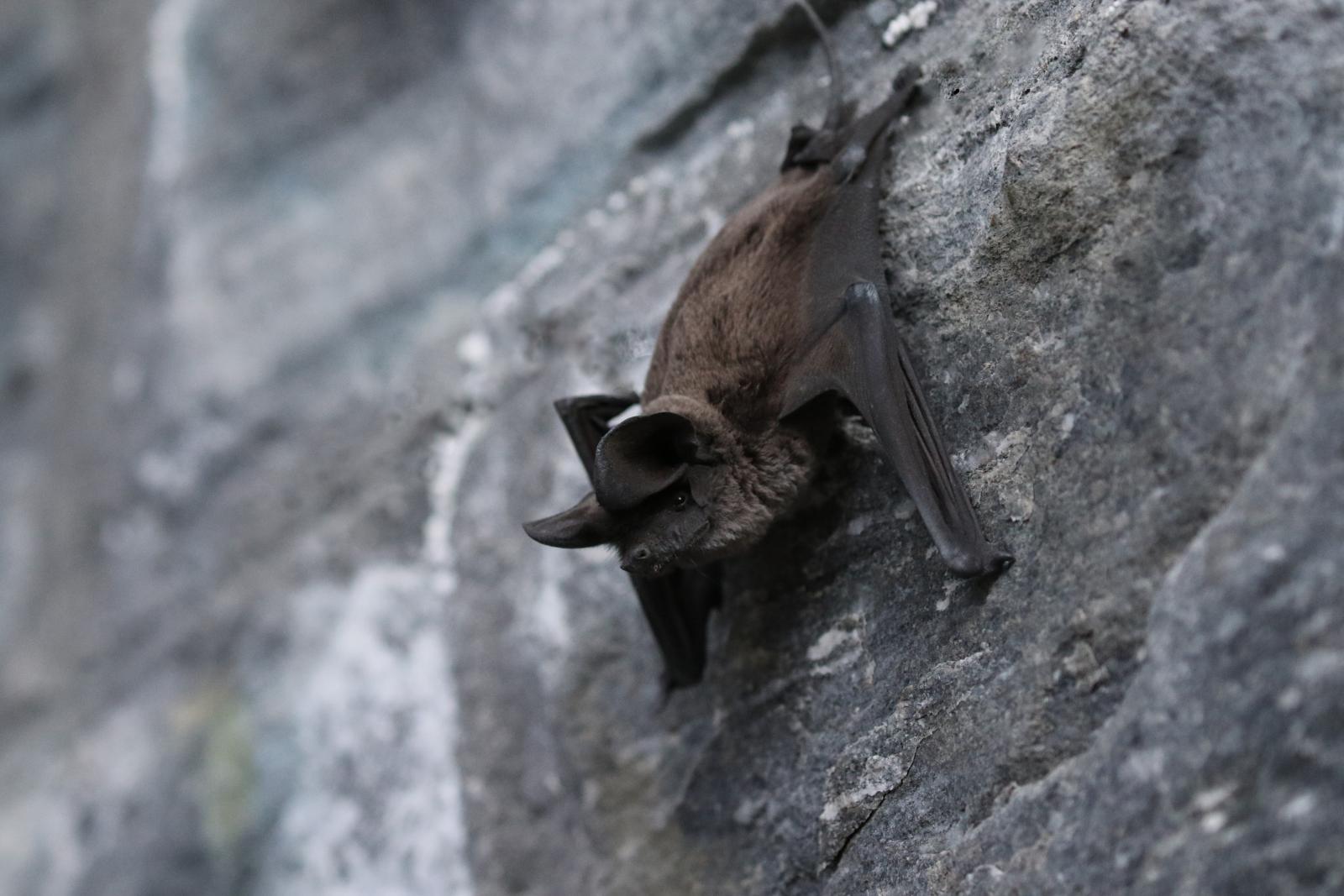
This unique habitat is also used by the European free-tailed bat, which, with a wingspan of 45 cm, is the largest native bat species. In Switzerland, its known winter roosts are exclusively located in the cracks of very large rock faces that are well-exposed to sun rays. It is not uncommon to hear the whistles of this large bat as it hunts high in the sky at night.
This area also faces human pressures, such as those from sports activities like climbing. To help ensure that the species inhabiting the wall have at least some protected space, the Canton has designated a «Quiet Zone» to protect wildlife.